
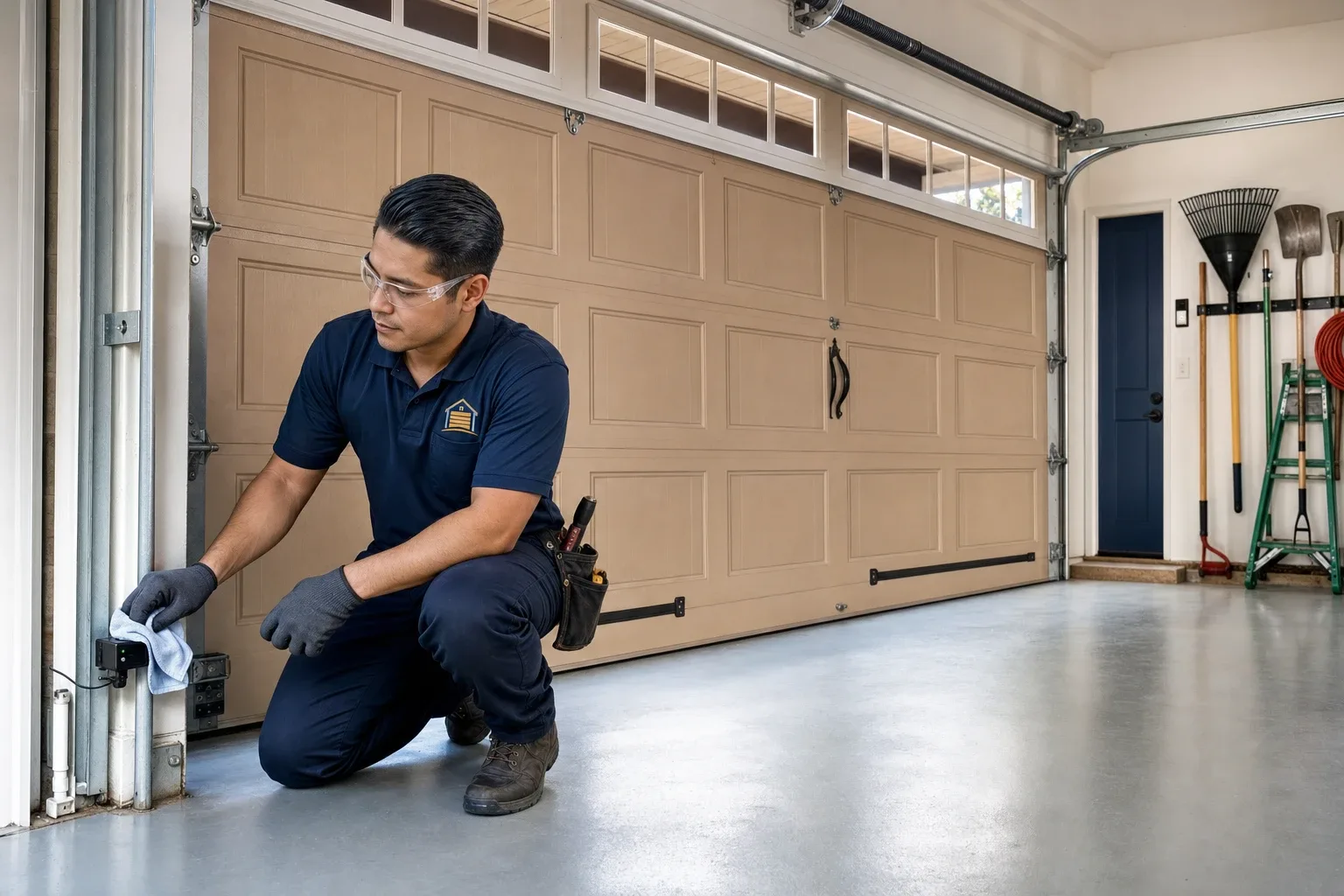
Georgia Garage Pros
Emergency Garage Door Repair in Georgia
Severe thunderstorms, occasional tornadoes, and coastal tropical systems can jam or damage a garage door with little warning, situations Georgia homeowners are more likely to encounter during spring storm season and the Atlantic hurricane season.
Emergency Repair · Georgia
Emergency Repair for Georgia homes
Emergency garage door situations in Georgia tend to cluster around two kinds of severe weather. Spring storm season brings severe thunderstorms and occasional tornadoes that can jam or damage a door with little warning, while coastal Georgia adds the Atlantic hurricane season, which runs officially from June 1 through November 30, as a second period of elevated risk.
In either case, the safest first move is the same: stop, assess the door visually from a distance, and avoid forcing it with the opener rather than repeating an attempt that isn't working.
Georgia
What's different in Georgia
- 01
Two Storm Seasons, One Response
Whether the cause is a spring severe thunderstorm, a tornado, or a coastal tropical system, the safe first response is the same: stop using the opener and assess visually before doing anything else.
- 02
What Not to Do Right Away
Continuing to press the opener on a door that's straining, binding, or reversing repeatedly risks making the damage worse rather than fixing it.
- 03
When to Call a Professional Immediately
A door that's visibly bowed, off its tracks, or has debris involving the spring or cable system needs a professional's inspection before anyone tries to operate it again.
Know the signs
When you need emergency repair
Common symptoms
- Door is stuck open and won't close, leaving the garage exposed
- A spring has just broken, often with a loud bang, and the door feels very heavy
- Door has come off its track or hangs visibly crooked
- Opener or door won't respond at all, and manual operation feels unsafe or isn't possible
What the service covers
- Triage of what's happening and how urgent it is when service is requested
- Guidance on securing the garage safely while waiting
- Diagnosis of the specific failure once a technician arrives
- Repair of the affected part to restore normal, safe operation
The process
How the work is done
- 1
Describe the problem
Request service and describe exactly what's happening — what you heard or saw, and whether the door is currently open, closed, or stuck partway.
- 2
Secure the area safely
Where it's safe to do so, keep people and vehicles clear of the door and avoid forcing it further in either direction.
- 3
Technician assessment
Once on site, the technician identifies the specific failure, such as a spring, cable, track, or opener issue, before touching anything under tension.
- 4
Repair and re-test
The affected part is repaired, and the door is cycled and tested for safe, even operation before the visit is complete.
Cost factors
What affects the price
Prices aren't published because they depend on your door, the parts involved and the access to the work. These are the things that move the cost — ask for the price before any work starts.
- Nature of the failure
- A broken spring or cable typically involves more parts and time than a stuck sensor or remote issue.
- Timing of the request
- When the request comes in relative to normal scheduling can affect how the visit is arranged.
- Extent of related damage
- A door that was forced while stuck can develop additional track or hardware damage beyond the original failure.
- Security needs
- A door that won't close at all may need a temporary secure measure in addition to the repair itself.
Safety first
- Never try to force a stuck door open or closed, especially if a spring or cable is involved — a stuck door can be under uneven tension.
- If you hear a loud bang from the garage, avoid using the door until it's inspected; this is often a broken spring, which stores dangerous energy even after failing.
- Do not attempt to bypass a photo-eye sensor or disable the auto-reverse feature to force a door to close.
- If a door is stuck open and you need to leave the property, close and lock the interior door between the garage and the house if one exists, and avoid leaving valuables in plain view.
Safe things to check first
- Note exactly where the door is stuck, whether fully open, partway, or fully closed, and whether it moved suddenly or gradually.
- Listen for whether the opener motor is running but the door isn't moving, which points to a different cause than a door that won't respond at all.
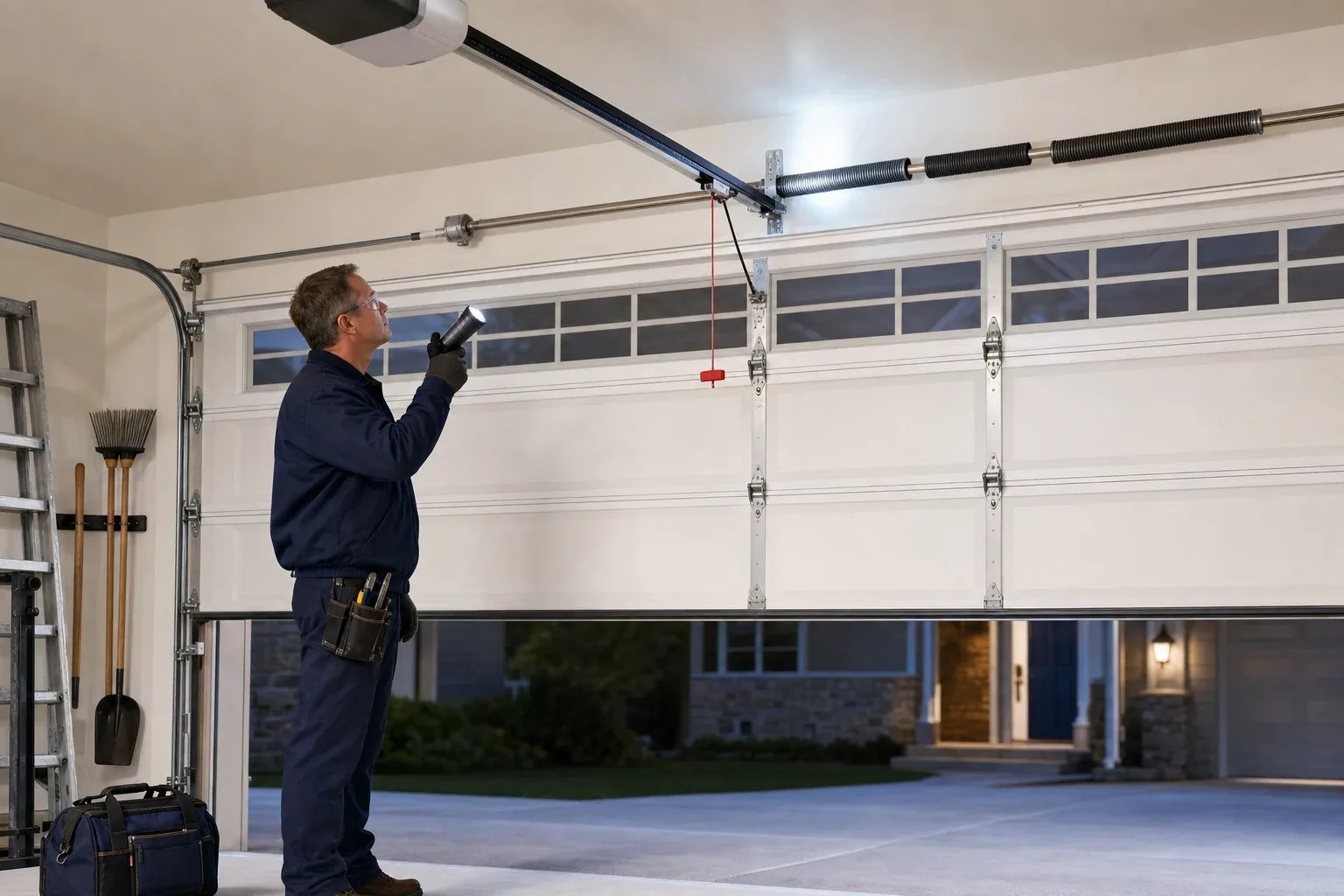
- From a safe distance, look for an obvious cause, such as a visible gap in a spring, a cable off its drum, or a roller out of the track, without touching anything.
Local pages
Emergency Repair by city
Answers
Emergency Repair questions in Georgia
What should I do if a storm damages my garage door in Georgia?
Stop trying to open or close it with the opener, disconnect power at the unit if it's straining, and have it inspected before using it again, especially if the spring or cable system looks involved.
Are garage door emergencies more common during certain seasons in Georgia?
Yes. Spring severe thunderstorm and tornado season, along with the Atlantic hurricane season from June 1 through November 30 on the coast, are both periods of elevated risk for storm-related garage door emergencies.
Related
Related services
Georgia Garage Pros
Request service
Send the details in two quick steps. This isn't a booking — we contact you to confirm the problem, the timing and the location first.
Sources
- Automatic Residential Garage Door Operators — U.S. Consumer Product Safety Commission (accessed 2026-09-24)
- Government and Industry Move To Reduce Garage Door Opener Child-Entrapment Deaths — U.S. Consumer Product Safety Commission (accessed 2026-09-24)