
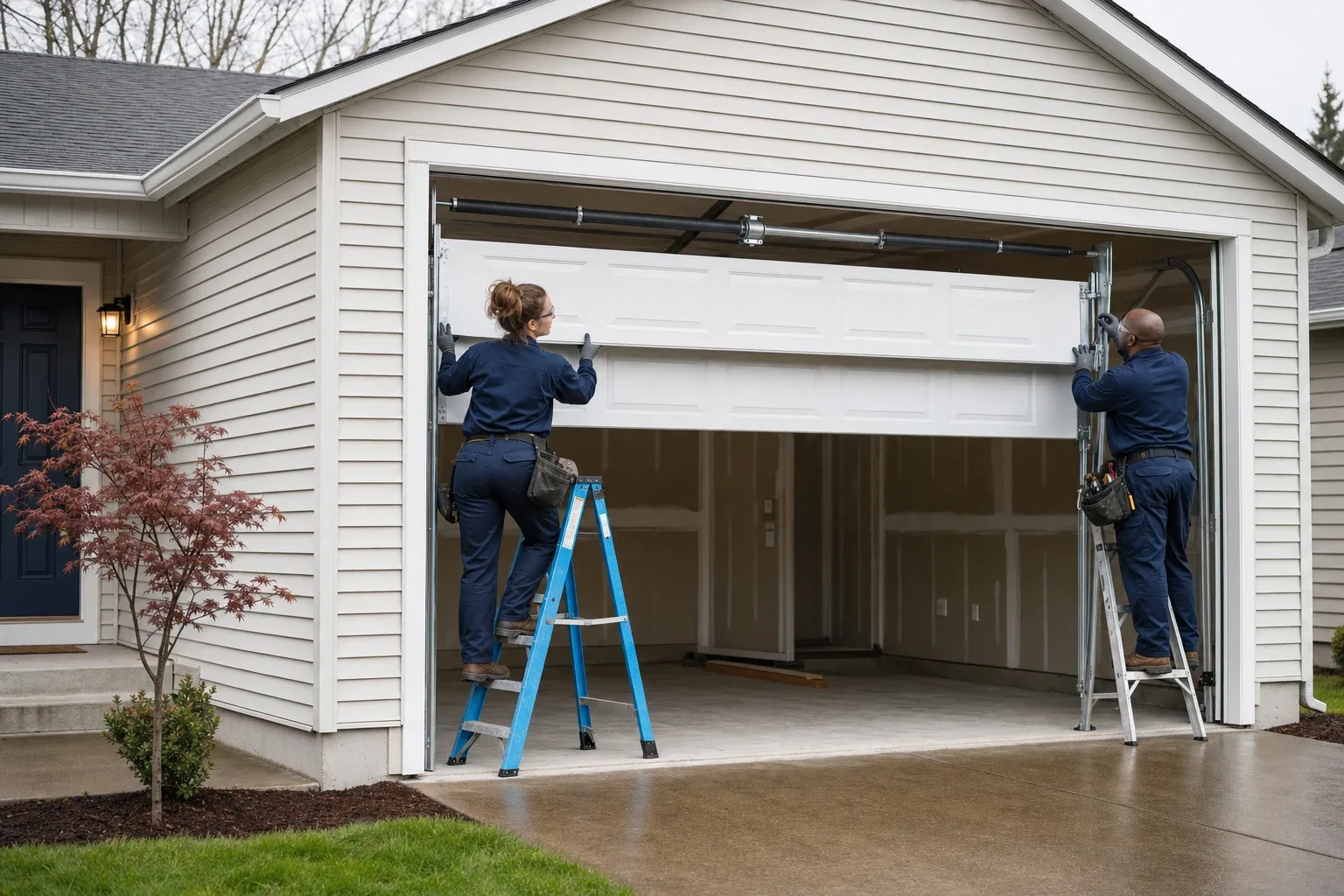
The short answer
In the handful of Oregon jurisdictions that have locally adopted the state's optional wildfire hazard mitigation building code (ORSC Section R327), garage and accessory-structure work on new construction may need to meet added standards. That can add cost factors such as ember-resistant venting and fire-resistant materials to the project.
This page explains what drives the cost. It does not quote prices: no verified local price data has been published for this area, and every door is different. Assumptions: Applies only in jurisdictions that have locally adopted ORSC Section R327 (currently including Ashland, Bend, Deschutes County, Grants Pass, and the City of Sisters), not statewide or to a general wildfire-risk area. Specific permitting and inspection requirements vary by local jurisdiction and should be confirmed with the local building department. Reviewed 2026-10-19.
Oregon's optional wildfire hazard building code
Oregon's residential building code includes an optional wildfire hazard mitigation section, ORSC Section R327, that a city or county with its own building department can adopt locally for new construction; it is not a statewide requirement. Jurisdictions that have adopted it so far include Ashland, Bend, Deschutes County, Grants Pass, and the City of Sisters. Where adopted, it focuses on reducing ember intrusion and using more fire-resistant materials on new construction.
Cost factors this can add
On new construction in a jurisdiction that has adopted R327, the factors below can apply beyond a standard replacement. Elsewhere in Oregon, these features are a voluntary choice rather than a code requirement.
Cost factors
- Ember-resistant venting
- Attic vents on or near the garage may need ventilation devices that help reduce ember intrusion.
- Fire-resistant windows
- Windows in the garage or accessory structure may need to be fire-resistant to protect those openings where the local code applies.
- Ignition-resistant roofing or siding near the structure
- Roofing and siding on or adjacent to the garage may need to use materials that resist ignition where the local code applies.
- Defensible space and site preparation
- Creating defensible space by clearing flammable vegetation and debris around the garage or accessory structure is recommended alongside home hardening to reduce the chance a nearby fire ignites it.
Published by Oregon Garage Pros, a regional brand of USA Garage Pros · Updated 2026-10-19