
South Carolina Garage Pros
Garage Door Maintenance in South Carolina
Regular maintenance matters more in South Carolina's humid, salt-touched climate, where hardware corrodes and lubricant washes out faster than in drier states, and a check ahead of hurricane season is a practical addition for coastal homes.
Maintenance · South Carolina
Maintenance for South Carolina homes
Routine maintenance carries more weight in South Carolina than it would in a milder, drier climate, since salt air, humidity, and long summer heat all work against hardware and lubricant faster than average. A check that might be optional elsewhere becomes more of a practical habit here, especially near the coast.
Timing matters too: a maintenance visit ahead of the Atlantic hurricane season, which runs officially from June 1 through November 30, gives coastal homeowners a chance to catch corroded or worn hardware before storm season puts extra strain on the door.
South Carolina
What's different in South Carolina
- 01
A Pre-Hurricane-Season Check
Scheduling maintenance before the Atlantic hurricane season starts on June 1 gives a technician time to catch corrosion, worn hardware, or loose brackets before storm-season winds test the door.
- 02
Coastal Hardware Needs More Frequent Attention
Homes near Charleston, Beaufort, or Myrtle Beach see hardware corrode faster than inland homes, so springs, cables, and rollers there often benefit from checks on a shorter interval.
- 03
The Upstate Runs on a Different Calendar
Greenville and Spartanburg-area homes face less coastal corrosion but should still get a seasonal check before winter cold snaps stiffen springs and lubricant.
Know the signs
When you need maintenance
Common symptoms
- It's been a while since the door's hardware was last checked
- Door has become slightly noisier or stiffer, but nothing is broken yet
- Door is used heavily, such as multiple times a day, and hardware wears faster as a result
- Preparing the door for a change in season and temperature
What the service covers
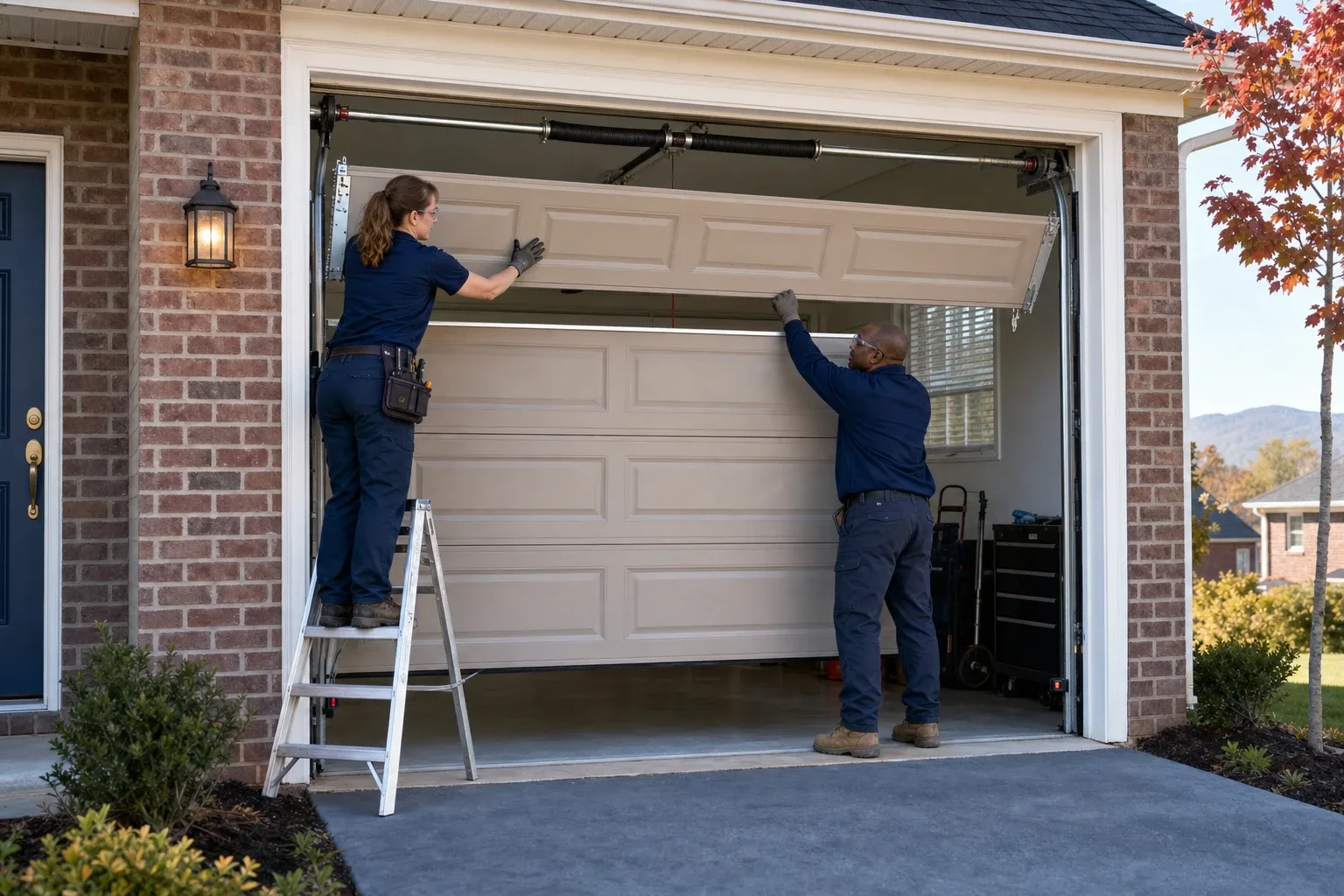
- Inspection of springs, cables, tracks, rollers, and hinges for wear
- Lubrication of rollers, hinges, and the torsion shaft's bearing points
- Tightening of loose bolts, brackets, and hardware
- Testing of door balance, opener settings, and the auto-reverse safety feature
The process
How the work is done
- 1
Inspect all hardware
Springs, cables, tracks, rollers, and hinges are checked for wear, rust, or looseness before anything is adjusted.
- 2
Lubricate moving parts
Rollers, hinges, and the spring shaft's bearing points are lubricated to reduce friction and noise.
- 3
Tighten and adjust
Loose bolts, brackets, and track fasteners are tightened, and minor track alignment is corrected.
- 4
Test balance and safety features
The door's balance is checked and the opener's auto-reverse feature is tested to confirm it's working correctly.
Cost factors
What affects the price
Prices aren't published because they depend on your door, the parts involved and the access to the work. These are the things that move the cost — ask for the price before any work starts.
- Door size and hardware count
- A double door has more hinges, rollers, and hardware to inspect and service than a single door.
- Current condition
- A door that's gone a long time without service may need more adjustment or a part replaced during the visit.
- Opener age
- Checking and testing an older opener's settings can take more time than a newer unit.
- Add-on repairs
- If a specific worn part is found during the tune-up, addressing it changes the scope of the visit.
Safety first
- Maintenance work on or near the spring system should be done by a trained technician, since even routine inspection means working close to stored tension.
- Disconnect the opener before manually testing the door's balance.
- Keep the auto-reverse feature enabled and tested as part of every maintenance visit.
Safe things to check first
- Listen for new or increasing noise during a normal open-close cycle.
- Look at visible hardware, such as hinges, rollers, and track brackets, for rust, looseness, or wear since the last check.
- Test the auto-reverse feature per the opener manufacturer's guidance and confirm the door reverses on contact with an obstruction.
Local pages
Maintenance by city
Answers
Maintenance questions in South Carolina
How often should I get garage door maintenance in South Carolina?
It depends on location. Coastal homes near salt air generally benefit from more frequent checks than Midlands or Upstate homes, and a visit before hurricane season is a practical addition along the coast.
Does South Carolina's climate really affect how often maintenance is needed?
Yes. Salt air, humidity, and long summer heat all speed up wear on hardware and lubricant compared with a drier, milder climate, which is why regular checks matter more here.
Related
Related services
South Carolina Garage Pros
Request service
Send the details in two quick steps. This isn't a booking — we contact you to confirm the problem, the timing and the location first.
Sources
- Technical Data Sheets — Door & Access Systems Manufacturers Association (DASMA) (accessed 2026-09-24)
- Government and Industry Move To Reduce Garage Door Opener Child-Entrapment Deaths — U.S. Consumer Product Safety Commission (accessed 2026-09-24)