
Florida Garage Pros
Garage Door Repair in Florida
Repair work in Florida often centers on humidity- and salt-related corrosion on hardware, plus wear from intense summer heat on rubber components, rather than the cold-weather issues seen in northern states.
Repair · Florida
Repair for Florida homes
Repair calls in Florida usually trace back to one of two things: humidity and salt air working on exposed hardware, or intense UV and heat breaking down rubber seals and weatherstripping faster than in milder climates. Neither pattern has much to do with cold-weather wear, which barely factors into Florida service at all.
Where the home sits changes the mix. A coastal property in Tampa Bay or Southwest Florida sees more corrosion-driven repairs, while an inland Orlando-area home is more likely dealing with heat and sun damage to seals and, after a summer thunderstorm, storm-related debris in the track.
Florida
What's different in Florida
- 01
Corrosion vs. Sun Damage
Coastal hardware corrosion and inland UV-driven seal wear are the two most common repair patterns statewide.
- 02
Concrete Block Framing
Most Florida garages are framed in concrete block, which affects how track hardware is anchored compared to wood-frame construction.
- 03
Post-Storm Debris
Summer thunderstorms and tropical systems can leave debris in the track that shows up as a repair call afterward.
Know the signs
When you need repair
Common symptoms
- Door is noisy, grinding, or squeaks during operation
- Door moves unevenly, jerks, or hesitates partway through a cycle
- Door feels heavy or won't stay in place when disconnected from the opener
- Remote or wall control works inconsistently
- Door reverses unexpectedly or won't fully close
What the service covers
- On-site inspection of springs, cables, tracks, rollers, and hinges
- Diagnosis of the specific part or adjustment causing the symptom
- Repair or replacement of the identified worn or damaged component
- Post-repair test of balance, travel, and auto-reverse function
The process
How the work is done
- 1
Diagnose the symptom
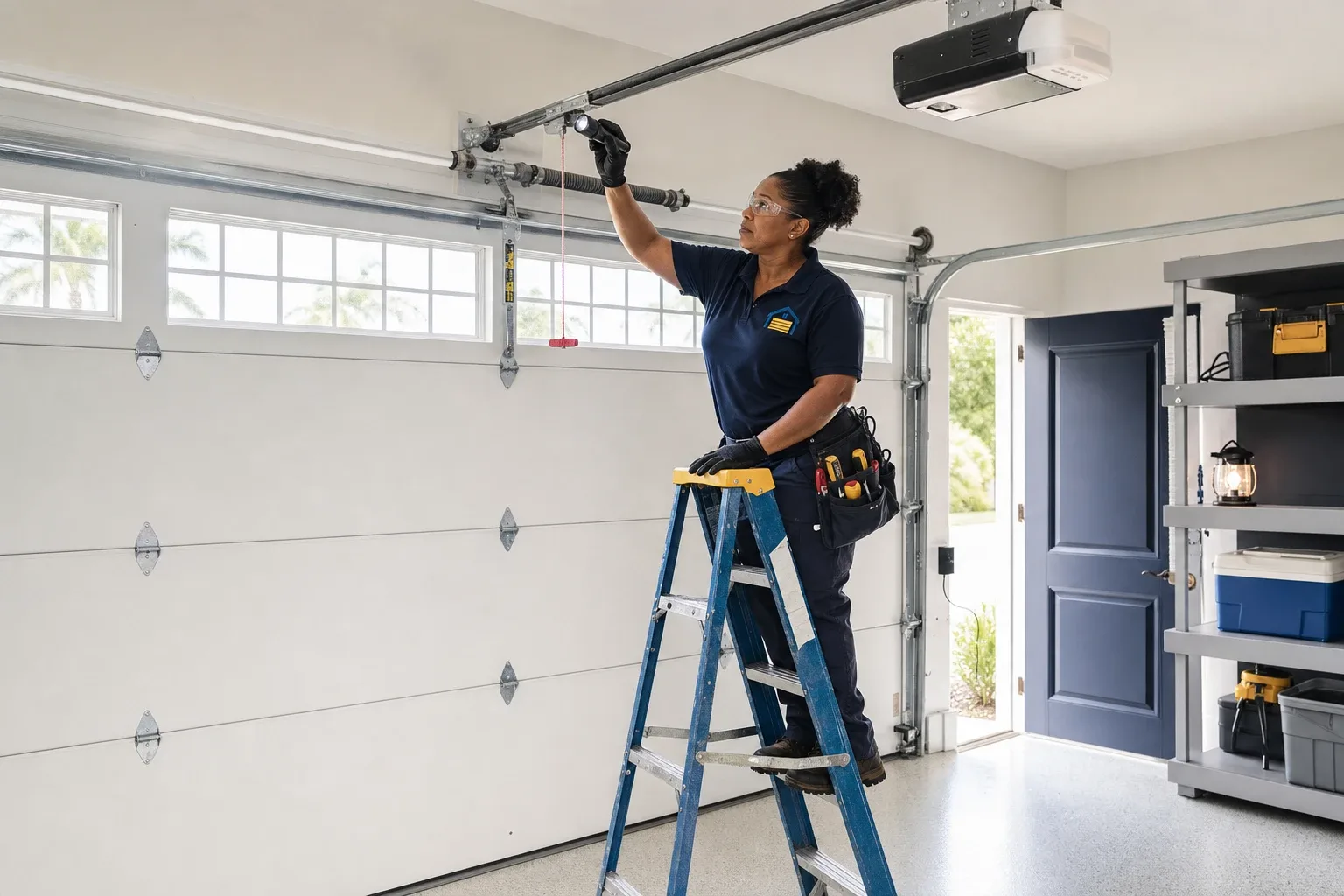
A technician reviews how the door has been behaving and observes a full open-close cycle to see where in the travel the problem shows up.
- 2
Inspect the hardware
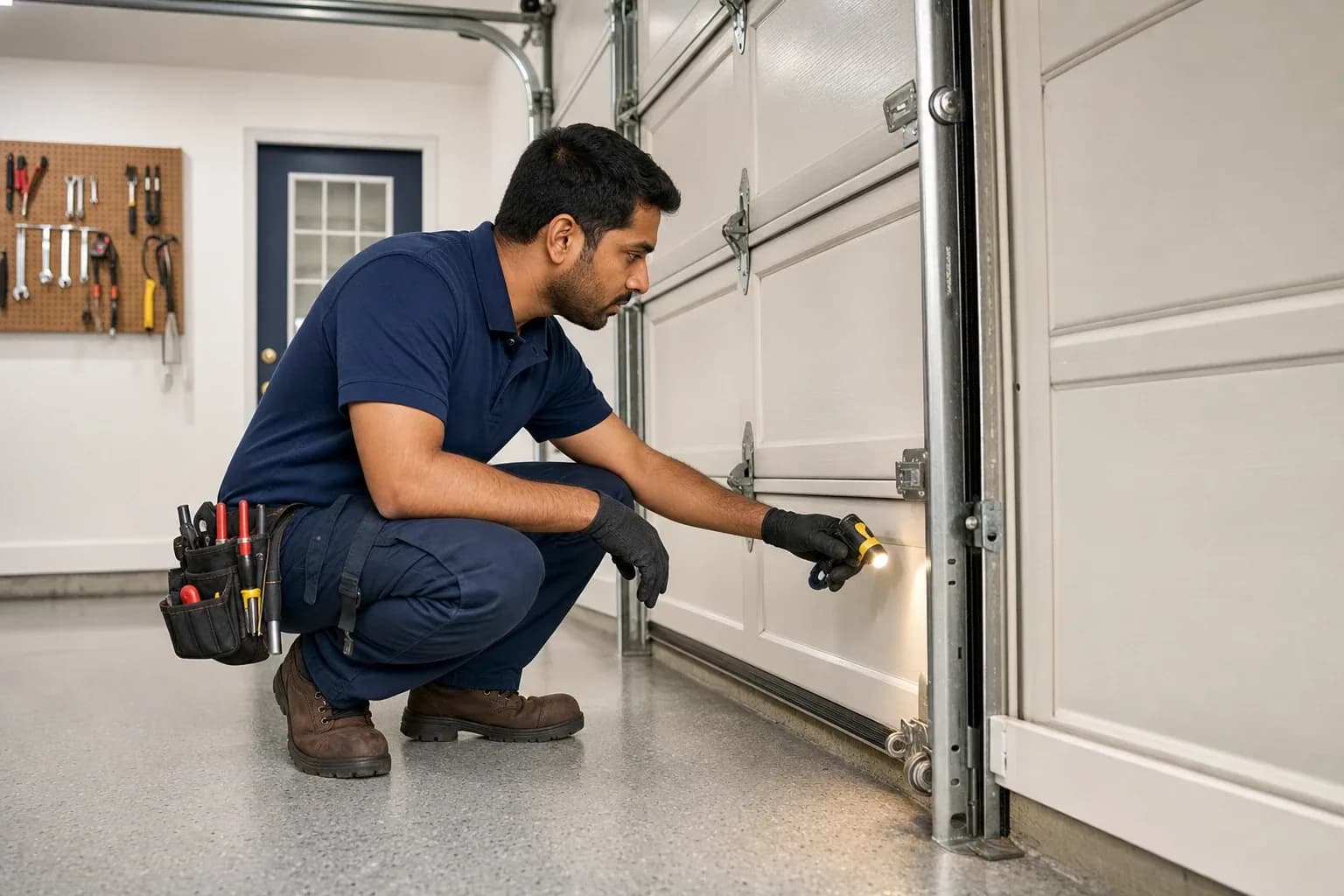
Springs, cables, tracks, rollers, hinges, and the opener are checked in sequence to isolate which part is out of adjustment, worn, or damaged.
- 3
Repair the affected part
The specific component causing the issue is adjusted, lubricated, or replaced, rather than swapping parts that are already working correctly.
- 4
Confirm the fix
The door is cycled again to confirm smooth, even travel, correct balance, and that the auto-reverse safety feature responds properly.
Cost factors
What affects the price
Prices aren't published because they depend on your door, the parts involved and the access to the work. These are the things that move the cost — ask for the price before any work starts.
- Which part is affected
- A worn roller or misaligned track takes less time and material to correct than a broken spring or a damaged cable and drum.
- Door size and weight
- Single and double doors put different loads on springs and hardware, which affects the parts and time involved.
- Age and condition of remaining hardware
- An older door may need more than one worn part addressed in the same visit.
- Access and mounting details
- Ceiling height, existing bracket condition, and how the opener and track are mounted can add time to a repair.
Safety first
- Never attempt to adjust, wind, or remove a torsion or extension spring — it stores enough energy to cause serious injury.
- Keep hands, fingers, and clothing away from moving tracks, rollers, and hinge points while the door is in motion.
- Disconnect the opener and support the door before inspecting it manually, and never work under a door that isn't secured open.
Safe things to check first
- Watch a full open-and-close cycle from a safe distance and note exactly where the door hesitates, jerks, or makes noise.
- Listen for grinding, popping, or scraping sounds and note which side of the door they come from.
- With the opener disconnected, look at the tracks for visible gaps, bends, or loose brackets without touching them.
Local pages
Repair by city
Answers
Repair questions in Florida
What's the most common reason for garage door repair in Florida?
Humidity- and salt-related hardware corrosion and UV damage to rubber seals are more common statewide than the cold-weather issues seen in northern climates.
Does it matter that most Florida garages are concrete block?
Yes, concrete block framing affects how track and hardware are anchored, which a technician accounts for differently than with wood-frame construction.
Related
Related services
Florida Garage Pros
Request service
Send the details in two quick steps. This isn't a booking — we contact you to confirm the problem, the timing and the location first.
Sources
- Government and Industry Move To Reduce Garage Door Opener Child-Entrapment Deaths — U.S. Consumer Product Safety Commission (accessed 2026-09-24)
- Technical Data Sheets — Door & Access Systems Manufacturers Association (DASMA) (accessed 2026-09-24)