
Florida Garage Pros
Garage Door Sensor Repair in Florida
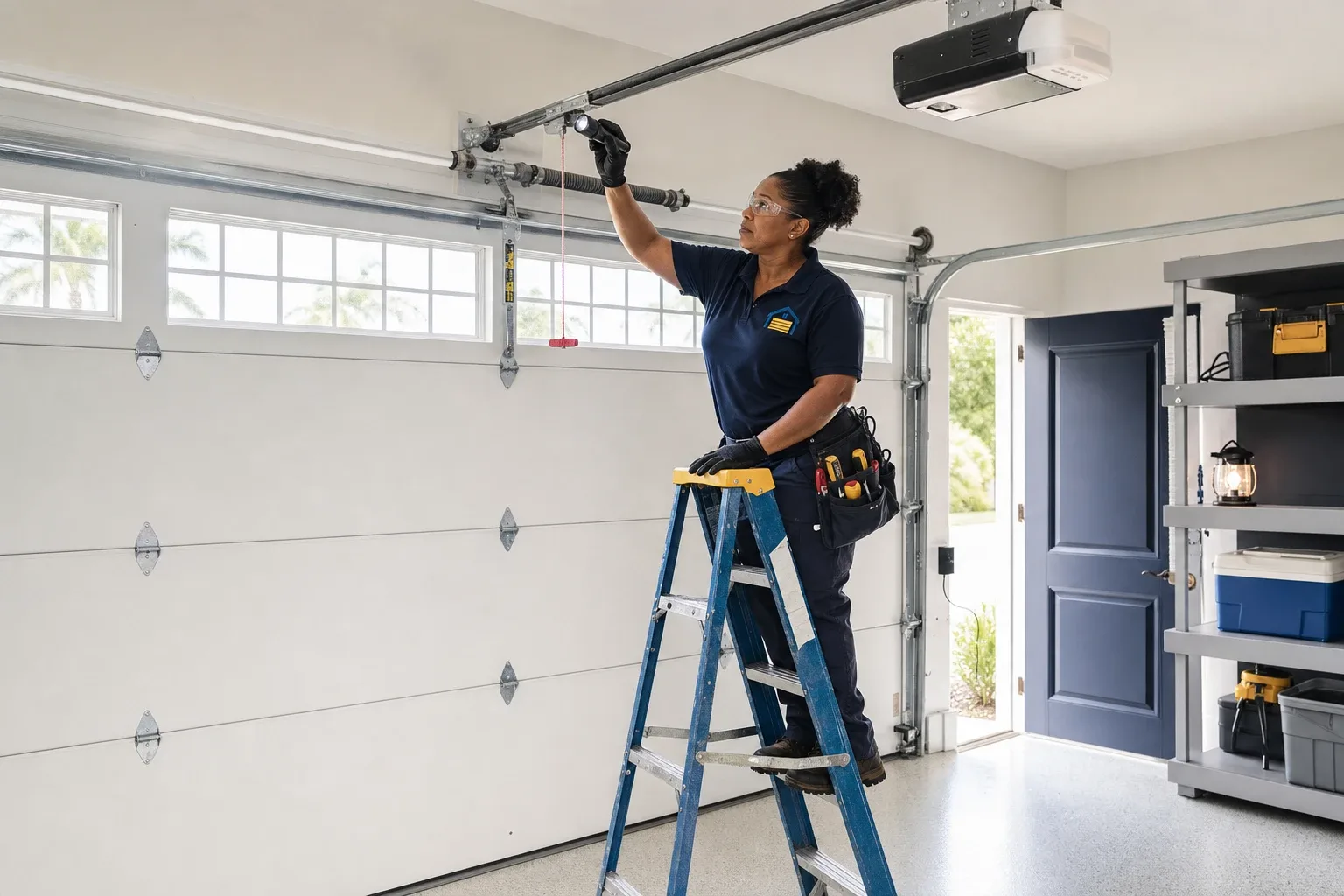
Photo-eye sensors can be affected by humidity intrusion into housings or by debris and water spray after a storm, so sensor checks are a routine part of post-storm service calls.
Sensor Repair · Florida
Sensor Repair for Florida homes
Photo-eye sensors in Florida deal with a different set of challenges than most states. Humidity can work its way into a sensor housing over time, and after a storm, water spray or debris settling near the sensor is a common reason a door will not close properly.
Bright, consistent Florida sun can also interfere with the sensor beam on doors that face directly into it, which is why sensor checks are a routine part of post-storm service calls alongside the more obvious track and panel inspection, especially in Central Florida where afternoon thunderstorm buildup follows hours of direct sun.
Florida
What's different in Florida
- 01
Humidity Intrusion
Moisture can affect sensor housings over time, particularly in consistently humid coastal areas.
- 02
Post-Storm Debris and Water
Water spray and debris after a storm are common reasons a sensor stops reading correctly.
- 03
Sun Glare
Doors facing directly into Florida's bright, consistent sun can have their sensor beam affected by glare at certain times of day.
- 04
Afternoon Storm Buildup
Central Florida's pattern of sunny mornings and afternoon thunderstorms means sensor conditions can shift over the course of a single day.
Know the signs
When you need sensor repair
Common symptoms
- Opener light blinks a set number of times and the door won't close
- Door starts to close, then reverses with nothing visibly in its path
- Indicator LED on one or both sensors is off, dim, or blinking
- Sensor bracket looks bumped, loose, or knocked out of alignment
What the service covers
- Inspection of both photo-eye sensors, brackets, and wiring
- Cleaning of sensor lenses and realignment of the brackets
- Testing the beam path for obstructions, glare, or interference
- Replacement of a faulty sensor or damaged wiring where needed
The process
How the work is done
- 1
Check sensor position and indicators
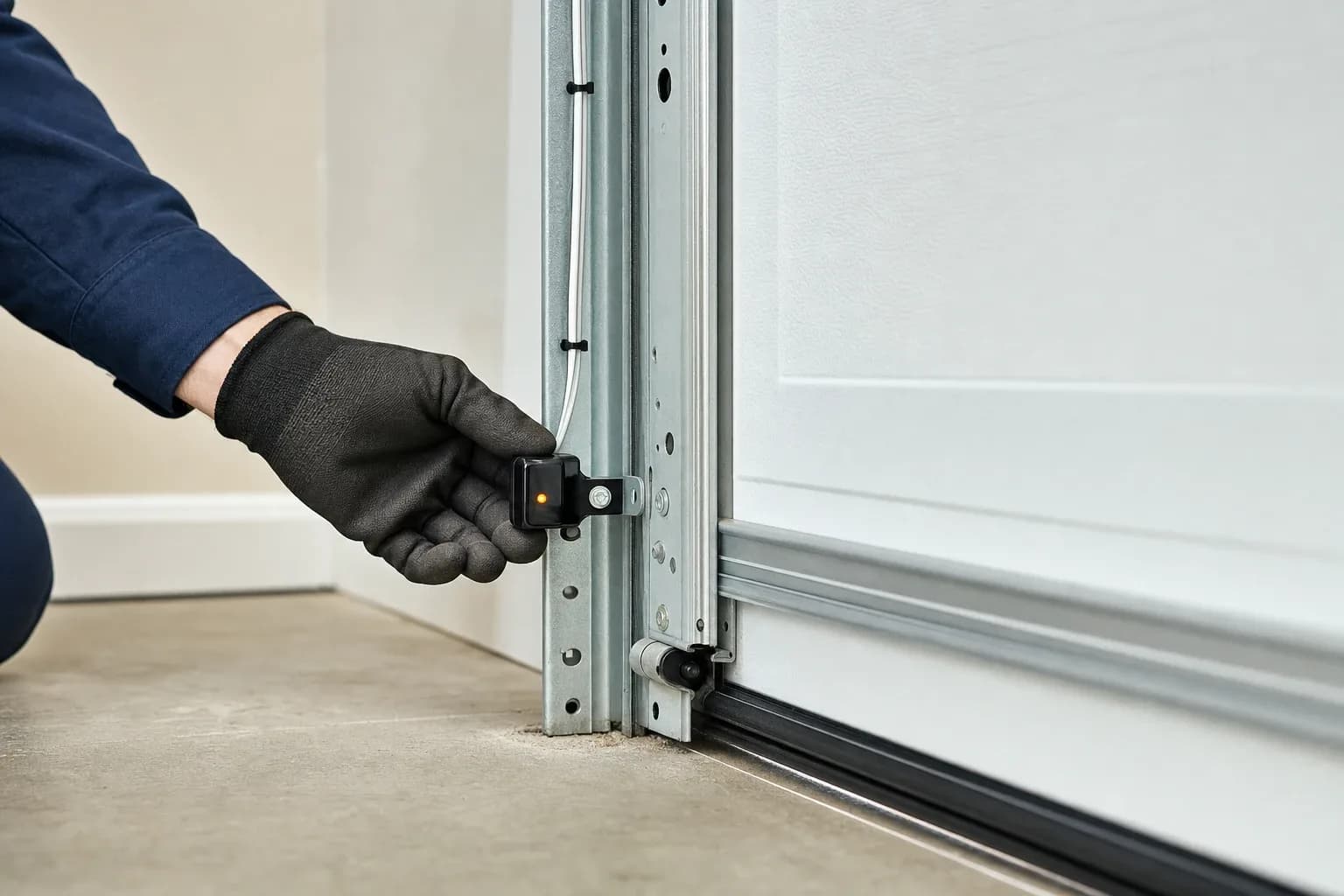
Both sensors are checked for physical position, about 6 inches above the floor, and whether their indicator lights show a clear, aligned beam.
- 2
Clean and realign
Lenses are cleaned of dust or cobwebs and brackets are adjusted so the sensors face each other directly.
- 3
Test for interference
The beam path is checked for obstructions, direct sunlight glare, or wiring issues that can cause a sensor to behave inconsistently.
- 4
Replace if needed
If a sensor or its wiring has actually failed rather than just needing cleaning or alignment, the faulty part is replaced and retested.
Cost factors
What affects the price
Prices aren't published because they depend on your door, the parts involved and the access to the work. These are the things that move the cost — ask for the price before any work starts.
- Cause of the fault
- A dirty lens or bumped bracket is quicker to correct than a wiring fault or failed sensor unit.
- Wiring condition
- Sensor wiring run along the floor can be damaged by moisture, pests, or being stepped on, which adds to the repair.
- Sensor compatibility
- A replacement sensor needs to be compatible with the existing opener's wiring and logic board.
- Bracket or mounting damage
- A bracket that's been knocked loose or broken may need to be replaced along with the sensor.
Safety first
- Never disconnect, cover, or bypass a photo-eye sensor to force a door to close — this removes the protection meant to stop the door on an obstruction.
- Disconnect power to the opener before adjusting or cleaning a sensor.
- After any sensor work, test that the door reverses when an object breaks the beam, per the opener manufacturer's guidance.
Safe things to check first
- Look at both sensor units near the floor for a steady indicator light; a blinking or dark light on either one usually means the beam isn't aligned.
- Check whether anything, such as a box, a toy, or leaves, is sitting in the beam path between the two sensors.
- Look at the small brackets holding each sensor for a bump, tilt, or loose mounting screw.
Answers
Sensor Repair questions in Florida
Why did my sensors stop working after a storm?
Water spray or debris settling near the sensors during a storm is a common reason a door will not close properly afterward, and a check is worth including in post-storm service.
Does Florida's humidity affect garage door sensors?
Yes, consistent humidity can work its way into a sensor housing over time, which is one reason sensor checks are part of routine Florida service.
Related
Related services
Florida Garage Pros
Request service
Send the details in two quick steps. This isn't a booking — we contact you to confirm the problem, the timing and the location first.
Sources
- Automatic Residential Garage Door Operators — U.S. Consumer Product Safety Commission (accessed 2026-09-24)
- UL 325 50th Anniversary & Key Safety Issues — UL Solutions (accessed 2026-09-24)