
The short answer
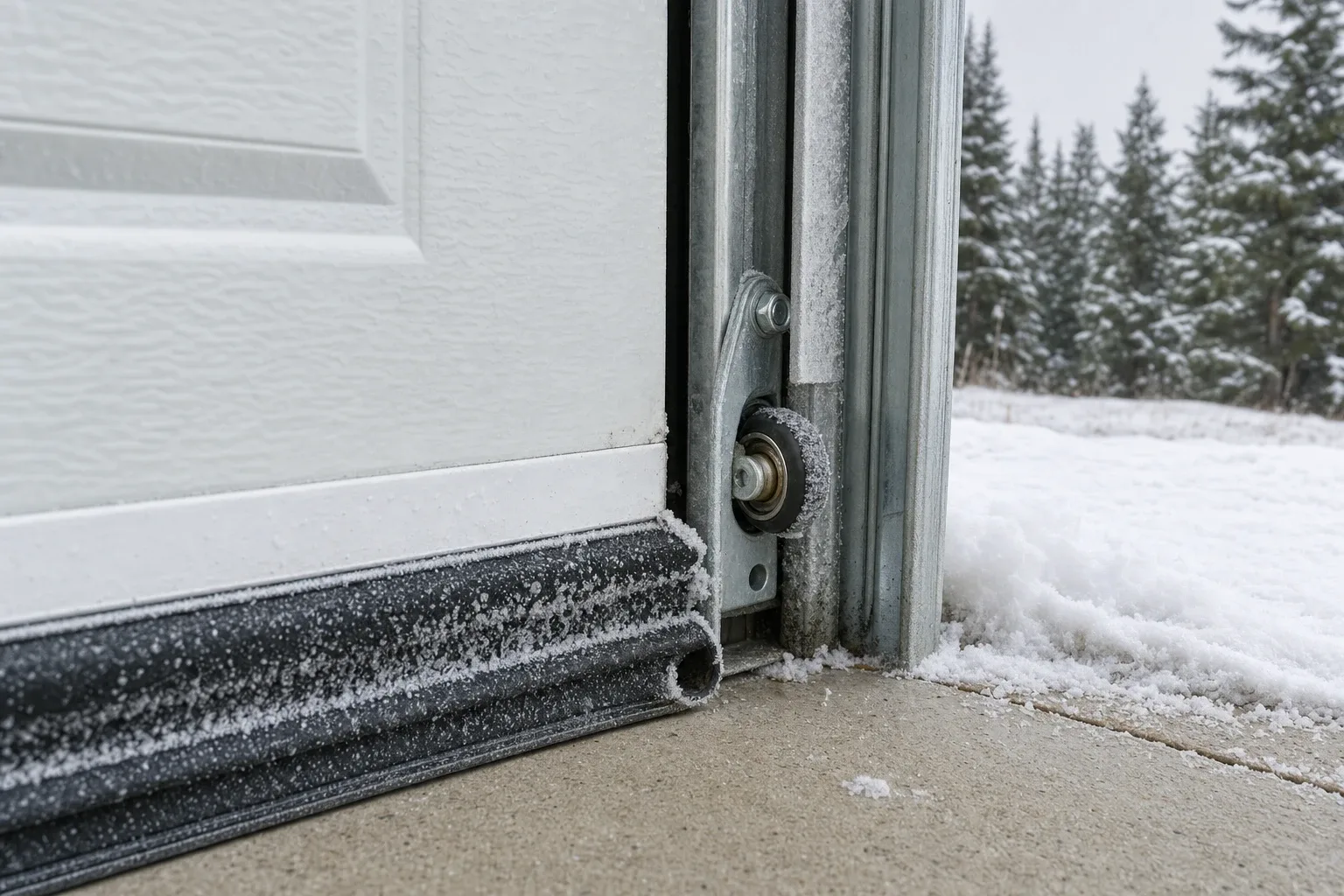
A garage door frozen to the floor is usually caused by melted snow or slush refreezing along the bottom seal overnight. Clear visible ice from the threshold, avoid forcing the opener, and request service if the door doesn't release safely.
Why This Happens in Idaho
Freeze-thaw cycles are common through Idaho winters, from the Treasure Valley to eastern Idaho and the Panhandle. Snow or slush on the garage apron melts slightly during a warmer afternoon, runs under the bottom seal, and refreezes overnight as temperatures drop. By morning, the rubber seal is bonded to a thin layer of ice on the concrete.
Safe Steps to Take
Clear loose snow from the apron only when it is safe to approach. Do not put ice-melt chemicals against the door or pry at the seal. If the door resists, stop using the opener and request service.
If the door releases partially and then binds, stop and check for visible damage to the bottom panel or track before continuing. A door that still won't move after the ice is cleared may be caught on something other than the seal, and forcing it can bend a track or damage the bottom section.
- Clear ice from the outside threshold before operating the door
- Avoid repeated opener attempts if the door resists
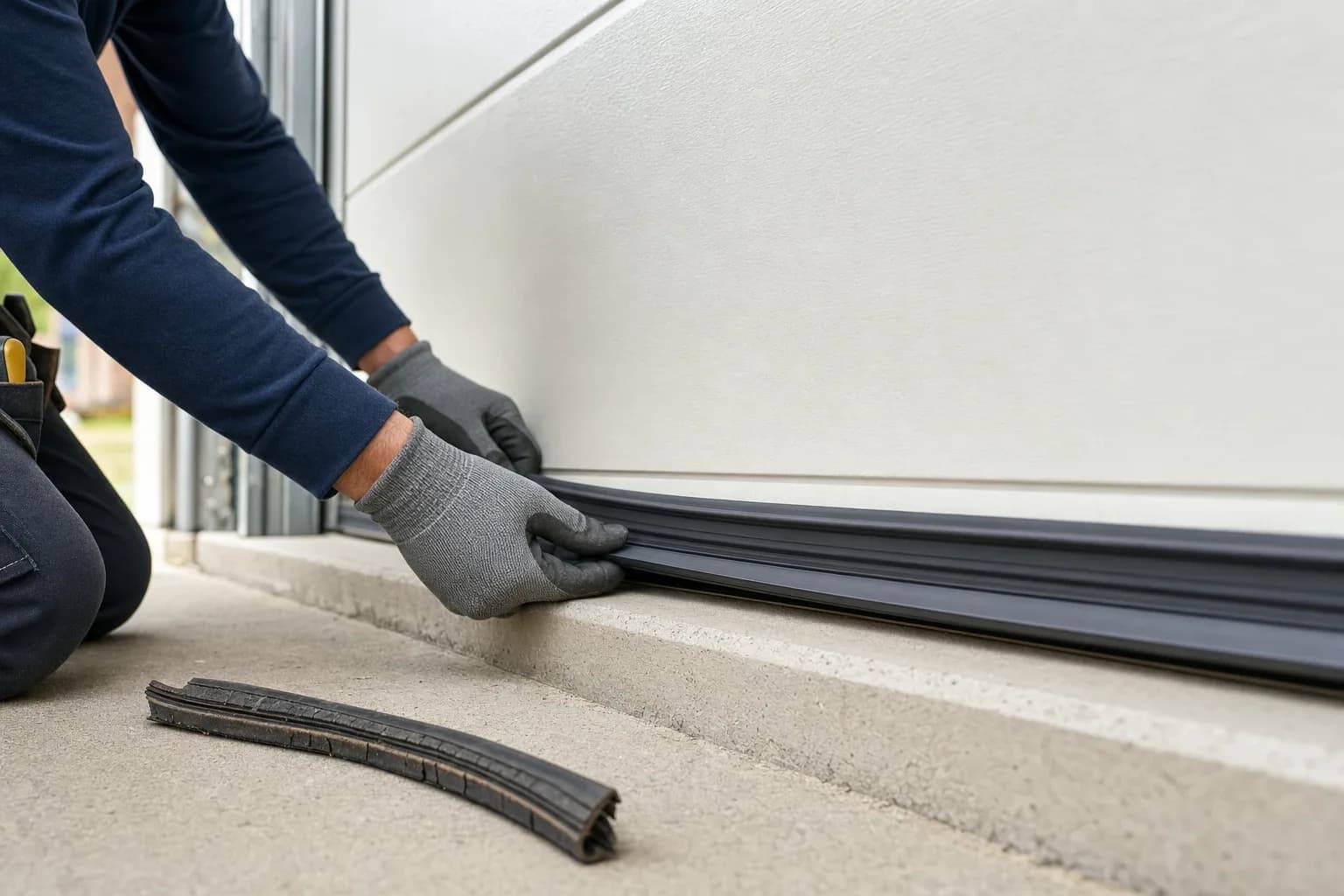
- Never pry at the bottom seal with a metal tool
When to Request Professional Service
If the door won't release safely, if you hear new grinding or popping sounds, or if the bottom panel looks bent or cracked after a freeze event, request service rather than continuing to try the opener. Recurring freezing at the same spot each winter can also point to a drainage or grading issue near the garage apron worth having looked at.
Published by Idaho Garage Pros, a regional brand of USA Garage Pros · Updated 2026-10-19