
The short answer
Salt-laden coastal air speeds up rust and corrosion on exposed springs, cables, hinges, and tracks. Look for surface rust, pitting, or a rough-sounding door, and request service before a corroded part fails rather than after.
Why this happens near Hampton Roads
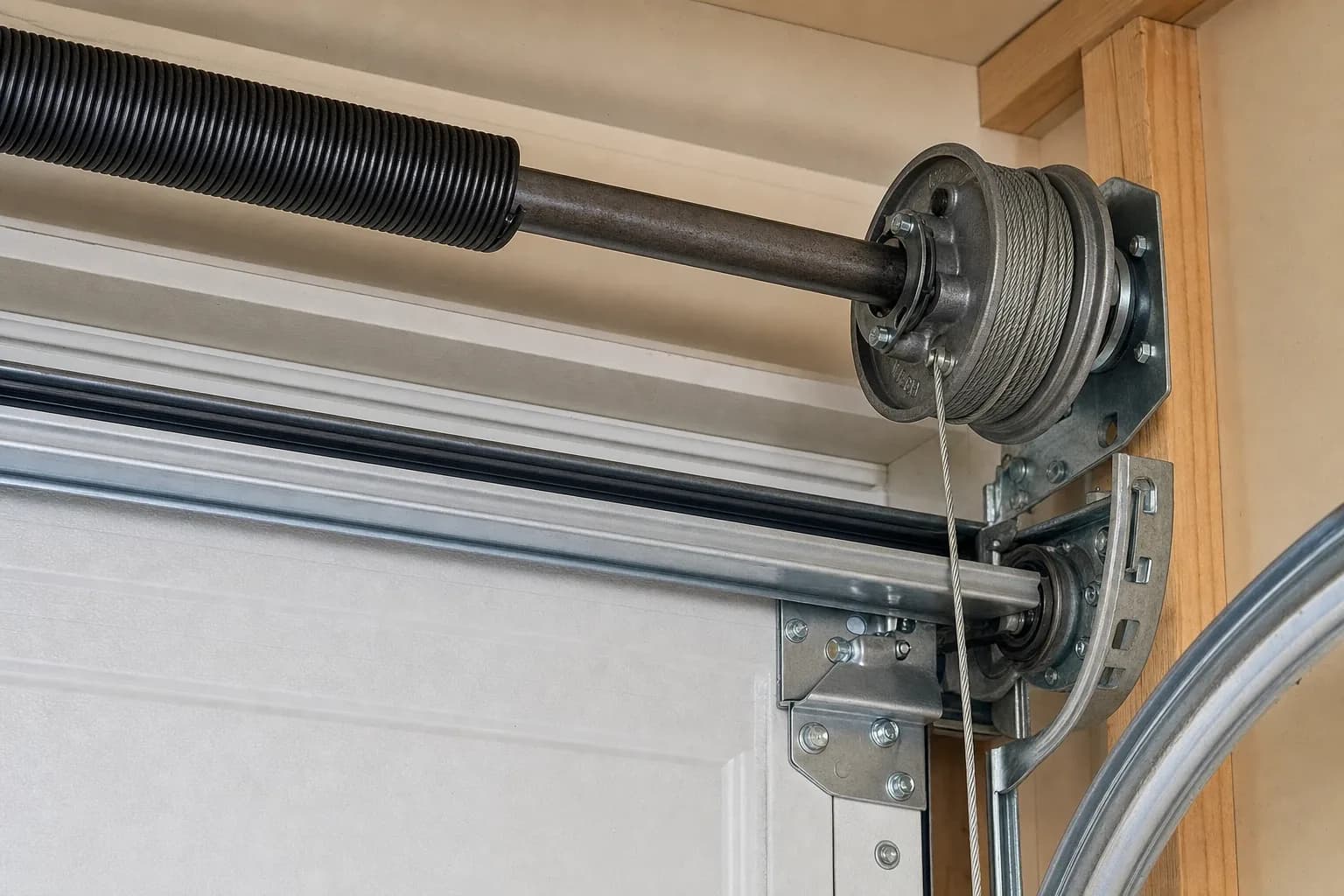
Homes near the Chesapeake Bay or the Atlantic coast are exposed to salt-laden air, and salt that settles on steel promotes rust; DASMA lists proximity to a saline coastal location among the climate conditions that affect spring life. Garage door hardware — springs, cables, hinges, and track brackets — is exposed steel, and on springs, rust reduces the wire's strength and can create pits where fatigue cracks start.
What corrosion looks and sounds like
Surface rust on springs and hinges is the most visible early sign. A cable with rust or fraying strands is more serious, since a cable under tension can snap. A door that's started making a new grinding, squeaking, or popping sound during operation is also worth a closer look.
- Orange or brown rust bloom on the torsion spring coils
- Frayed or rust-discolored strands on a lift cable
- Hinges or track brackets that have started to pit or flake
- A new grinding or squeaking sound during normal operation
What to do about it
Regular cleaning of the door (Clopay recommends quarterly in coastal areas) and lubrication as the manufacturer's instructions specify help protect hardware, but they don't reverse damage that's already happened. If you see rust on a cable or a spring that's under tension, don't try to clean or adjust it yourself — request service so a technician can assess whether the part needs replacement before it fails.
Published by Virginia Garage Pros, a regional brand of USA Garage Pros · Updated 2026-10-19