
Massachusetts Garage Pros
Off-Track Garage Door Repair in Boston
A door jumping its track is one of the more common calls in Boston's older housing stock, where tight alley access means a track can be nudged out of alignment by a car mirror, a trash bin, or plowed snow piled against the garage.
Off-Track Repair · Boston
Off-Track Repair for Boston homes
Winter adds another cause: packed snow or ice inside the track can bind the rollers and pull the door off-track when the opener keeps pushing against the resistance.
- Alley-access garages in Dorchester and East Boston see more track misalignment from tight clearances than freestanding suburban garages.
- Plowed snow banked against a garage door is a frequent cause of ice-related off-track issues in Boston winters.
Know the signs
When you need off-track repair
Common symptoms
- Door hangs crooked or at a visible angle when partly open
- A roller has visibly popped out of the track
- Door binds, sticks, or grinds at a specific point in its travel
- Track shows a bend, gap, or loose bracket along its length
What the service covers
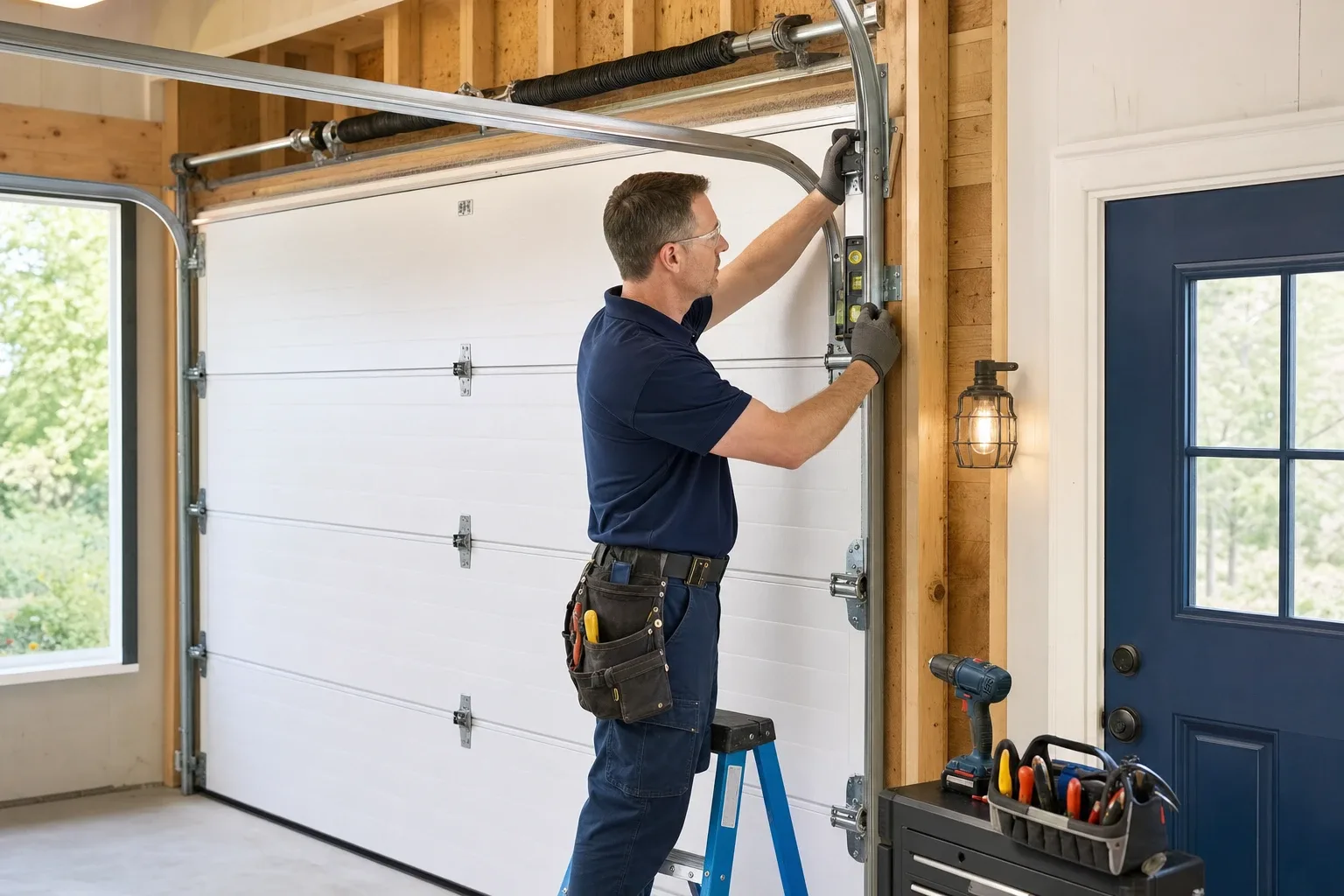
- Inspection of vertical and curved track sections and mounting brackets
- Realignment or straightening of tracks that are bent but reusable
- Replacement of track sections or rollers that are damaged beyond adjustment
- Test of the door's travel to confirm it runs smoothly on both sides
The process
How the work is done
- 1
Assess how far off-track the door is
The technician checks whether the door is safe to leave in its current position and how the tracks, rollers, and brackets have been affected.
- 2
Realign or replace the track
A track that's only slightly bent or loose can often be straightened and re-secured; a track with a sharper bend or crack is replaced.
- 3
Check related hardware
Rollers, hinges, and brackets near the affected section are inspected, since a worn roller or loose bracket is often what caused the track problem.
- 4
Test full travel
The door is cycled through its full range to confirm both sides move evenly and nothing binds or catches.
Cost factors
What affects the price
Prices aren't published because they depend on your door, the parts involved and the access to the work. These are the things that move the cost — ask for the price before any work starts.
- Extent of the misalignment
- A track that's slightly loose costs less to correct than one that's visibly bent or bowed.
- Cause of the problem
- If a broken cable or worn roller caused the track issue, that part needs addressing as well.
- Section affected
- Repairs to the curved radius section of track are typically more involved than the straight vertical run.
- Door size
- Double doors have more track length and hardware than single doors.
Safety first
- Do not attempt to force a door back onto its tracks or pry it into place — this can cause the door to fall or hardware to fail suddenly.
- If a door is visibly off-track, avoid using the opener until it's been inspected, since forcing it can damage the opener or worsen the misalignment.
- Keep the area under and around an off-track door clear until it's repaired.
Safe things to check first
- Look at both tracks from a safe distance for an obvious bend, a gap at a bracket, or a roller sitting outside the track.
- Note whether the door looks level or visibly tilts to one side when it's partly open.
Answers
Off-Track Repair questions in Boston
Why does my garage door keep coming off track in the winter?
Ice or packed snow inside the track is the most common winter cause in Boston. It restricts the rollers enough that the door can bind and pull off-track, especially if the opener keeps trying to push through the resistance.
Is it safe to keep using the opener if the door is off-track?
No. Continuing to run the opener on a door that's off-track risks further damage to the track, rollers, or panel. Stop using the opener and request service instead.
Related
Related services
Massachusetts Garage Pros
Request service
Send the details in two quick steps. This isn't a booking — we contact you to confirm the problem, the timing and the location first.
Sources
- Technical Data Sheets — Door & Access Systems Manufacturers Association (DASMA) (accessed 2026-09-24)