
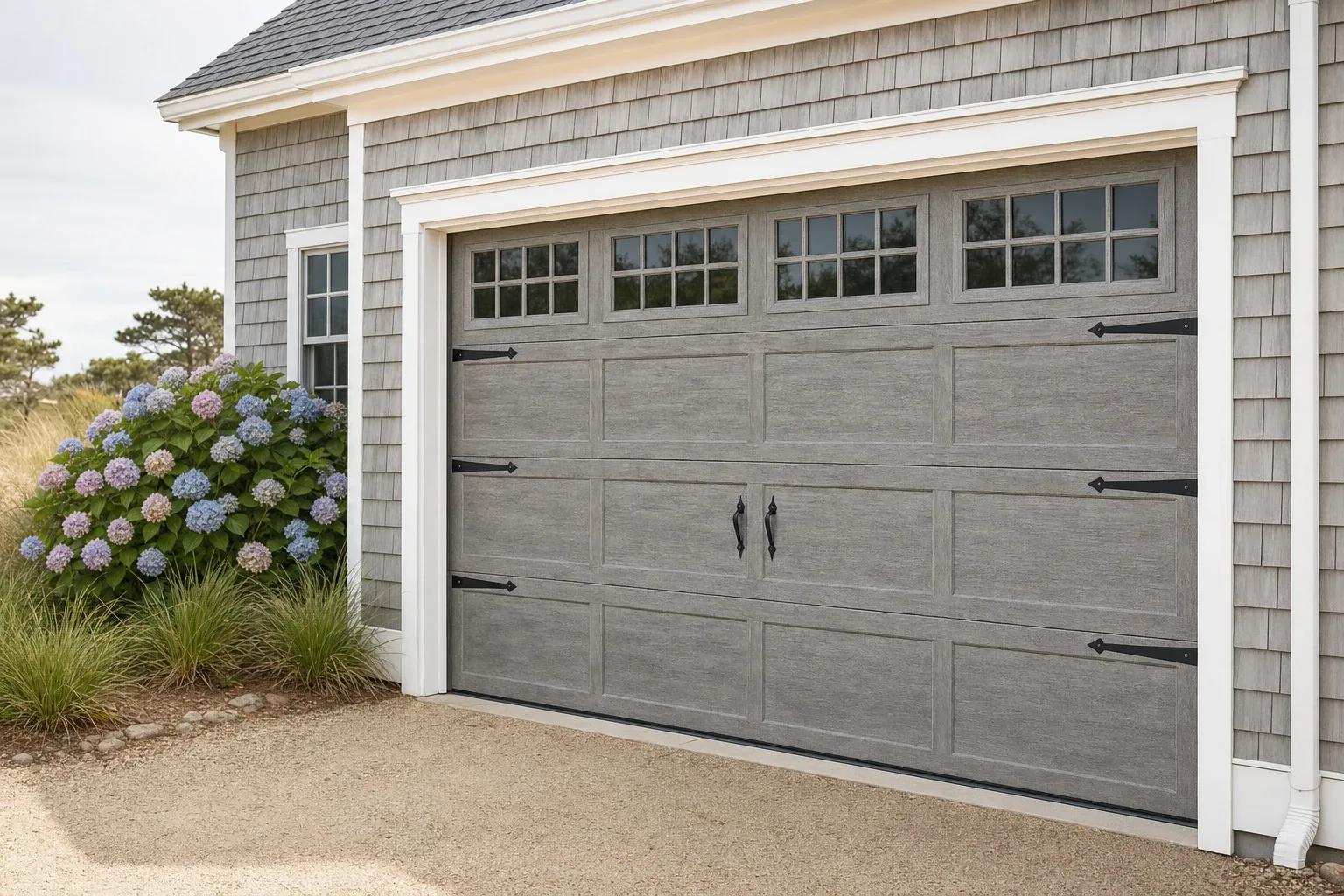
The short answer
Salt-laden coastal air speeds up corrosion on springs, hinges, rollers, and track hardware for homes on Cape Cod, Martha's Vineyard, Nantucket, and the South Coast. Watch for rust spots, stiff or squeaking hardware, and pitted metal, and have corroding parts inspected before they fail rather than after.
Why the coast is harder on garage door hardware
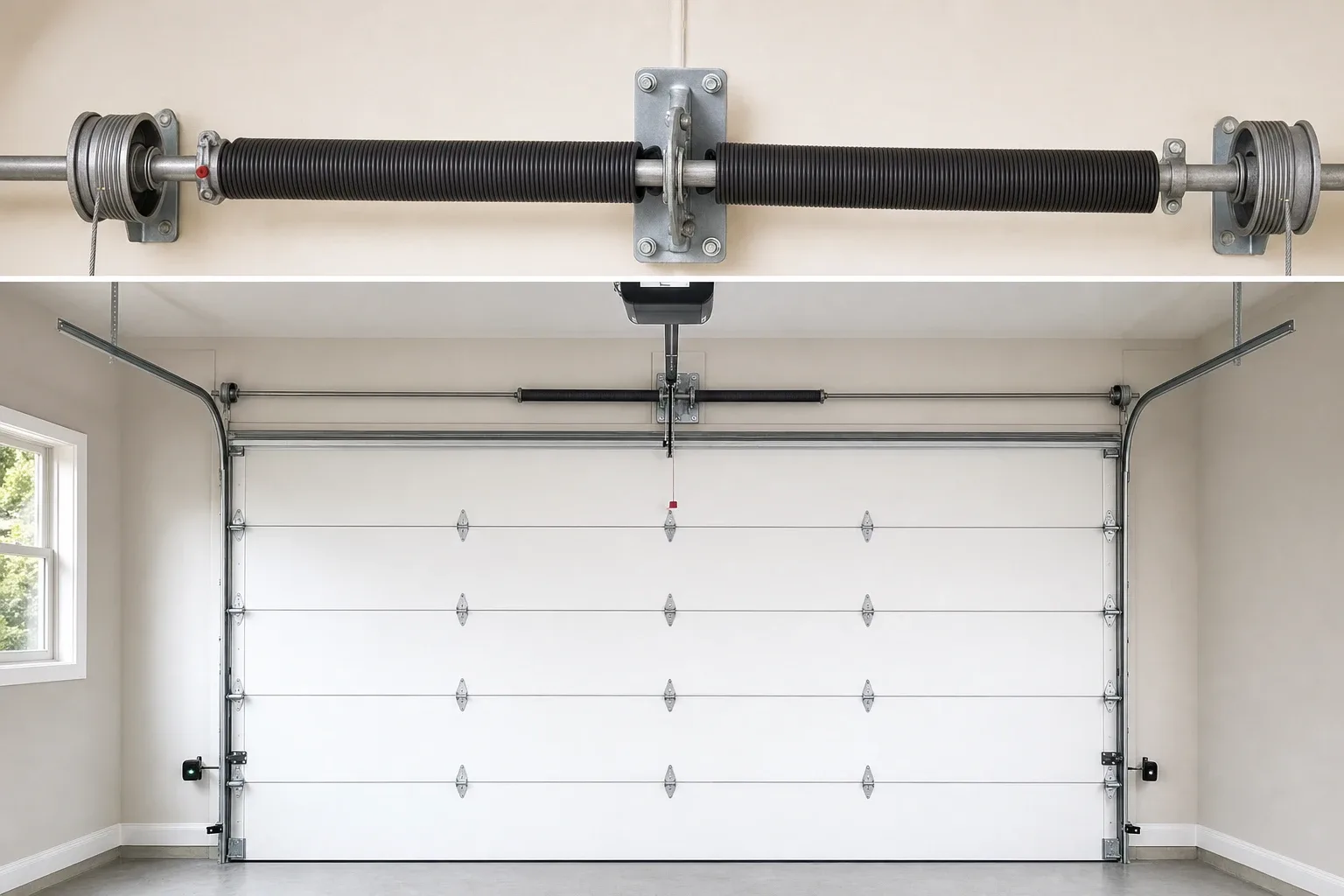
Airborne salt from ocean spray settles on exposed metal and accelerates oxidation, especially on unpainted or lightly coated steel hardware like springs, hinges, and roller shafts. Homes directly exposed to onshore wind, which describes much of Cape Cod, the Islands, and the South Coast, see this effect more than homes set back from the water.
Seasonal homes add a second factor: a garage that sits unused for stretches between visits can go a long time without anyone checking it, so corrosion and stiffness can advance further before anyone notices.
What to watch for
Visible rust on springs, hinges, or the track itself is the clearest sign. A door that starts squeaking, moving unevenly, or feels heavier than it used to can be a sign of a problem worth having inspected, even before rust is visible on the surface.
- Rust spots or pitting on springs, hinges, or track hardware.
- New squeaking, grinding, or uneven movement.
- A door that feels noticeably heavier or slower to respond than before.
Reducing corrosion risk between service visits
Keeping the door closed when it is not in use, keeping the tracks clear of salt residue and sand, lubricating as the manufacturer's instructions require, and having hardware inspected on a schedule rather than only after something fails all help. Clopay recommends cleaning and waxing a door's metal surfaces quarterly in coastal areas, rather than twice a year.
Published by Massachusetts Garage Pros, a regional brand of USA Garage Pros · Updated 2026-10-19