
The short answer
Massachusetts garage doors face a different stress in each season: fall is about preparing for cold, winter is about ice and snow load, spring is about thaw and moisture, and summer is about heat and humidity. A short check in each season can catch many problems before they become a repair call.
Fall: preparing for winter
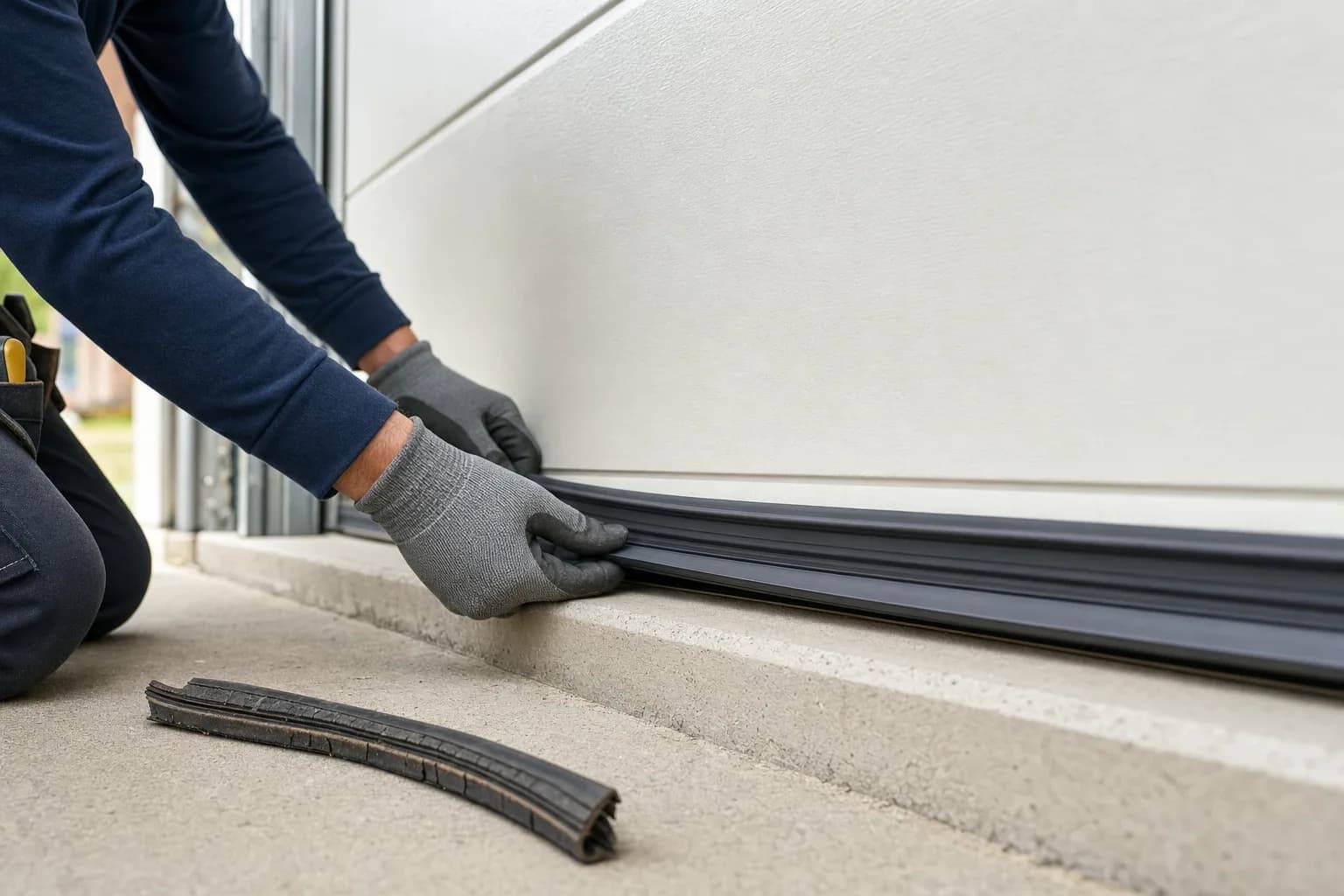
Before the first hard freeze, it's worth having the weatherseal, tracks, and hardware checked, since a worn seal or a stiff spring is far easier to address before winter than during a cold snap. This is also a reasonable time to discuss opener battery backup if winter power outages are a concern.
- Check that the bottom weatherseal is intact and sealing evenly.
- Look for early rust or stiffness in hinges and rollers.
- Test the auto-reverse safety feature by following the opener manufacturer's guidance; DASMA recommends testing it monthly, not just in the fall.
Winter: cold, snow, and ice
Keep the approach clear of loose snow when conditions are safe. Do not force a stuck or unusually heavy door. New resistance, noise or uneven movement needs assessment rather than an assumption that cold weather is harmless.
Spring: thaw and moisture
As snow and ice melt, road salt, sand, and grit tend to accumulate in the tracks and on hardware. A spring clean and inspection clears that residue before it accelerates wear, and it's a good time to have coastal homes check for winter corrosion specifically.
Summer: heat and humidity
Humidity can swell wood trim and jambs and leave condensation on the garage floor, both of which affect how the door seats and seals. Summer is also a practical time to schedule maintenance, since it avoids the seasonal rush that tends to hit right before winter.
Published by Massachusetts Garage Pros, a regional brand of USA Garage Pros · Updated 2026-10-19