
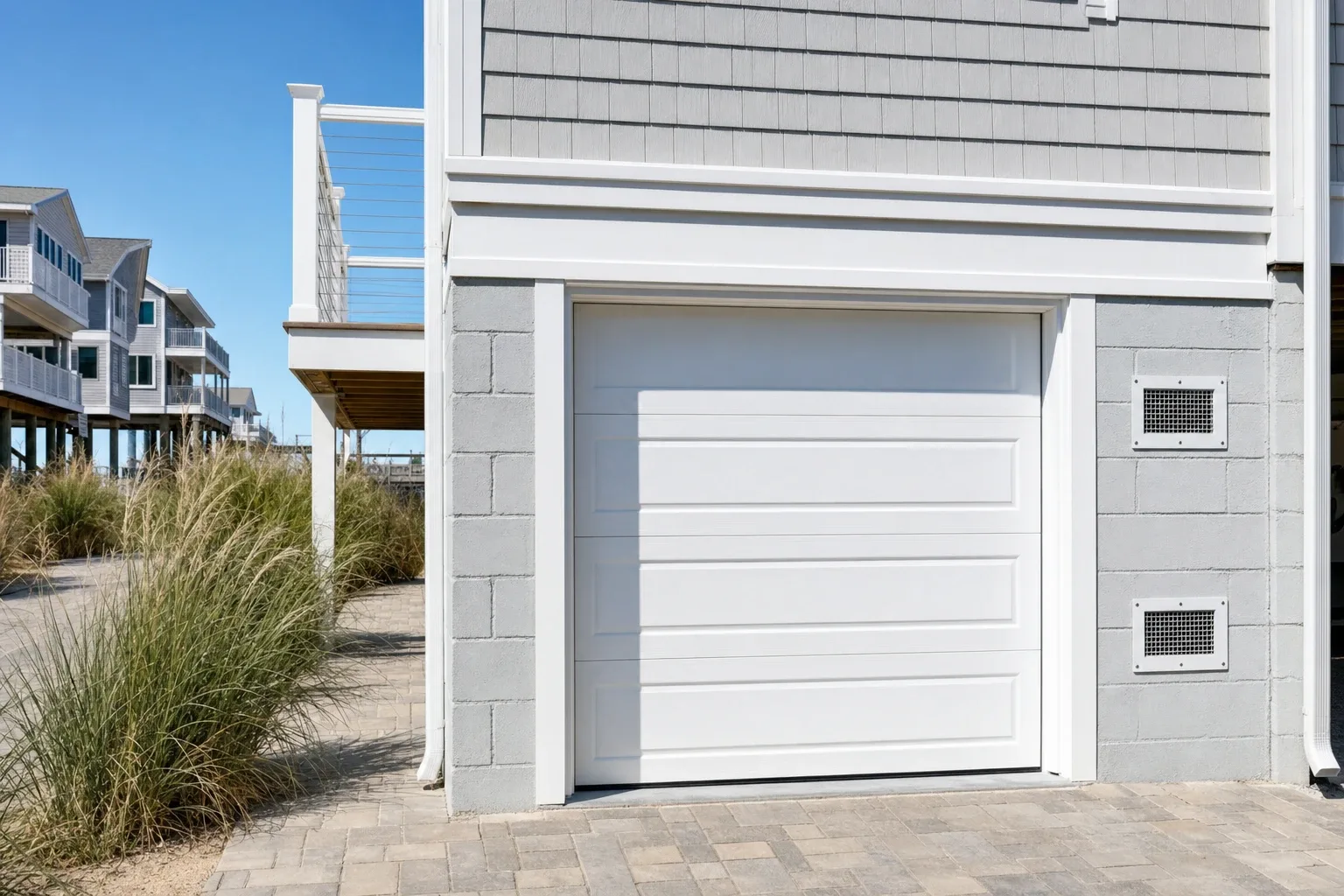
The short answer
Salt carried off the ocean and the back bays wears on garage door hardware anywhere from Sandy Hook to Cape May, and it's generally hardest on homes closest to open water. A door that starts dragging or squealing, or hardware showing rust before it's expected to, is worth having looked at rather than waiting for a part to give out.
Why Shore hardware wears faster
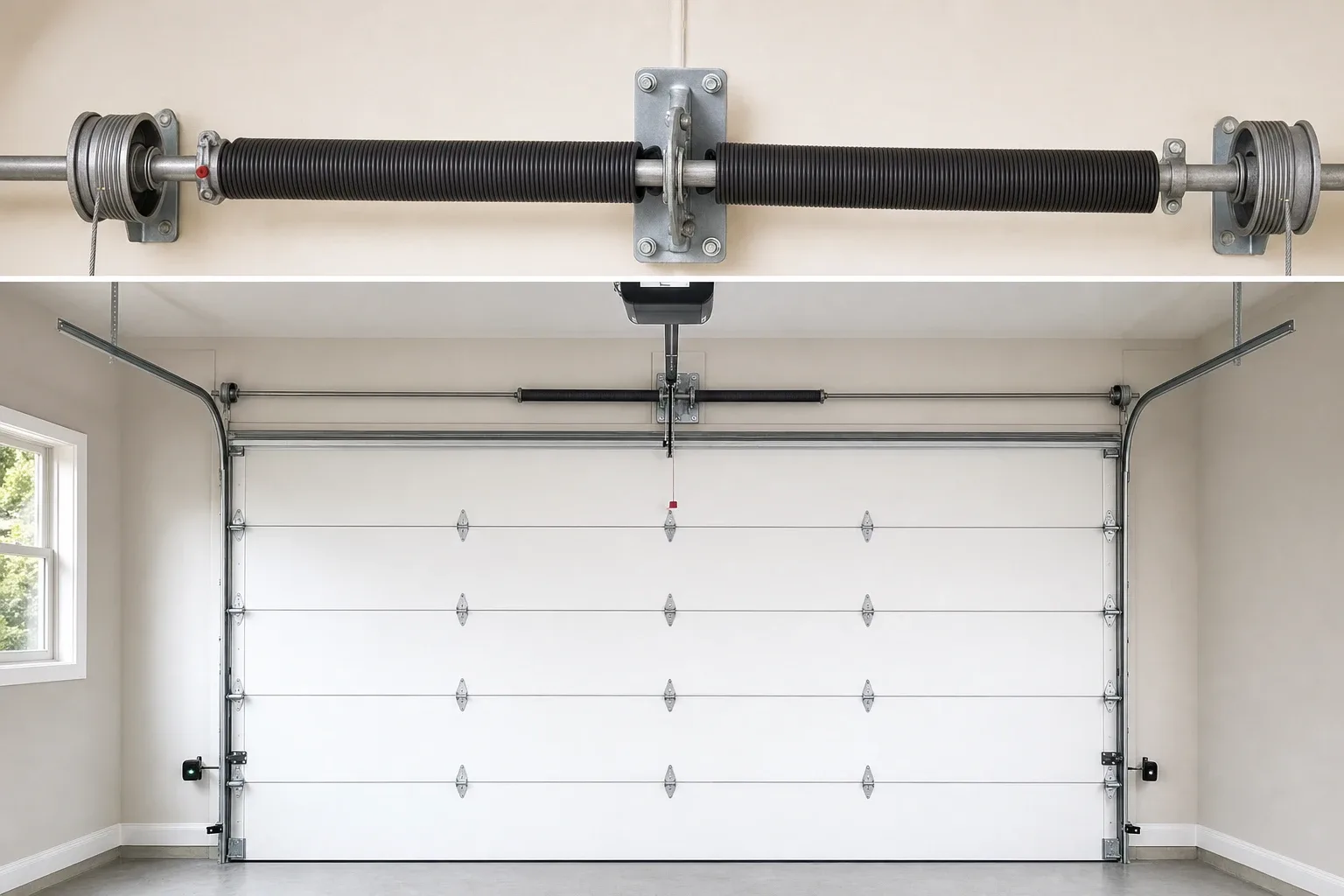
Salt riding on ocean wind settles on bare or thinly coated steel and speeds up rust, and homes closest to open ocean or bay water generally see the most exposure. Springs deserve particular attention: DASMA notes that rust reduces the effective area of spring wire and can create corrosion pits that shorten spring cycle life.
Part-time Shore homes add to the problem in a different way: corrosion that develops at a hinge or roller in the months between visits often isn't caught until someone's back at the property and the door is noticeably harder to open.
Signs worth checking for
A door that's begun dragging on the way up, squeaking somewhere in the track, or sitting unevenly in its opening is often corrosion working on a hinge or roller before any rust is visible from the driveway. Rust already showing on a spring coil or hinge plate usually means that part is overdue for a look.
- Rust or pitting on spring coils, hinge plates, or roller shafts.
- A door that drags, squeaks, or opens unevenly compared to how it used to.
- Corrosion visible on the track itself, not just on the door hardware.
Cutting down on corrosion between visits
Cleaning and waxing the door's metal surfaces to remove salt, keeping the door closed where possible, and having hardware checked on a set schedule instead of waiting for something to fail all slow the process down. Clopay recommends cleaning quarterly rather than twice a year in coastal regions, so Shore properties generally need a tighter schedule than a mainland New Jersey garage does.
Published by New Jersey Garage Pros, a regional brand of USA Garage Pros · Updated 2026-10-19