
The short answer
After a coastal storm, check the garage door for bent panels, a track pulled loose from the wall, or a door that no longer sits square in its opening before using the opener again. If the garage sits below the flood elevation and took on water, treat electrical components, including the opener, as a safety concern until they've been checked.
Common storm damage at the Shore
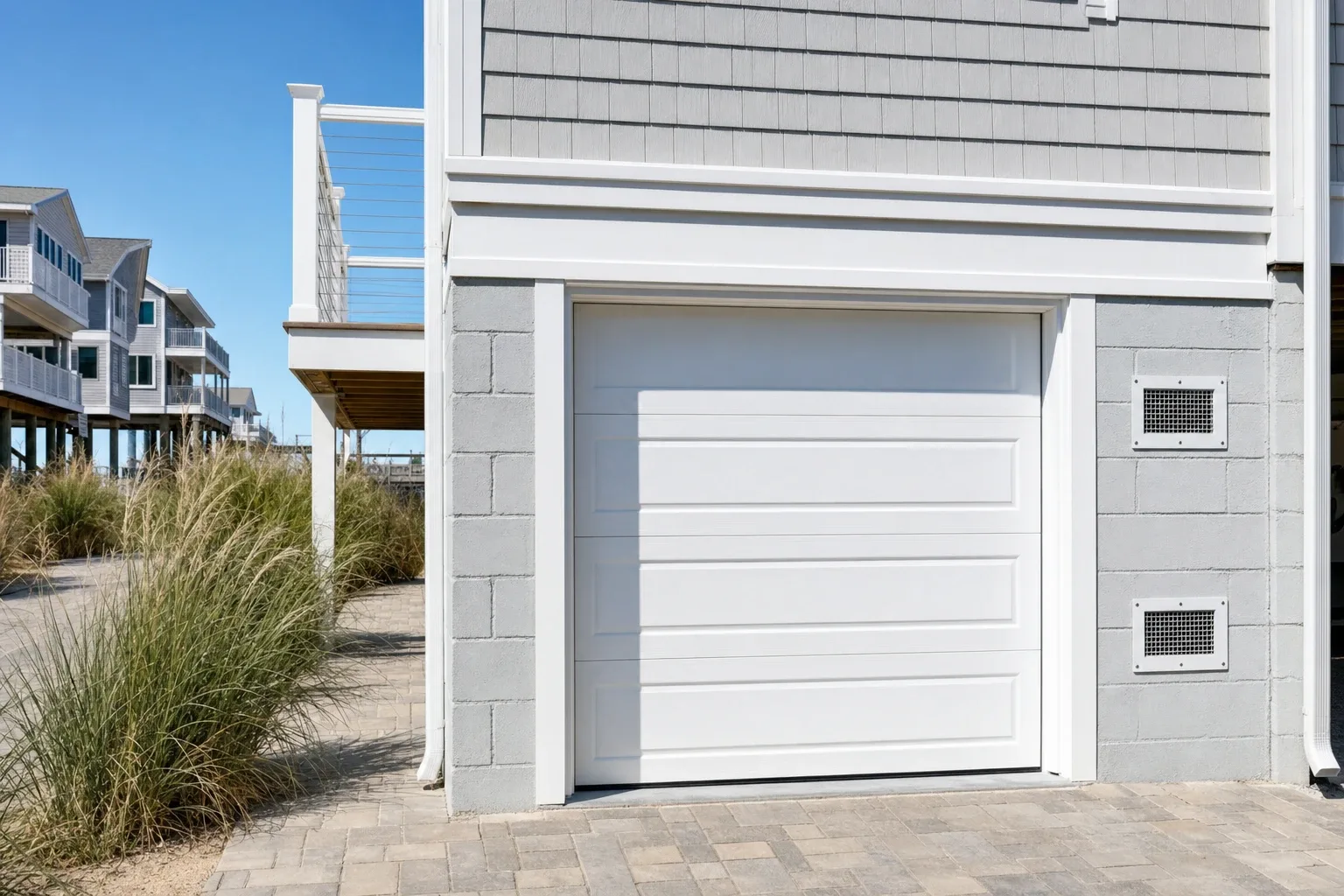
Coastal storms during hurricane season and strong nor'easters can bend or dent panels with wind-blown debris, pull a track loose from its wall anchors under wind pressure, or leave a door that no longer closes flush in its opening. Flooding is a separate risk for garages at or below the base flood elevation, where standing water can reach the bottom section of the door and any nearby electrical components.
What to check before using the door again
Look at the door from outside for visible bends, dents, or gaps where it no longer meets the frame evenly, and check that the track is still firmly anchored to the wall. If the garage took on floodwater, do not run the opener or touch electrical components until they've been checked; water-damaged electrical parts are a safety hazard, not just a repair inconvenience.
- Visible bends, dents, or gaps around the door.
- A track pulled loose from its wall anchors.
- Any sign the garage took on floodwater, especially near the opener or wiring.
When to request professional service
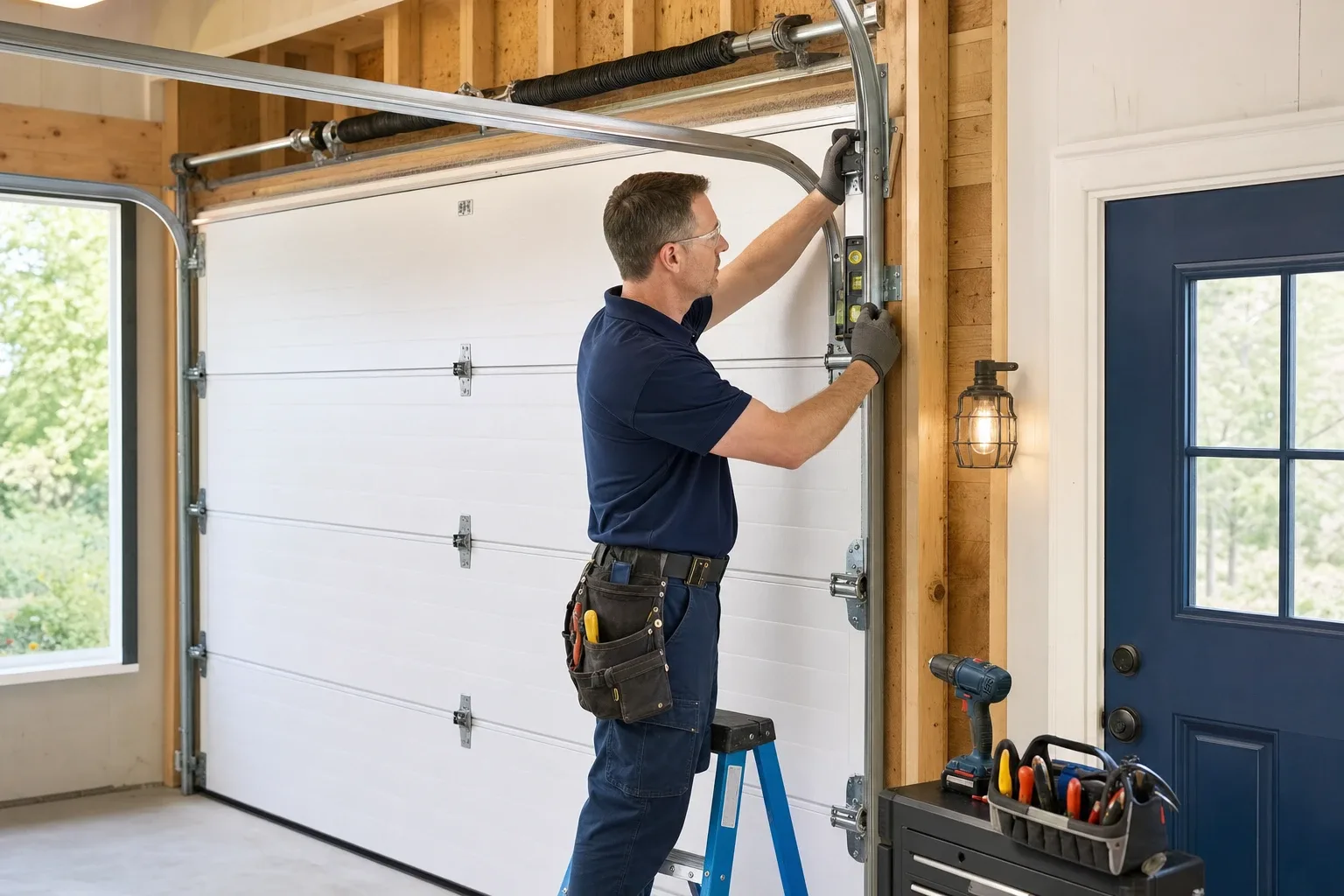
If the door is damaged, misaligned, or was exposed to floodwater, request service rather than trying to force the door or reset the opener yourself. A damaged track or panel under wind or water stress is not a homeowner repair.
Published by New Jersey Garage Pros, a regional brand of USA Garage Pros · Updated 2026-09-27