
Pennsylvania Garage Pros
Garage Door Replacement in Pennsylvania
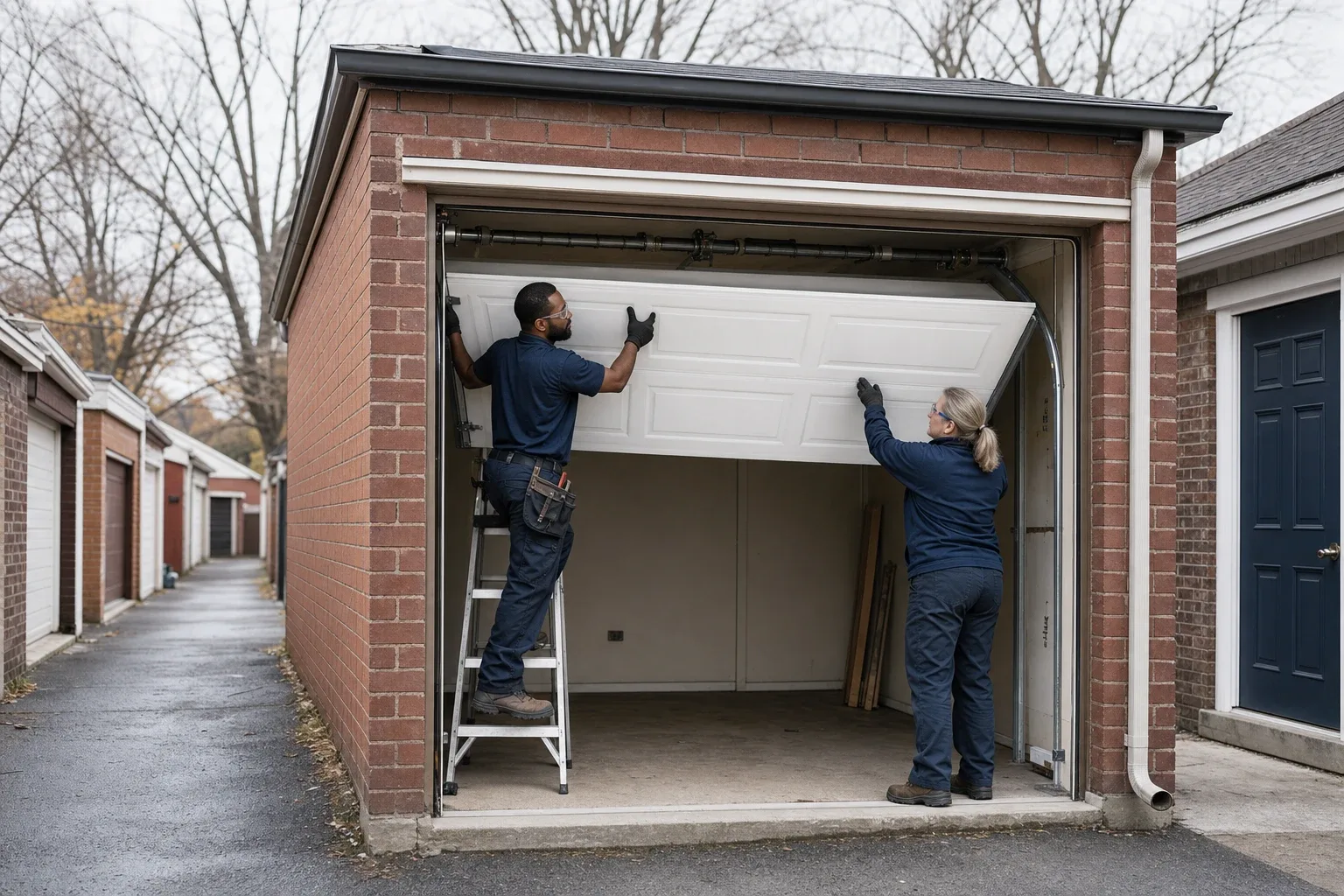
Replacing a door on an older Pennsylvania home, especially a detached garage built decades ago, often means addressing an out-of-square frame or settled foundation at the same time as the new door.
Replacement · Pennsylvania
Replacement for Pennsylvania homes
Replacing a door on an older Pennsylvania home is rarely just a swap. Detached garages built decades ago, particularly around Pittsburgh's hillside neighborhoods or on South Central Pennsylvania farmsteads, have often settled enough that the frame needs squaring up before a new door goes in.
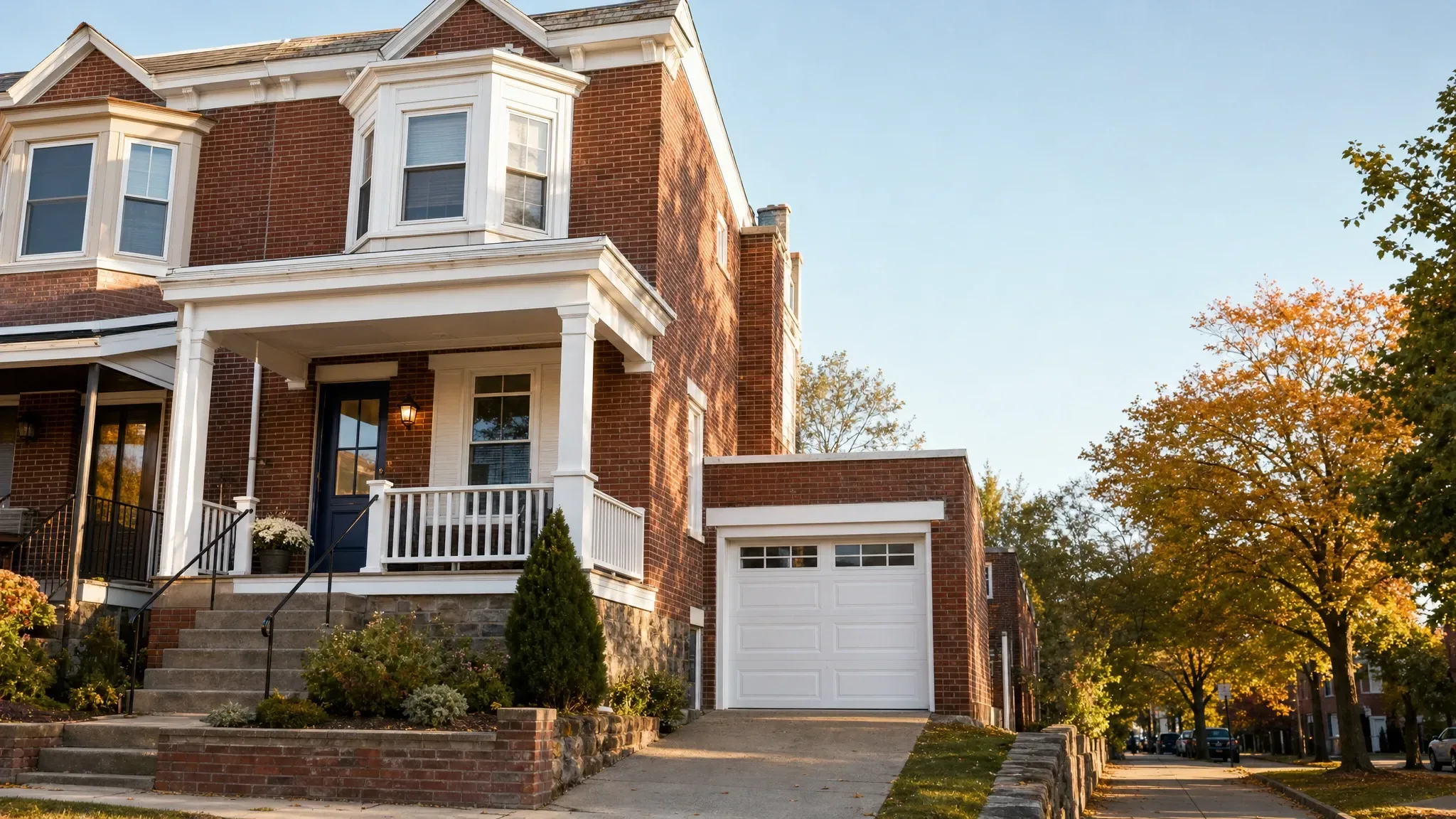
In Philadelphia's rowhome blocks, replacement can also mean working within a compact, sometimes shared alley opening rather than a standalone driveway, which shapes what size and style of door will actually work.
Statewide, freeze-thaw winters and Erie's heavier snow load are reasons homeowners often pair a replacement with better-insulated panels or updated weatherstripping rather than matching the old door exactly.
Pennsylvania
What's different in Pennsylvania
- 01
An out-of-square frame changes the plan
Settled foundations on older or hillside Pennsylvania properties can leave an opening slightly out of square, and addressing that during replacement helps the new door seal and operate properly.
- 02
Insulation matters more in unheated garages
A detached, unheated garage feels Pennsylvania's cold more directly, so replacement is a natural point to reconsider a panel's insulation value.
- 03
Older openings may need a nonstandard size
Rowhome, twin, and farmhouse garages built before modern standards sometimes require a custom or adjusted-size door rather than an off-the-shelf option.
Know the signs
When you need replacement
Common symptoms
- Door has multiple worn or damaged systems at once, such as springs, tracks, and panels together
- Panels are dented, cracked, warped, or rusted through in ways that affect how the door sits or seals
- Repairs have become frequent, or the same problems keep coming back
- Door no longer matches a home's style, insulation needs, or security expectations
What the service covers
- Removal of the existing door, tracks, and spring system
- Inspection of the opening, jambs, and header before the new door goes in
- Installation of a new door with tracks and hardware sized to its weight
- Evaluation of the existing opener for reuse or replacement
The process
How the work is done
- 1
Assess the current door and opening
The existing door, tracks, and opening are inspected to confirm replacement is the right call and to plan for the new door's fit.
- 2
Remove the old door and hardware
The door, tracks, and spring system are safely taken down, with the spring's stored energy released using proper equipment before removal.
- 3
Install the new door and hardware
New tracks and a spring system matched to the new door's weight are mounted, and the door panels are hung and connected.
- 4
Balance, test, and finish
The new door is balanced, cycled for smooth even travel, and checked for a proper seal along the sides, top, and bottom.
Cost factors
What affects the price
Prices aren't published because they depend on your door, the parts involved and the access to the work. These are the things that move the cost — ask for the price before any work starts.
- New door material and style
- Insulated, multi-layer, and higher-end finishes use more material than a basic steel door.
- Reusable vs. new hardware
- Whether the opener, tracks, or other hardware can be reused affects how much new material is needed.
- Condition of the opening
- An opening needing jamb or header repair before the new door goes in adds time.
- Disposal of the old door
- Removing and hauling away the old door and hardware is part of the scope.
Safety first
- Removing an old door's spring system involves releasing stored energy and should only be done by someone trained to do it safely.
- Never stand under a door or its tracks while the old system is being taken down or the new one is being fitted.
- Keep the work area clear of children and pets while tools, panels, and open hardware are present.
Safe things to check first
- Look at the current door's panels for cracks, rust-through, or warping, and note which sections are affected.
- With the opener disconnected, watch whether the door stays roughly in place when raised partway, or drops and rises on its own — either can suggest the balance is off.
Answers
Replacement questions in Pennsylvania
Should I replace my garage door instead of repairing it?
That depends on the door's age, the extent of the damage, and whether the frame itself has shifted, which is common on older or hillside Pennsylvania properties. A technician can weigh those factors during an inspection.
Can a replacement door fix an out-of-square opening on my Pittsburgh-area garage?
Replacement is often the point where a settled or out-of-square frame gets addressed, since fitting a new door correctly usually requires squaring up the opening first.
Related
Related services
Pennsylvania Garage Pros
Request service
Send the details in two quick steps. This isn't a booking — we contact you to confirm the problem, the timing and the location first.
Sources
- Technical Data Sheets — Door & Access Systems Manufacturers Association (DASMA) (accessed 2026-09-24)