
Pennsylvania Garage Pros
Garage Door Roller Replacement in Pennsylvania
Repeated freezing and thawing makes nylon rollers brittle faster in Pennsylvania's climate, and stiff or cracked rollers are one of the more common reasons a door starts binding or grinding in the tracks.
Roller Replacement · Pennsylvania
Roller Replacement for Pennsylvania homes
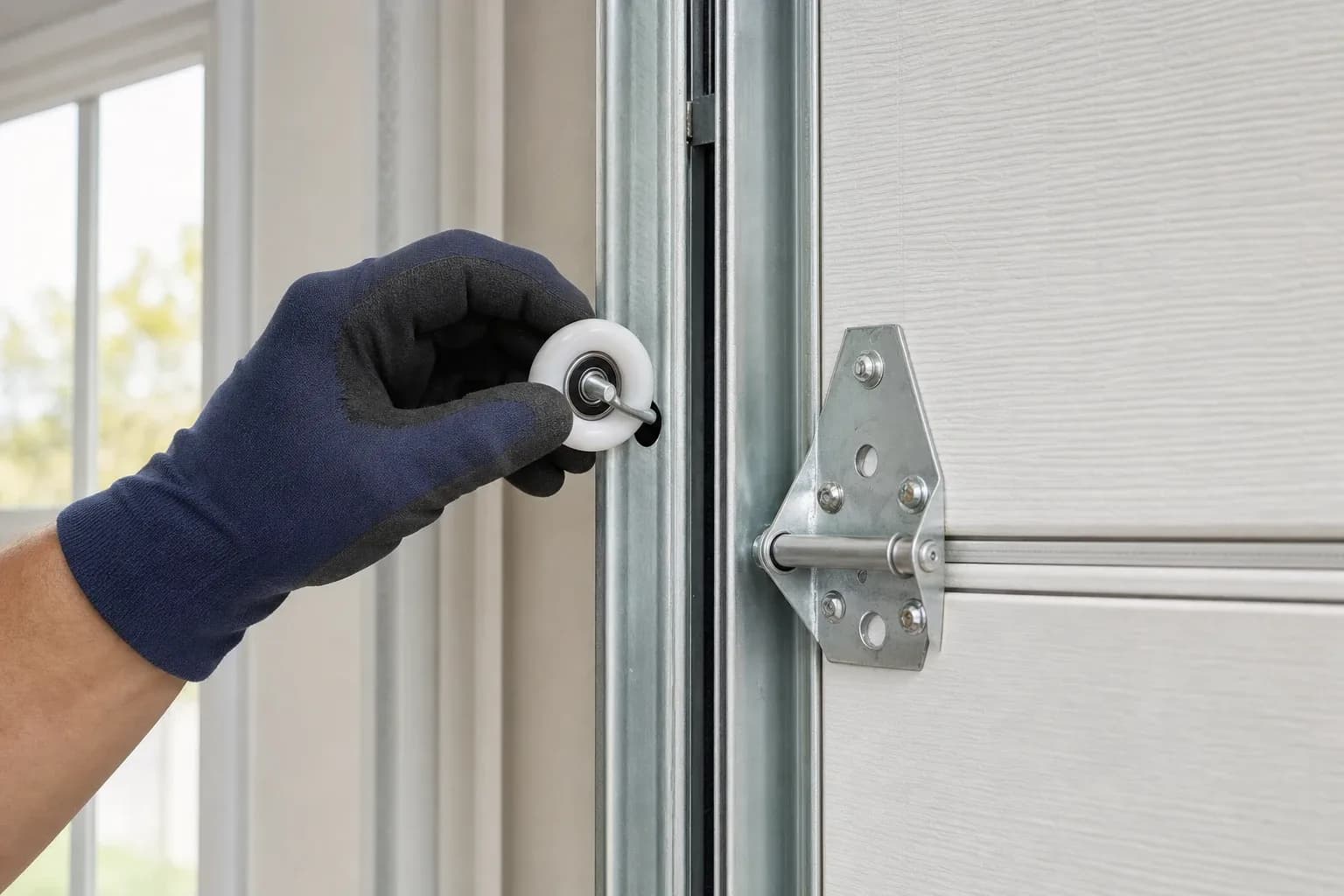
Nylon rollers rely on some flexibility to move smoothly through the track, and Pennsylvania's repeated freeze-thaw cycling works against that. Cold makes the material more brittle over time, and a roller that's been quietly stiffening for a season or two often announces itself with a new grinding or binding sound.
Rollers near the bottom of the door, closer to road salt and moisture tracked in from outside, tend to show wear before the ones higher up the track.
Pennsylvania
What's different in Pennsylvania
- 01
Sound often comes before failure
A grinding, squeaking, or binding noise is frequently the first sign of a worn roller, and catching it before the roller cracks fully can prevent a bigger repair.
- 02
Lower rollers face more exposure
The bottom rollers on a Pennsylvania door sit closest to the slush and road grime tracked in off the driveway, so they typically need replacing well before the rollers higher up the track do.
- 03
Replacement is a good time to check the track
Since a damaged roller can also mean a track has been rubbing or slightly bent, a roller replacement visit is a reasonable point to have the track checked as well.
Know the signs
When you need roller replacement
Common symptoms
- Loud rumbling, squeaking, or grinding as the door moves
- Visible cracks, flat spots, or missing pieces on a roller wheel
- Door moves roughly or catches at specific points along the track
- Rollers look worn unevenly compared to others on the same door
What the service covers
- Inspection of all rollers, hinges, and the tracks they ride in
- Removal of worn or damaged rollers one hinge point at a time
- Installation of new rollers seated correctly in the track
- Lubrication and a full-cycle test for smooth, quiet travel
The process
How the work is done
- 1
Inspect all rollers and hinges
Each roller is checked for cracking, flat spots, and bearing wear, along with the hinges and track sections they ride in.
- 2
Remove worn rollers one at a time
Rollers are replaced one hinge point at a time so the door stays supported throughout the process.
- 3
Seat new rollers in the track
Replacement rollers are fitted to the hinge and guided into the track so they sit and roll correctly.
- 4
Lubricate and test
Hinges and rollers are lubricated and the door is cycled to confirm quiet, even travel.
Cost factors
What affects the price
Prices aren't published because they depend on your door, the parts involved and the access to the work. These are the things that move the cost — ask for the price before any work starts.
- Number of rollers replaced
- A door typically has multiple rollers, and it's common to replace several that are wearing at a similar rate.
- Roller material
- Nylon rollers with sealed bearings run quieter and typically last longer than plastic rollers, which affects material cost.
- Track condition
- Rollers that have been grinding for a while can leave the tracks needing cleaning or minor adjustment too.
- Door usage
- A door that cycles frequently wears rollers faster and may benefit from a higher-cycle roller.
Safety first
- Rollers near the bottom of the door are removed one at a time while the door is supported, since taking out too many at once can let a section shift unexpectedly.
- Keep fingers clear of the track and hinge points while rollers are being removed or fitted.
- Avoid operating the door with a roller visibly popped out of the track until it's been addressed.
Safe things to check first
- Listen for a rumbling or grinding sound as the door moves and note whether it happens at the same spot each time.
- Look at the rollers you can see from the ground for obvious cracks or flat spots on the wheel.
Answers
Roller Replacement questions in Pennsylvania
What does it mean if my garage door is making a grinding noise?
A grinding or binding sound often points to a worn or cracked roller, especially in Pennsylvania's climate where repeated freezing and thawing makes nylon rollers brittle faster than in a milder climate.
Do garage door rollers wear out faster near the bottom of the door?
Often, yes. Rollers closer to the ground pick up more road salt, moisture, and debris carried in from outside, which can accelerate wear compared with rollers higher up the track.
Related
Related services
Pennsylvania Garage Pros
Request service
Send the details in two quick steps. This isn't a booking — we contact you to confirm the problem, the timing and the location first.
Sources
- Technical Data Sheets — Door & Access Systems Manufacturers Association (DASMA) (accessed 2026-09-24)