
The short answer
A garage door freezes to the floor when melted snow, ice, or condensation under the bottom weatherstrip refreezes during a cold snap, gluing the seal to the concrete slab until it's warmed or gently freed.
Why It Happens
Wisconsin's freeze-thaw pattern is the main cause: slush and meltwater from tires or a shoveled path sit under the bottom seal during a warmer afternoon, then refreeze overnight as temperatures drop.
Condensation in a heated attached garage may also contribute, especially on nights with a sharp temperature drop.
How to Free It Safely
Do not force the opener repeatedly. Forcing a frozen door can rip the bottom weatherseal, and the cables and springs are already under high tension.
Do not force the opener or pry the door loose. Keep electrical appliances away from meltwater. Follow the door manufacturer’s thawing guidance, keep the area dry to prevent refreezing, and request service if the seal cannot be released safely.
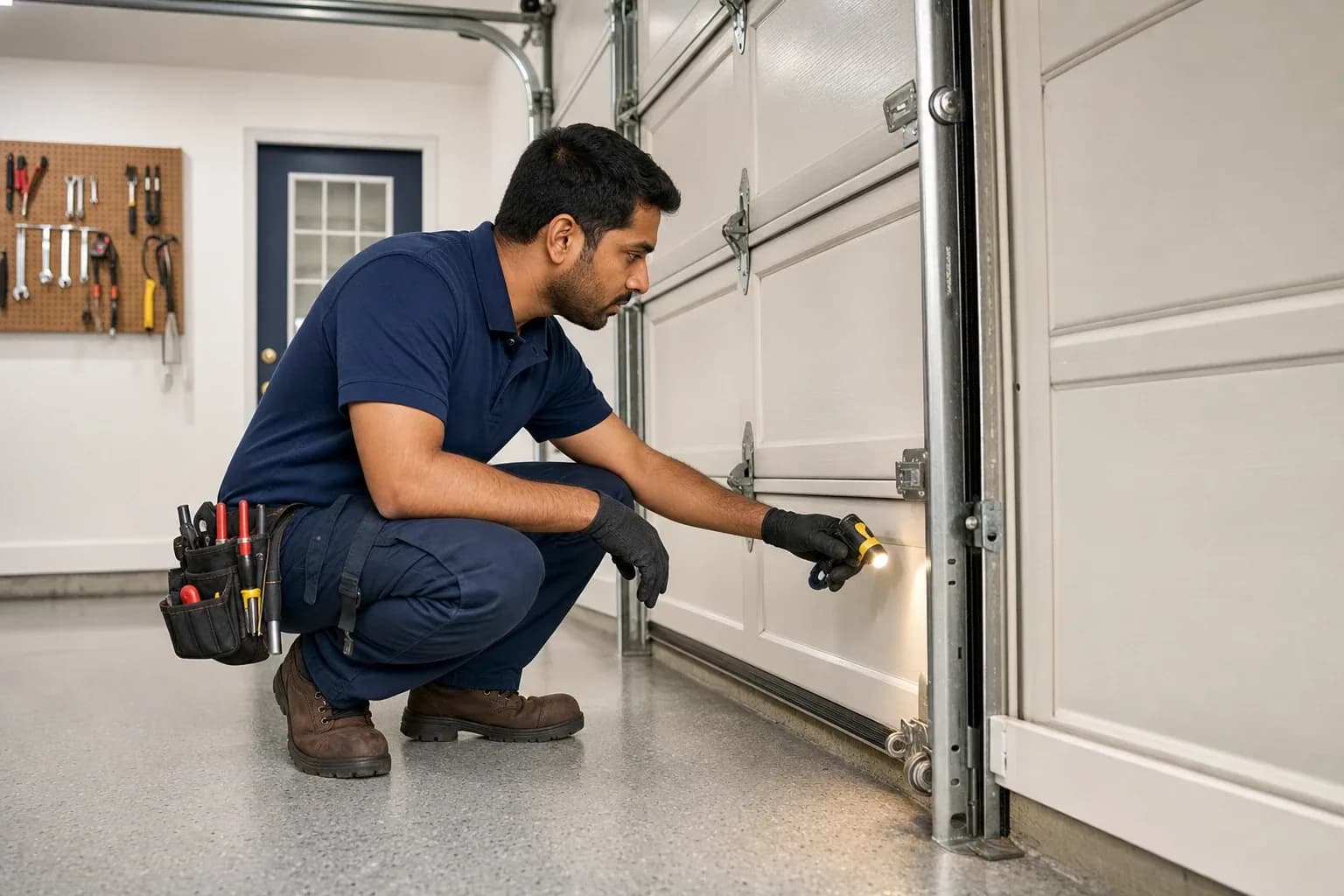
If the door still won't budge, or if you notice a bent track, a loose cable, or the spring assembly looks off, stop and call a professional rather than prying near the bottom corners where the cables anchor.
Reducing It Going Forward
Keeping the bottom seal in good condition and the area under the door clean and dry reduces how often this happens.
- Keep the slab in front of the door clear of ice-melt puddles overnight
- Replace a bottom seal once it's visibly cracked or flattened
- Consider a threshold seal if drifting snow is a recurring issue
Published by Wisconsin Garage Pros, a regional brand of USA Garage Pros · Updated 2026-10-19