
Arizona Garage Pros
Garage Door Panel Replacement in Arizona
Sun-facing panels can fade, and a dark color on insulated steel in direct sun raises the risk of bowing. A bowed section may call for reinforcement or a lighter finish rather than a like-for-like swap.
Panel Replacement · Arizona
Panel Replacement for Arizona homes
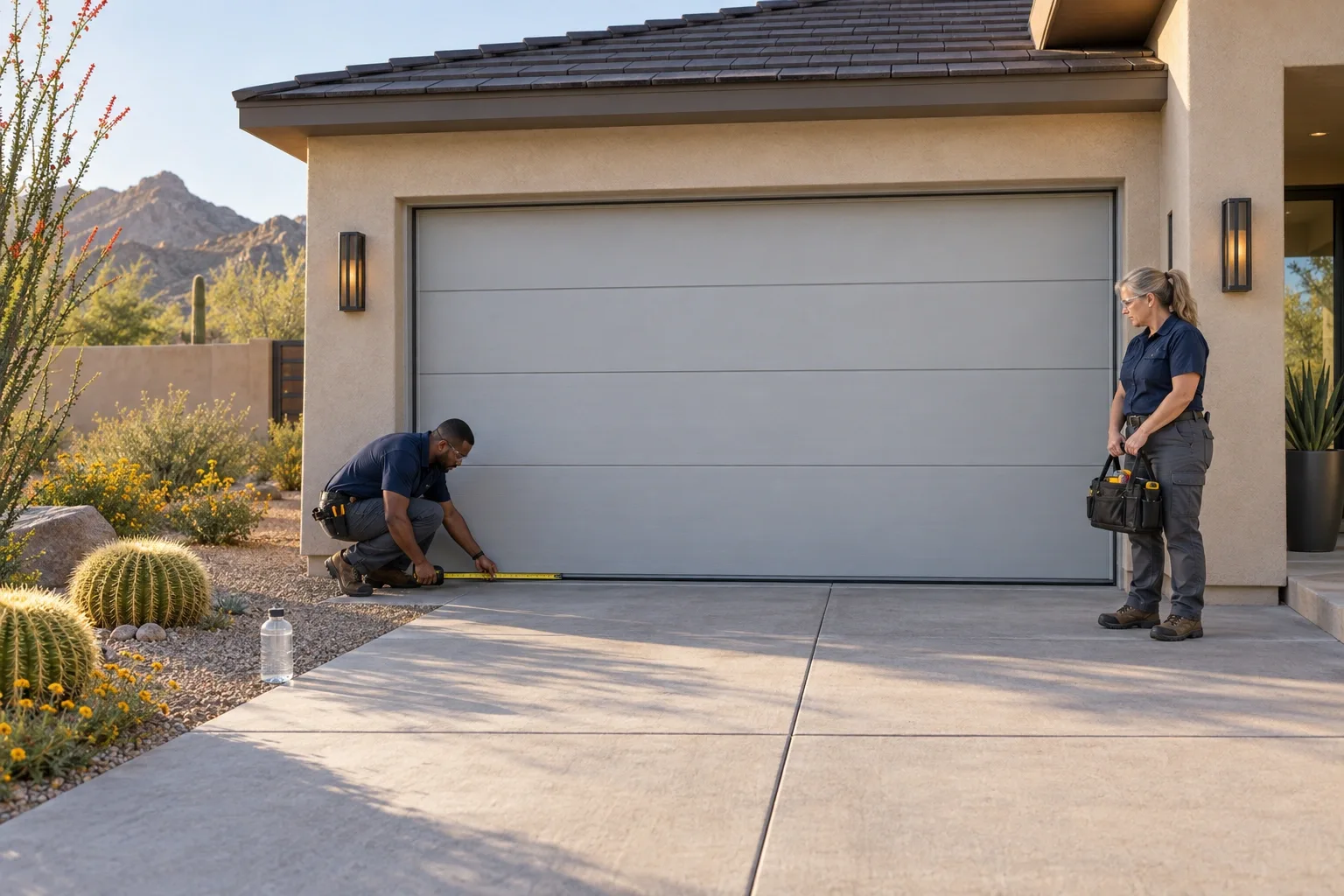
Sun is the constant on an Arizona garage door, and a door face takes heavy exposure in the same months heat peaks. Thermal bowing is an inherent trait of insulated steel doors rather than a defect, and darker colors, wider doors, a large temperature difference between the two skins and sun-facing walls, south worse than north, make it worse.
That makes panel replacement here as much about appearance and approvals as about damage. A new section's color and design often need association sign-off before anything is ordered, and Phoenix has 36 residential historic districts under preservation overlay zoning, where exterior alterations go through city review.
Arizona
What's different in Arizona
- 01
Dark Colors and Finish Rules
At least one manufacturer's finish instructions rule out very dark colors and require solar-reflective paint for mid-dark ones. Check the specific door's finish guidance before choosing a color for one section.
- 02
Weight After Paint or Add-Ons
Paint or added components can push a door past the weight its counterbalance was set for. A door that feels heavier after a refinish or a panel swap should be checked by a trained technician, who measures the weight with the counterbalance disabled.
Know the signs
When you need panel replacement
Common symptoms
- A dent, crack, or hole in one or more panels
- Rust that has worked through the metal on a lower panel
- A panel that's bowed, warped, or no longer sits flush with its neighbors
- Impact damage from a vehicle, ladder, or falling object
What the service covers
- Inspection of the damaged panel and identification of the door's make and model
- Sourcing a matching replacement panel where available
- Removal of the damaged section and hardware transfer to the new panel
- Reinstallation, alignment check, and a full-cycle test
The process
How the work is done
- 1
Identify the door and damage
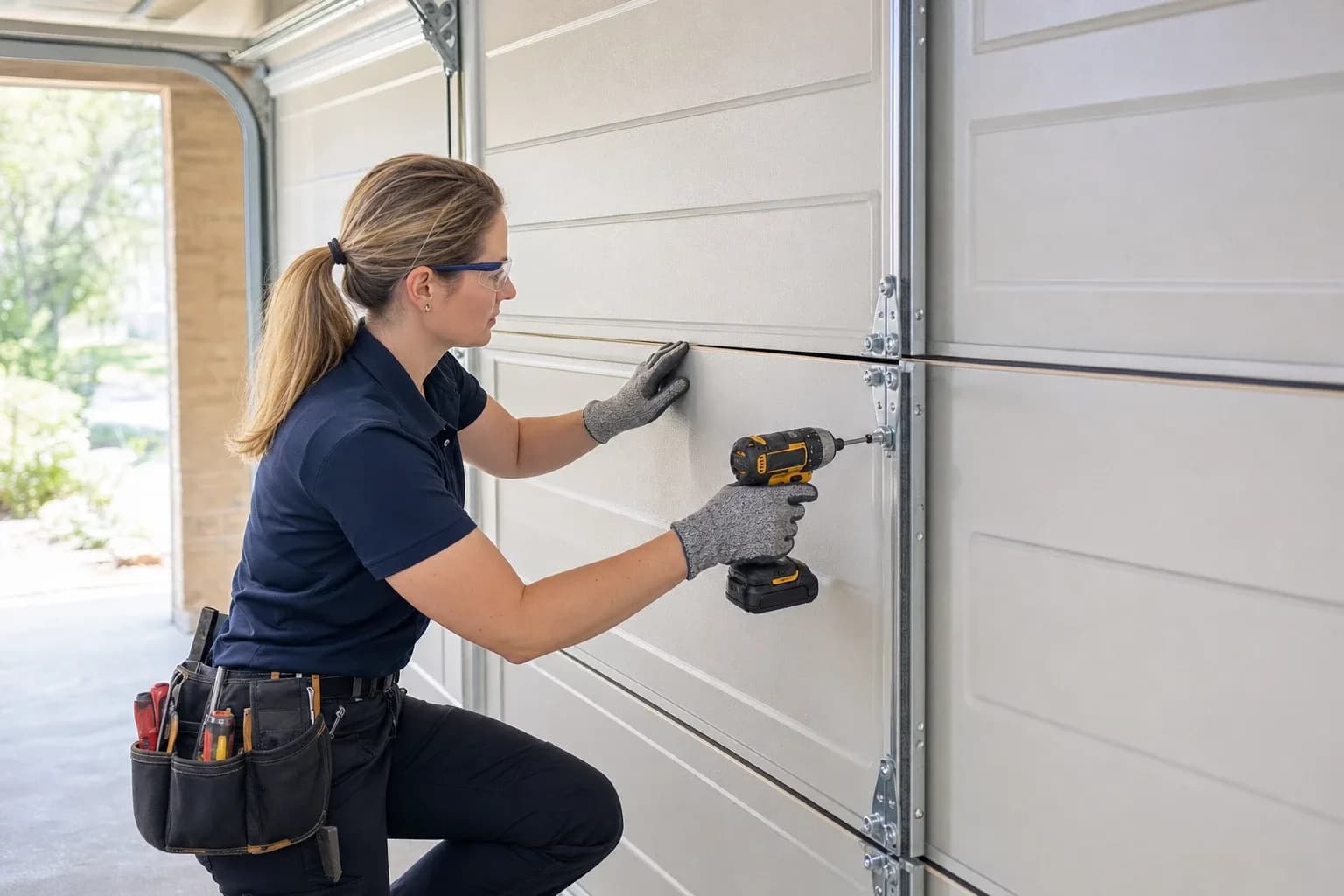
The door's manufacturer, model, and panel profile are identified to determine whether a matching replacement section is available.
- 2
Remove the damaged panel
The affected section is unhinged and removed while the door's other sections and hardware stay supported.
- 3
Fit the replacement panel
Hardware from the old panel, such as hinges, rollers, and end caps, is transferred to the new one, which is then set into place.
- 4
Align and test
The door is checked for even alignment across all sections and cycled to confirm smooth travel and a proper seal.
Cost factors
What affects the price
Prices aren't published because they depend on your door, the parts involved and the access to the work. These are the things that move the cost — ask for the price before any work starts.
- Panel availability
- An exact match depends on the door's manufacturer, model, and age; some panels are easier to source than others.
- Number of panels affected
- Damage to a single section costs less to correct than damage spread across multiple sections.
- Color and finish matching
- Sun fading on the rest of the door can make a brand-new panel stand out even if the profile matches.
- Hardware condition
- Hinges, rollers, or end caps that are also damaged in the affected area may need replacing along with the panel.
Safety first
- Keep hands clear of hinge points and section seams while a panel is being removed or fitted.
- Do not operate the door with a section removed or only partially secured.
- If a panel is damaged near the bottom corner where a lift cable attaches, treat the cable as compromised and avoid using the door until it's inspected.
Safe things to check first
- Note which panel or panels are affected and whether the damage is a shallow dent or has gone all the way through the material.
- Check whether the damaged section still sits flush with the panels above and below it, or if there's a visible gap.
Answers
Panel Replacement questions in Arizona
Why does one section of my garage door look bowed in the afternoon sun?
Thermal bowing is a known trait of insulated bonded-core steel doors, worse with dark colors, wide doors and sun-facing exposure. Because it is a temperature effect rather than a dent or crack, note whether the bow changes through the day when describing it to a technician.
Can I replace just one damaged garage door section?
Sometimes. A single section can be swapped when the same door model's section is available and matches, but on discontinued or heavily sun-faded doors matching color and profile can be difficult and replacing the whole door may be more practical. A technician can judge from the actual door.
Related
Related services
Arizona Garage Pros
Request service
Send the details in two quick steps. This isn't a booking — we contact you to confirm the problem, the timing and the location first.
Sources
- Technical Data Sheets — Door & Access Systems Manufacturers Association (DASMA) (accessed 2026-09-24)