
Arizona Garage Pros
Garage Door Replacement in Arizona
A replacement door is the chance to plan for sun: a dark finish on sun-facing insulated steel raises the odds of bowing, and any energy claim should cite the tested U-factor of the whole door assembly, not a section's R-value.
Replacement · Arizona
Replacement for Arizona homes
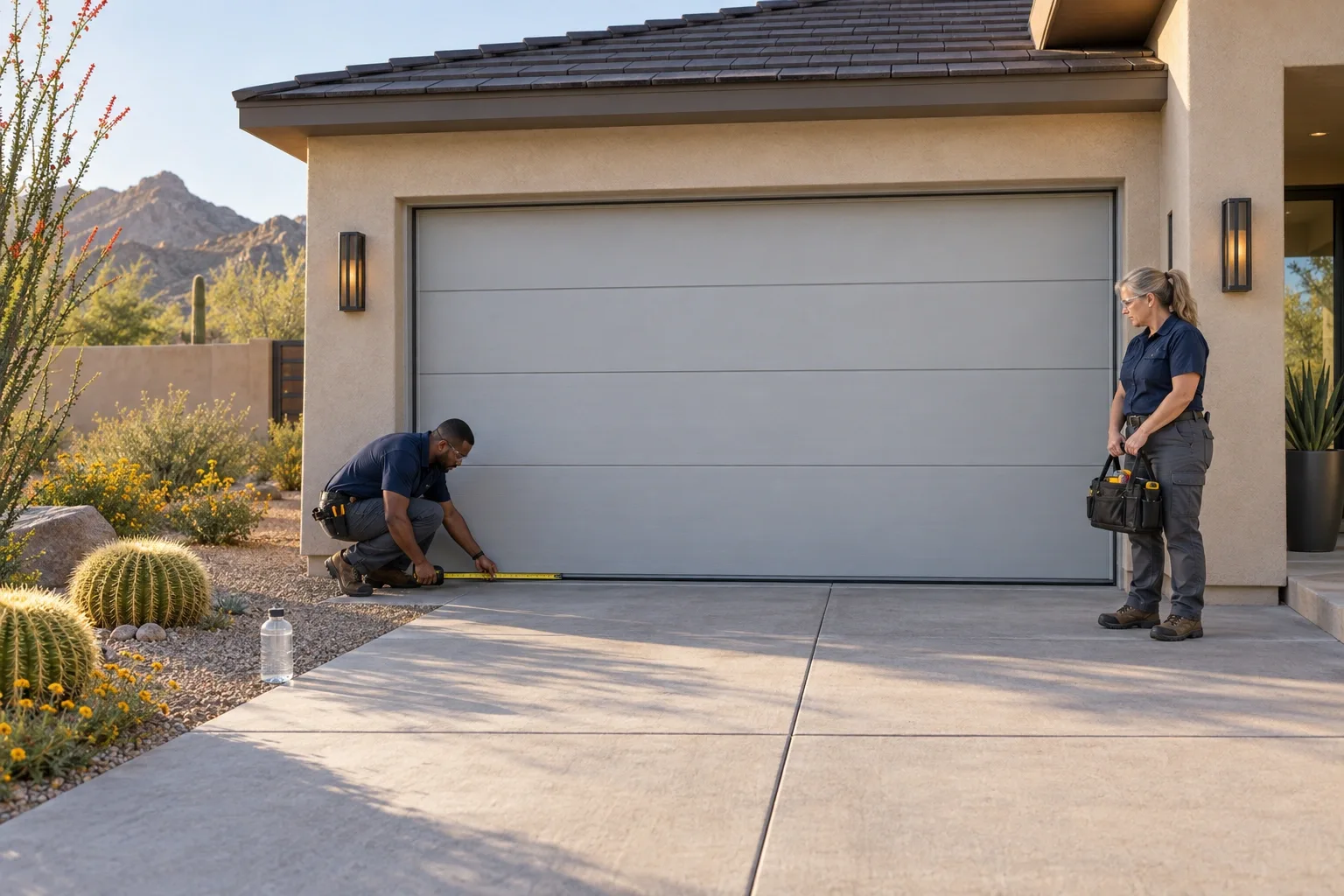
Sun drives most replacement decisions in Arizona. Insulated steel doors bow more with darker colors, wider openings and sun-facing exposure, with south-facing doors more prone than north-facing ones, so color and orientation belong on the checklist alongside panel style.
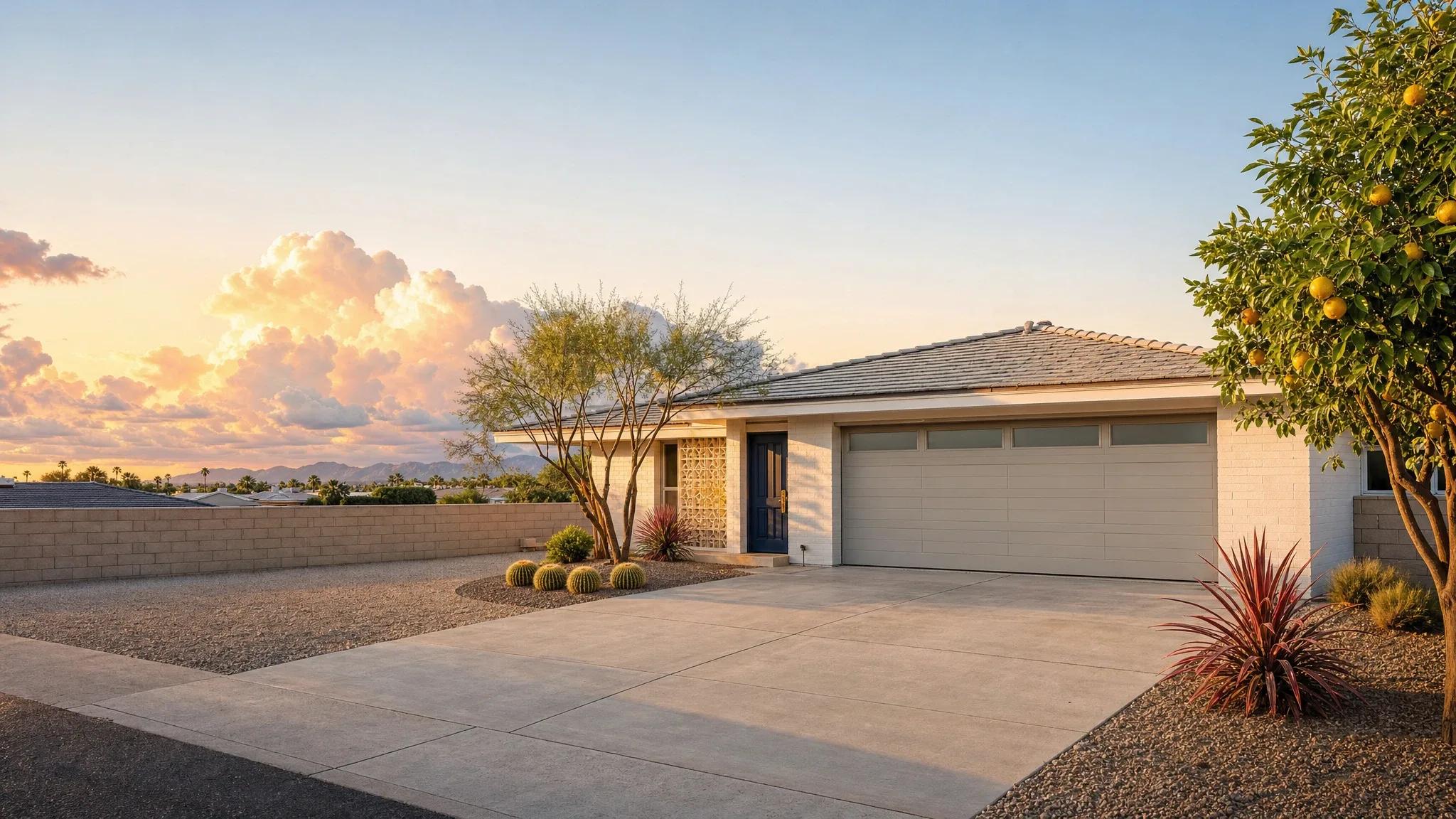
Older neighborhoods add a design question. Tucson's historic-styles guide describes Spanish Colonial Revival houses with red clay tile roofs and arched openings, Pueblo Revival houses with earth-colored stucco, and Ranch and Mid-Century homes with garages or carports under the main roof. A replacement looks right when its panel pattern, windows and color respect those lines.
Arizona
What's different in Arizona
- 01
Bowing Is a Known Trait of Insulated Steel
Thermal bowing is an inherent trait of insulated steel-skin doors, not a defect, and back-of-door struts or other maker-recommended measures can reduce it. A large temperature difference between the two skins makes it worse.
- 02
Historic Districts May Add Design Review
Phoenix lists 36 residential historic districts with Historic Preservation overlay zoning, and Tucson's six Historic Preservation Zones apply design review to exterior alterations, even work that needs no building permit. Neither description names garage doors, so a call to the city's preservation office before ordering is the reliable check.
Know the signs
When you need replacement
Common symptoms
- Door has multiple worn or damaged systems at once, such as springs, tracks, and panels together
- Panels are dented, cracked, warped, or rusted through in ways that affect how the door sits or seals
- Repairs have become frequent, or the same problems keep coming back
- Door no longer matches a home's style, insulation needs, or security expectations
What the service covers
- Removal of the existing door, tracks, and spring system
- Inspection of the opening, jambs, and header before the new door goes in
- Installation of a new door with tracks and hardware sized to its weight
- Evaluation of the existing opener for reuse or replacement
The process
How the work is done
- 1
Assess the current door and opening
The existing door, tracks, and opening are inspected to confirm replacement is the right call and to plan for the new door's fit.
- 2
Remove the old door and hardware
The door, tracks, and spring system are safely taken down, with the spring's stored energy released using proper equipment before removal.
- 3
Install the new door and hardware
New tracks and a spring system matched to the new door's weight are mounted, and the door panels are hung and connected.
- 4
Balance, test, and finish
The new door is balanced, cycled for smooth even travel, and checked for a proper seal along the sides, top, and bottom.
Cost factors
What affects the price
Prices aren't published because they depend on your door, the parts involved and the access to the work. These are the things that move the cost — ask for the price before any work starts.
- New door material and style
- Insulated, multi-layer, and higher-end finishes use more material than a basic steel door.
- Reusable vs. new hardware
- Whether the opener, tracks, or other hardware can be reused affects how much new material is needed.
- Condition of the opening
- An opening needing jamb or header repair before the new door goes in adds time.
- Disposal of the old door
- Removing and hauling away the old door and hardware is part of the scope.
Safety first
- Removing an old door's spring system involves releasing stored energy and should only be done by someone trained to do it safely.
- Never stand under a door or its tracks while the old system is being taken down or the new one is being fitted.
- Keep the work area clear of children and pets while tools, panels, and open hardware are present.
Safe things to check first
- Look at the current door's panels for cracks, rust-through, or warping, and note which sections are affected.
- With the opener disconnected, watch whether the door stays roughly in place when raised partway, or drops and rises on its own — either can suggest the balance is off.
Local pages
Replacement by city
Answers
Replacement questions in Arizona
Are dark garage door colors a problem in Arizona?
They can be. Darker color and sun-facing exposure raise the odds of bowing, and at least one manufacturer's painting instructions bar very dark colors and require solar-reflective paint for many darker shades. Check the door's finish guidance and any HOA color rules before choosing a shade.
How should insulated garage doors be compared for Arizona?
Compare the tested U-factor of the complete door assembly; a section's calculated R-value ignores joints, stiles and seals and cannot be converted to a U-factor. Arizona spans climate zones from hot-dry in Maricopa, Pima and Pinal counties to cold in Coconino County, so Phoenix's choice is not Flagstaff's.
Related
Related services
Arizona Garage Pros
Request service
Send the details in two quick steps. This isn't a booking — we contact you to confirm the problem, the timing and the location first.
Sources
- Technical Data Sheets — Door & Access Systems Manufacturers Association (DASMA) (accessed 2026-09-24)