
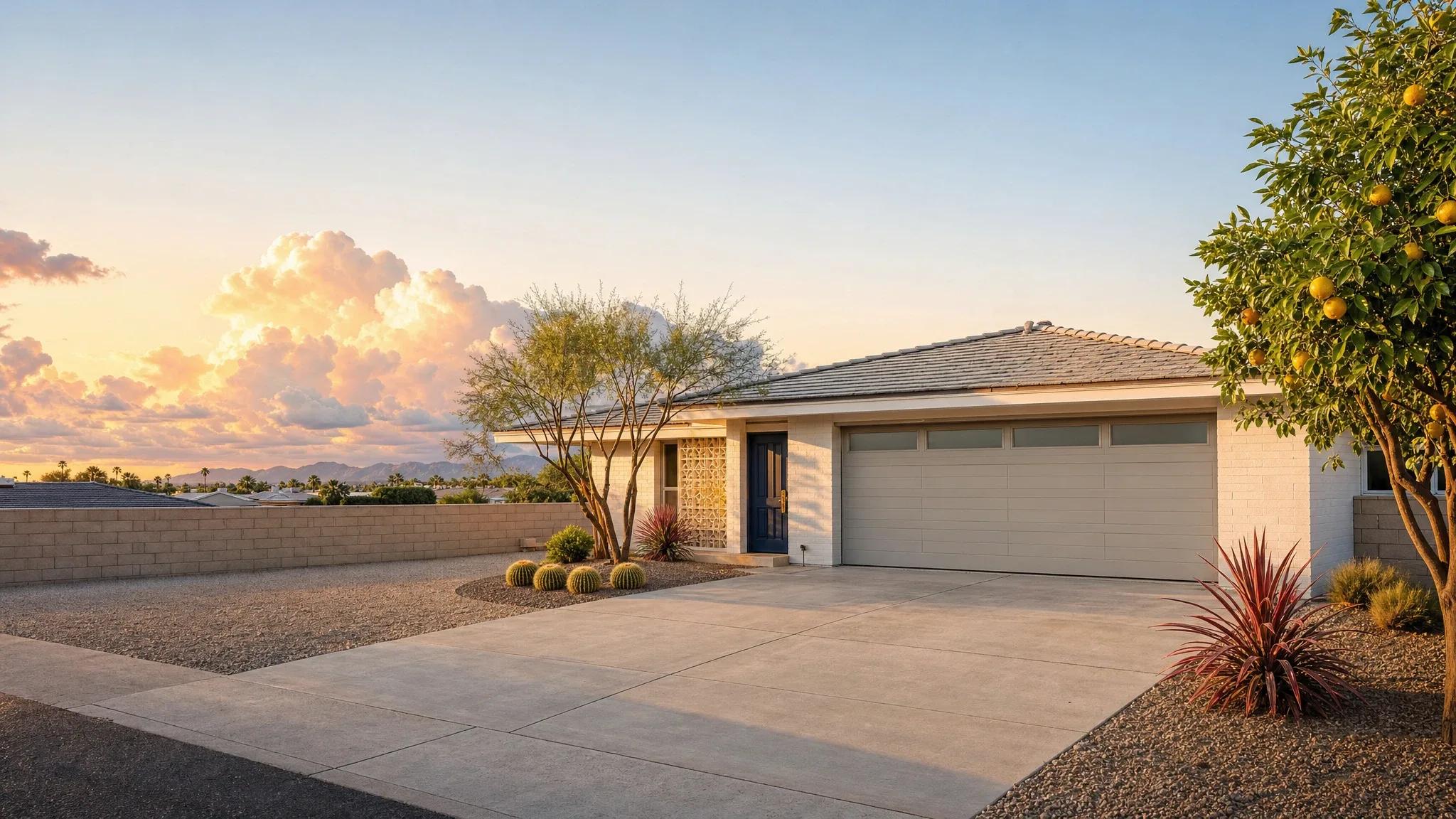
Garage Doors. A Stronger Arizona.
Garage Door Repair, Installation & Replacement in Arizona
Request service for garage door repair, installation or replacement, from the Valley's months of 100°F heat and monsoon dust to Flagstaff's snow.
- Repairs for springs, openers, cables, rollers and tracks
- New door selection, replacement and installation
- Advice written for Arizona homes and weather
Request Service
Arizona Garage Pros — tell us what's happening.
Arizona Garage Pros
Garage door information for Arizona homes
Arizona is not one climate, and a garage door feels that difference depending on where in the state it hangs. The U.S. Department of Energy's Building America guide puts Maricopa, Pima and Pinal counties in a hot-dry climate region, Coconino County in a cold one and Yavapai and Gila counties in a mixed-dry one, which is why advice written for one part of Arizona rarely fits another.
Much of Arizona's housing was built around the car and the air conditioner. Postwar ranch and mid-century neighborhoods in Phoenix, Scottsdale and Tucson often put a carport or garage under the main roofline, and many newer East Valley and Tucson-area subdivisions are planned communities with an architectural committee. Arizona leaves residential building codes to its cities and counties, so permit answers can differ from city to city.
Heat, dust, wind and snow each arrive in different places and at different times of year. Which of them a home actually sees is the first thing worth pinning down before choosing a door or scheduling work, and the sections below take them in turn: the Valley's long heat season, the summer monsoon, Flagstaff's cold and the planned-community reviews that shape a new door.
- Phoenix Metro (the Valley)
- Low Sonoran Desert heat: Sky Harbor's 1991–2020 NOAA normals show about 111 days a year at or above 100°F and about 7.2 inches of annual precipitation, so sustained heat and sun are the main stresses on seals, rollers and finishes. Mesa, Chandler, Gilbert and Tempe share this low-desert setting, as does the lower, southern part of Scottsdale.
- Tucson & the Southern Desert
- Tucson averages about 10.6 inches of rain a year, roughly half of it from July through September, and about 68 days a year at or above 100°F, so monsoon storms and dust sit on top of desert heat.
- Flagstaff & the Northern High Country
- Cold, snow and freeze-thaw cycles matter far more here than in the desert cities, and the monsoon arrives later than it does in the Valley.
- Colorado River Corridor (Yuma & Lake Havasu)
- One of the lowest and driest parts of the state: Yuma, on the river in Arizona's southwest corner, averages about 3.3 inches of rain a year and about 118 days at or above 100°F, at an airport elevation of only about 213 feet.
Every request is reviewed before anything is scheduled.
Services
Arizona garage door services
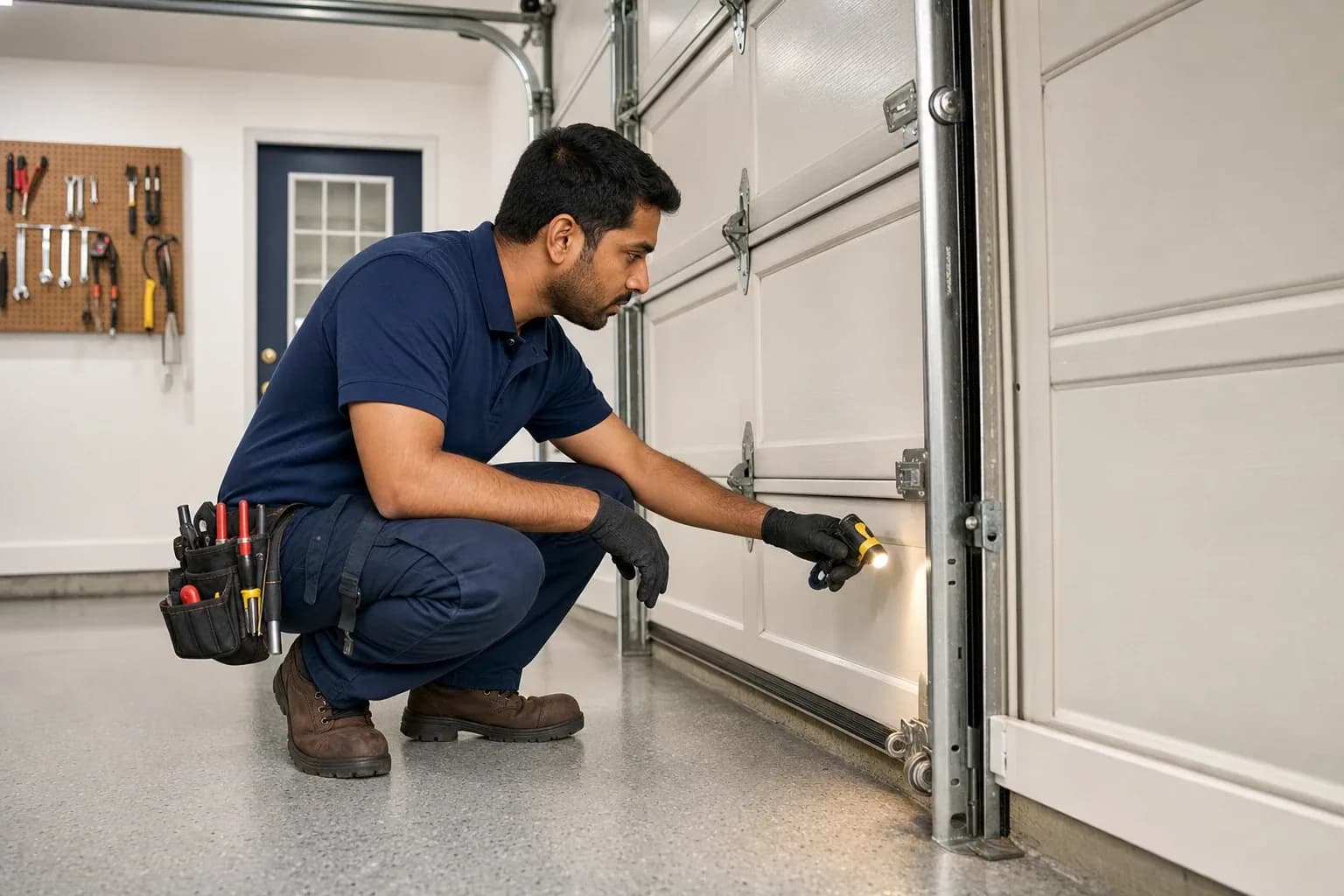
Illustrative image Repair
Repairs here often start as symptoms: hardware that binds after months of 100°F days, seals baked hard, or a door that acts up after a dust storm. Noting when it happens points to the cause.
Repair details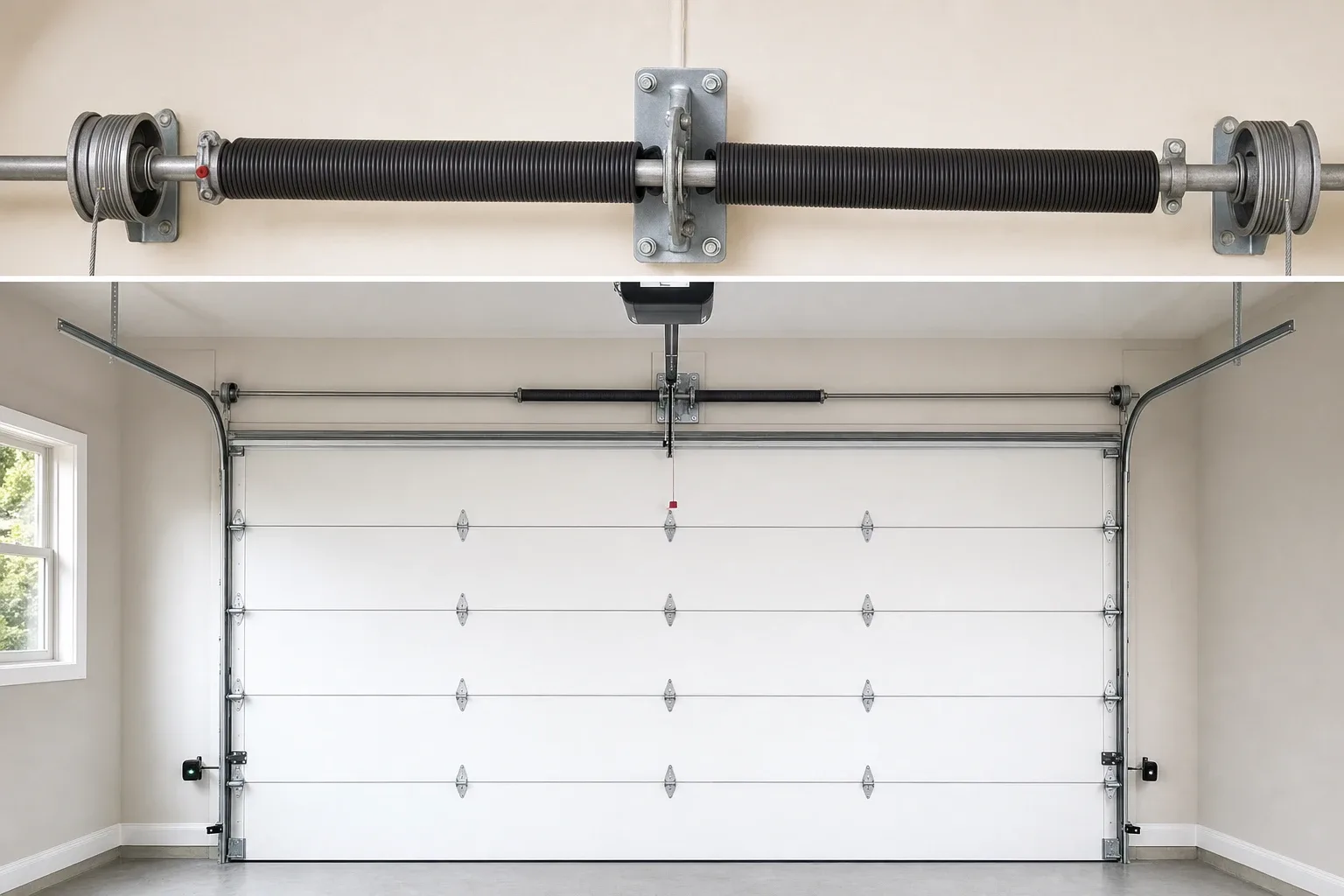
Illustrative image Spring Repair
Torsion springs are under extreme tension, so adjusting or replacing them is work for a trained technician. On a two-spring door, replacing both springs is the usual advice even when only one has broken.
Spring Repair details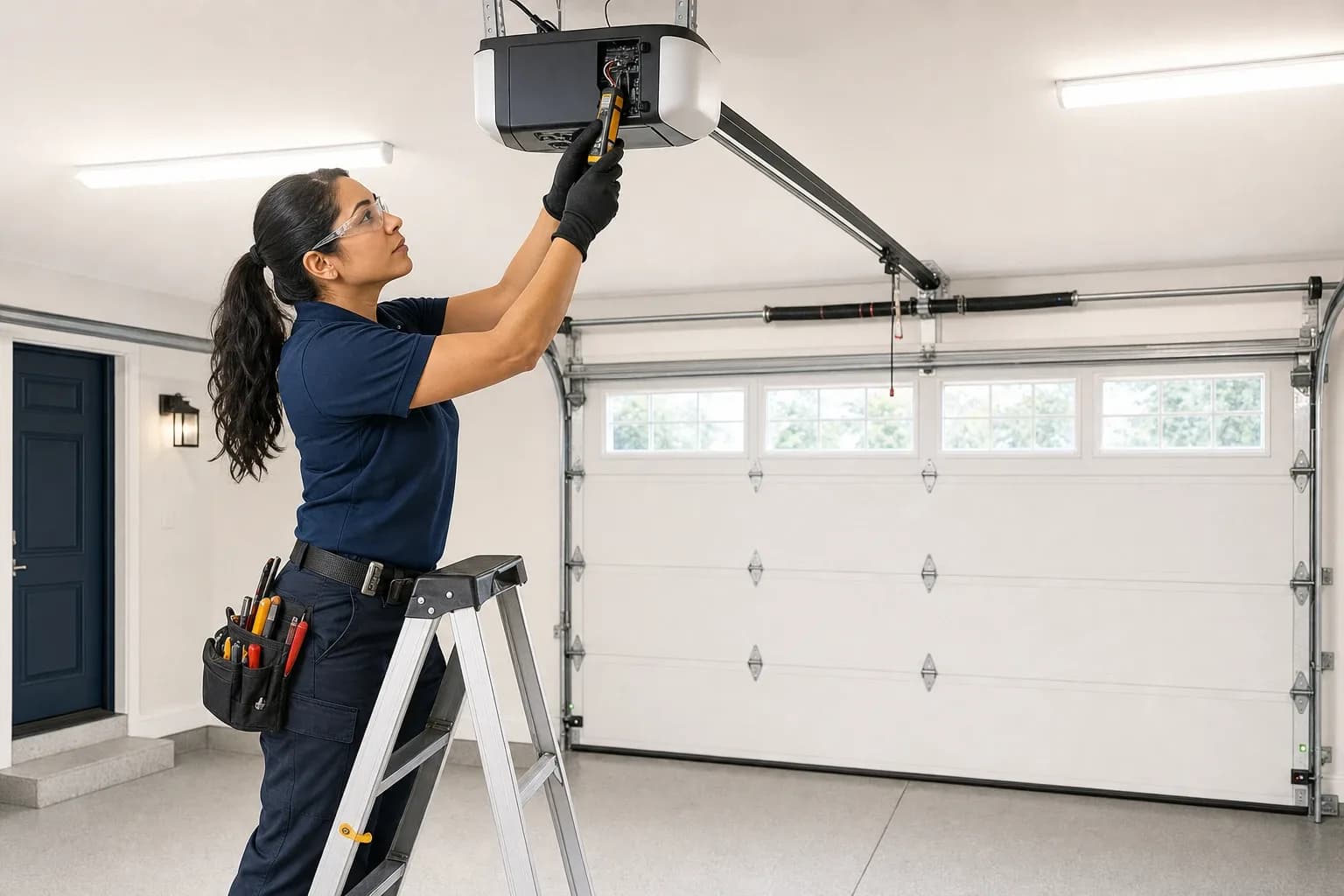
Illustrative image Opener Repair
Heat shortens battery life in general, so a dead remote in July is not always an opener fault. After a monsoon storm knocks out power, test the opener and any battery backup before assuming the motor has failed.
Opener Repair details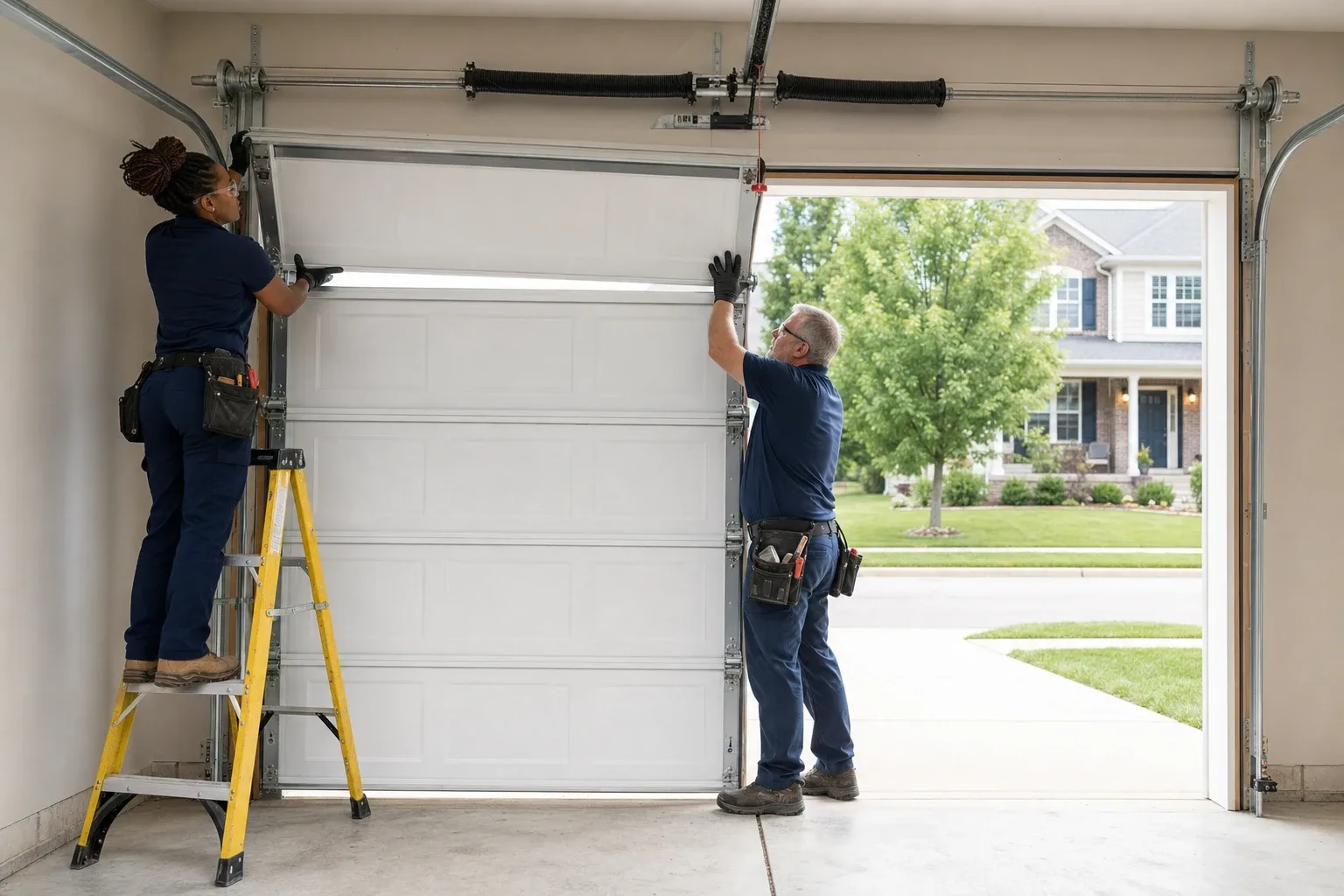
Illustrative image Replacement
A replacement door is the chance to plan for sun: a dark finish on sun-facing insulated steel raises the odds of bowing, and any energy claim should cite the tested U-factor of the whole door assembly, not a section's R-value.
Replacement detailsIllustrative image Installation
Installations in planned communities often start with an architectural committee's approval, and a designated historic district can add city review. Because cities and counties adopt their own codes, wind and permit requirements depend on the address.
Installation details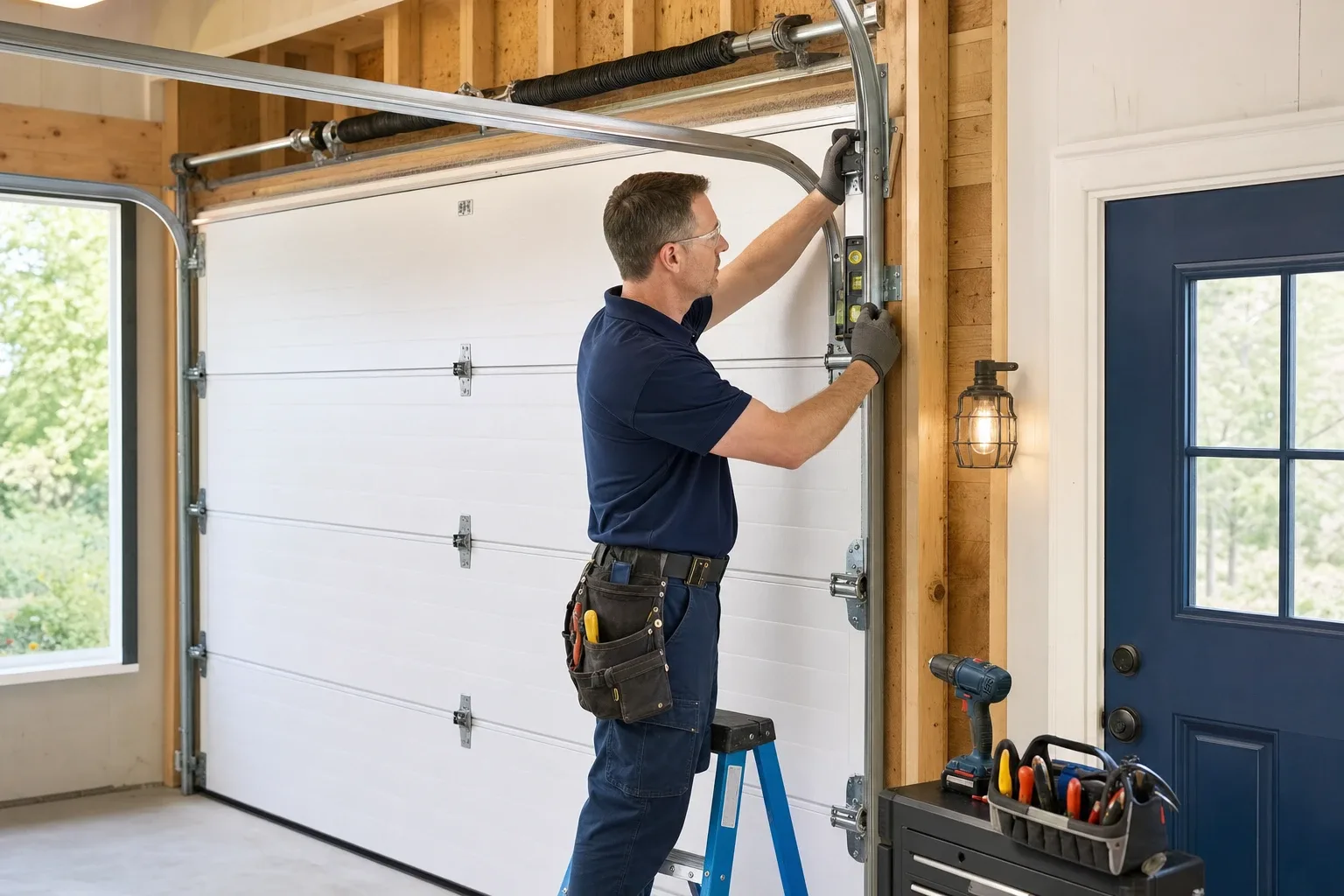
Illustrative image Off-Track Repair
Springs and cables stay under extreme tension when a door is off its track, so stop using it rather than force it. Only a technician can say whether wind, worn rollers or an impact was the cause.
Off-Track Repair details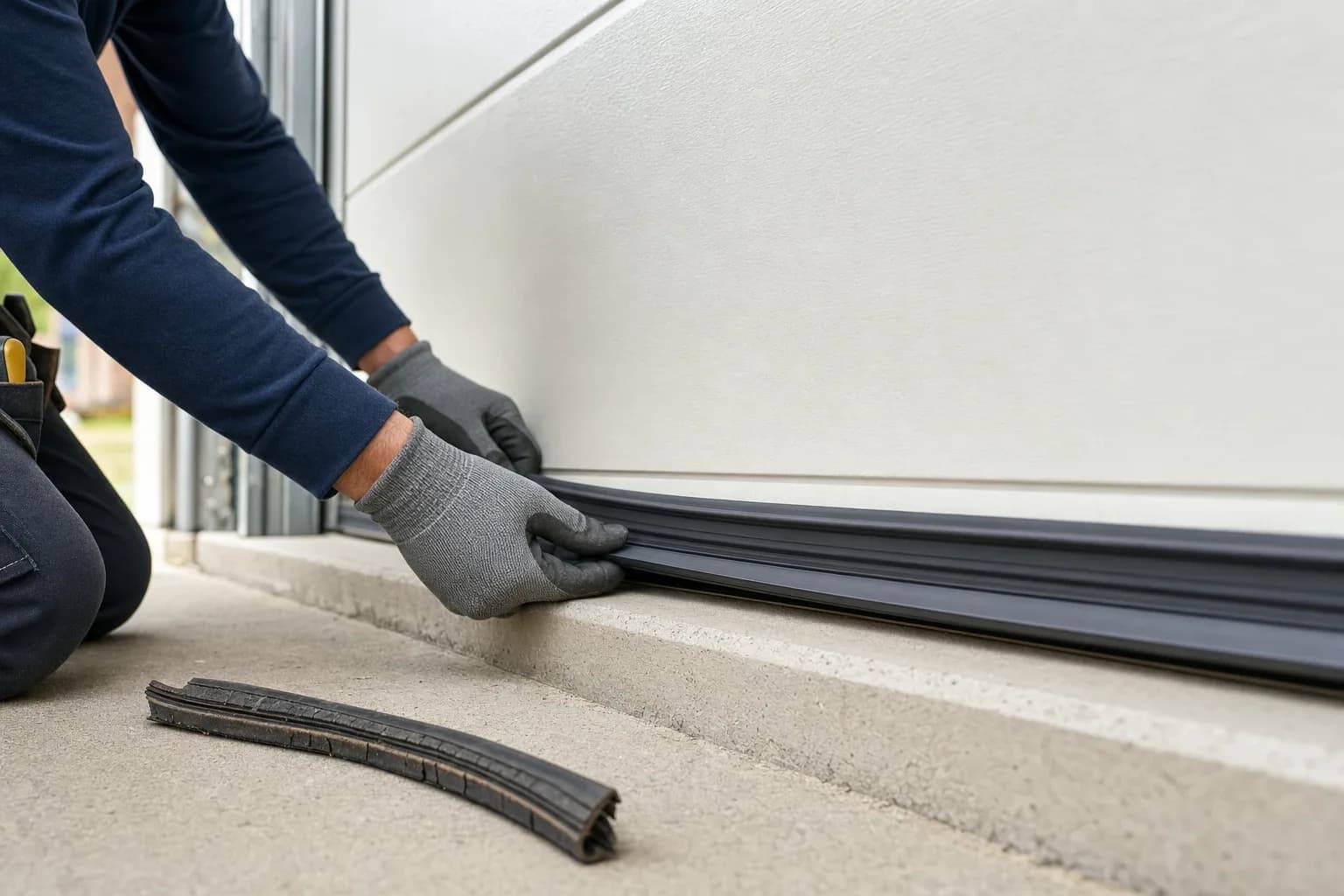
Illustrative image Weather Sealing
In the desert cities, seals work mostly against dust, heat and air leakage rather than rain, and rubber ages in a hot garage. Sealing an attached garage from the house is a separate job.
Weather Sealing details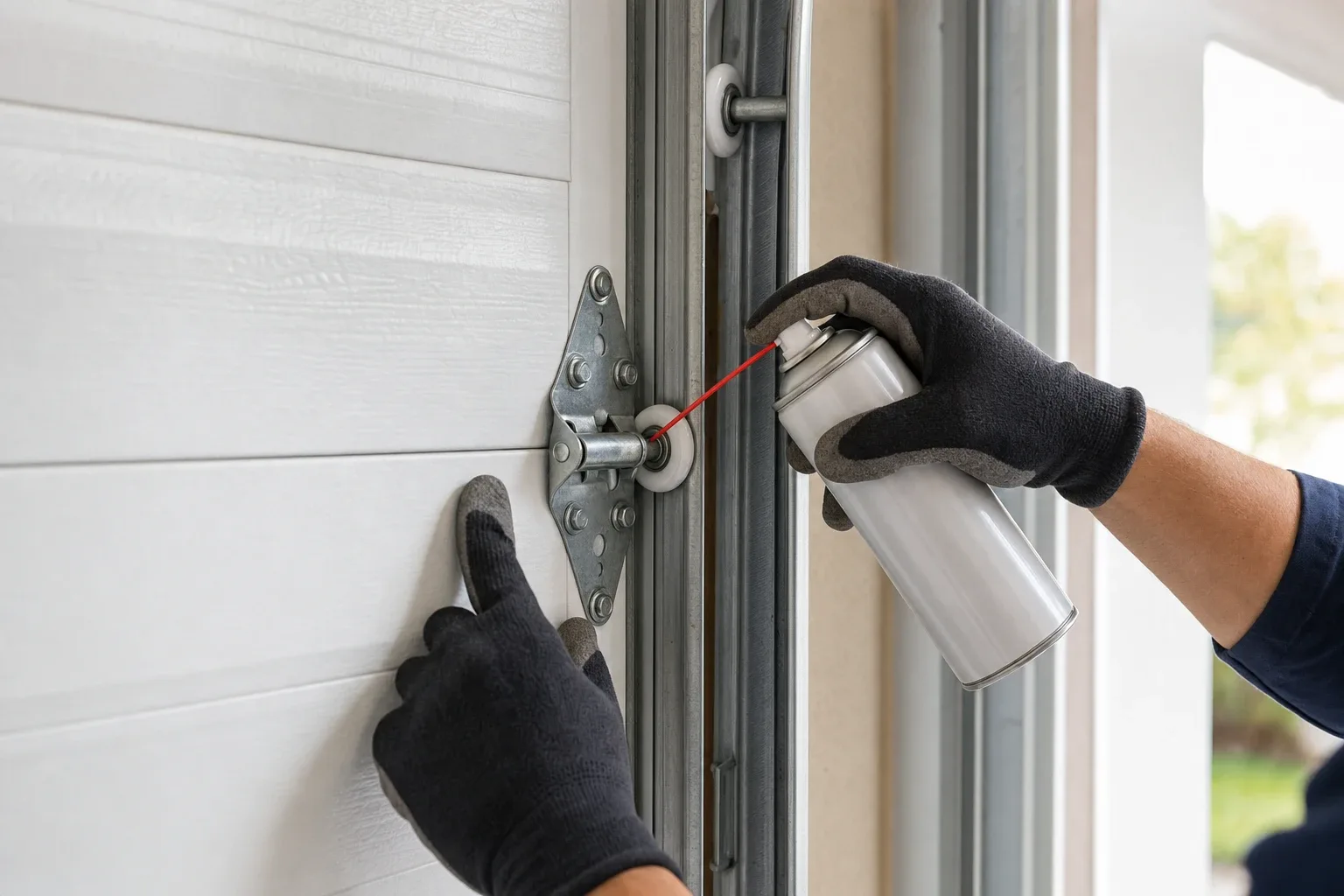
Illustrative image Maintenance
A useful Arizona rhythm is one check before the heat builds in spring, one after the monsoon closes on September 30 and a third before snow in the high country, plus a yearly visit from a trained technician.
Maintenance details
Built for Arizona
What local conditions mean for your door
- 01
A Heat Season That Runs May Through October
Phoenix's average first 100°F day is May 2 and its average last is October 5 (1991–2020 NWS normals), so the season that tests seals, rollers, springs and opener electronics runs roughly five months, not a July-and-August peak. One door manufacturer's hot-climate guidance says garage temperatures can climb 20°F or more above the outdoor air, and keeping the door closed where possible limits the temperature swings its springs face.
- 02
Nights That Barely Cool Down
Phoenix's 1991–2020 July normals put the average high at 106.5°F and the average low at 84.5°F, and July 2025 set daily record-warm lows of 93°F to 95°F, so a slab, a door and an opener get little overnight recovery. Dark, sun-facing steel doors and remote and backup batteries feel it most, and batteries in a hot garage may need replacing sooner than the calendar suggests.
- 03
Monsoon Microbursts, Haboobs and Dust
The monsoon officially runs from June 15 through September 30, and the City of Phoenix says storms peak between mid-July and mid-August. NWS Phoenix describes downbursts with damaging winds of 60 mph or more and dust storms that arrive as a wall of dust and debris. Fine dust settles on photo-eye lenses, tracks and rollers, and an outage leaves the opener working only with a battery backup.
- 04
Flagstaff and the High Country: Snow, Freeze and a Later Monsoon
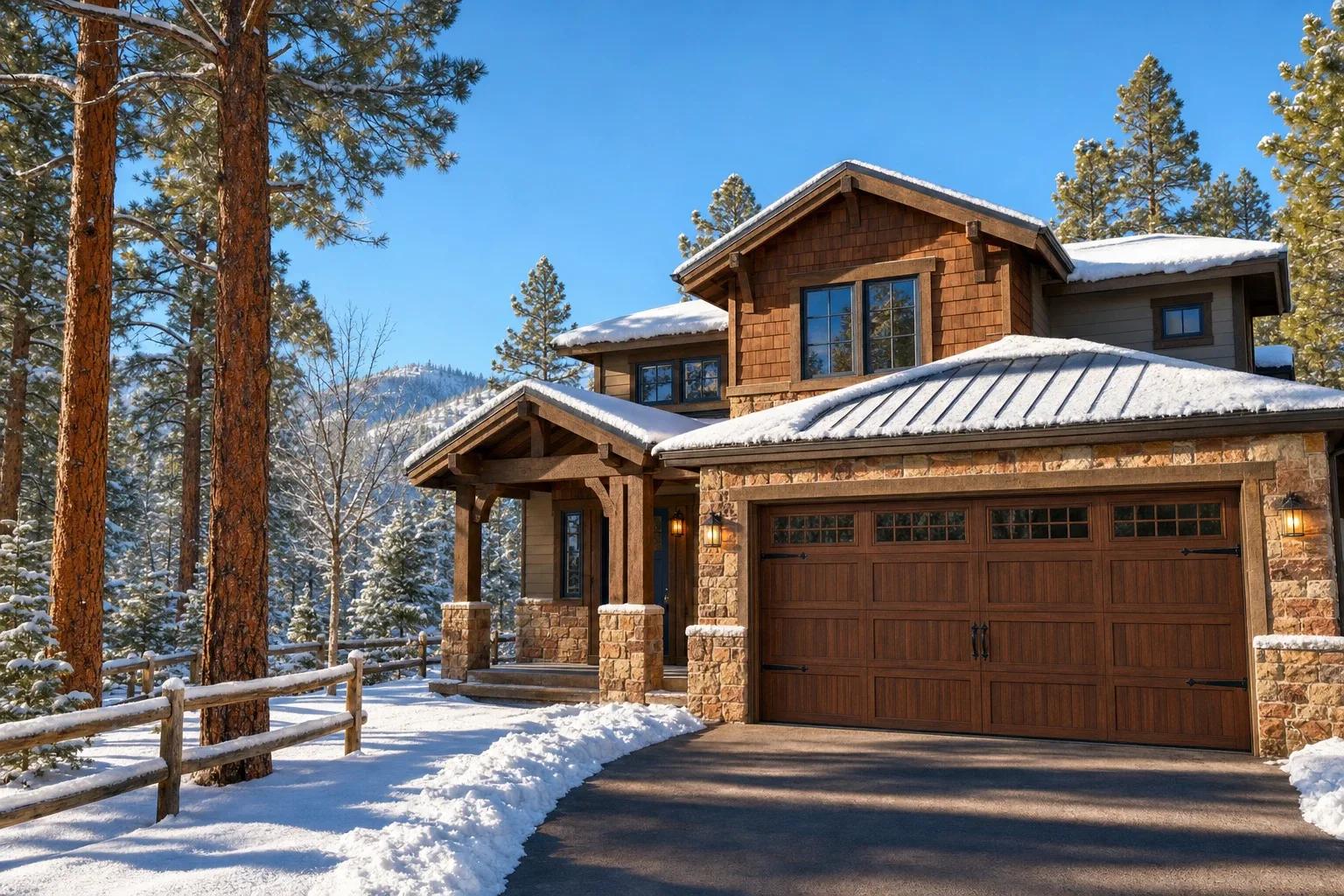
Flagstaff sits near 7,000 feet, and NWS Flagstaff reports that its airport averages 90.1 inches of snow between October and May. Freezing lows show up on roughly 200 days a year there, against fewer than one a year at Phoenix Sky Harbor. Up north the monsoon typically waits until the first week of July, so a door specified for Phoenix is not automatically right for Coconino County.
- 05
HOAs and Architectural Review
Many Arizona homes sit in planned communities, where the association's declaration, bylaws and rules decide which garage-door styles and colors are allowed. State law requires a design review committee to include a board member as chair and says approval of plans cannot be unreasonably withheld, but it names no garage-door rule or decision deadline, so written approval before ordering prevents a redo.
Cities
Arizona cities
Local pages for the cities our technicians serve, and what matters for doors in each one.
- PhoenixMaricopa County · Phoenix-Mesa-Chandler
- TucsonPima County · Tucson
- MesaMaricopa County · Phoenix-Mesa-Chandler
- ChandlerMaricopa County · Phoenix-Mesa-Chandler
- ScottsdaleMaricopa County · Phoenix-Mesa-Chandler
- GilbertMaricopa County · Phoenix-Mesa-Chandler
- TempeMaricopa County · Phoenix-Mesa-Chandler
- FlagstaffCoconino County · Flagstaff
Local guides
Arizona garage door guides
How it works
What happens after you ask for help
- 1
Request
Tell us what the door is doing and your ZIP code. The form takes about a minute.
- 2
Confirm
We review the request and contact you to confirm details and timing before anything is scheduled.
- 3
Diagnose
A technician inspects springs, cables, rollers, tracks and the opener, then explains what is wrong and your options.
- 4
Fix or install
The agreed repair or new door is completed, then the balance and the opener's safety reverse are checked.
Answers
Arizona garage door questions
How much does Arizona heat really matter to a garage door?
It matters through parts that can be named: dark, sun-facing doors can bow, seals stiffen and crack, and remote and backup batteries lose life. Industry spring-life guidance gives no heat-specific cycle figure, so any single desert lifespan number would be a guess, and a check before the hot season is more useful.
How does monsoon season affect a garage door?
Downbursts push on panels and tracks, dust settles on sensor lenses and hardware, and power can drop, leaving the opener working only with a battery backup. After a big storm, check that the door moves smoothly, run the monthly reversal and photo-eye check, and test any backup battery.
Can an HOA in Arizona refuse a garage door I want to install?
Style and color rules live in the community documents, and a design review committee decides applications. State law says approval of plans cannot be unreasonably withheld but names no garage-door rule and no deadline. The Registrar of Contractors says owners should tell a contractor about CC&R restrictions before signing.
Do I need a permit to replace a garage door in Arizona?
It depends on the city or county, because Arizona leaves residential codes to local governments and adopted editions differ. Some jurisdictions exempt minor like-for-like door replacement where no framing changes, but an exemption never authorizes work that violates the code. Ask the local building department before work starts.
How do I check a garage door contractor in Arizona?
The Registrar of Contractors offers an online license search; confirm the license class covers the work and call the number on the record. Contracts over $1,000 must be written with the license number. The small-job exemption covers only casual or minor work under $1,000 needing no local permit, with advertising that says "not a licensed contractor"; the statute has other exemptions.
Can I replace my garage door in a Phoenix or Tucson historic district?
Possibly, but it can need city sign-off first. Phoenix's Historic Preservation Office reviews exterior alterations to designated properties, and Tucson's Historic Preservation Zones extend design review to exterior work even when no building permit is required. Confirm with the city's historic preservation staff before ordering.
Arizona Garage Pros
Request service in Arizona
Send the details in two quick steps. This isn't a booking — we contact you to confirm the problem, the timing and the location first.