
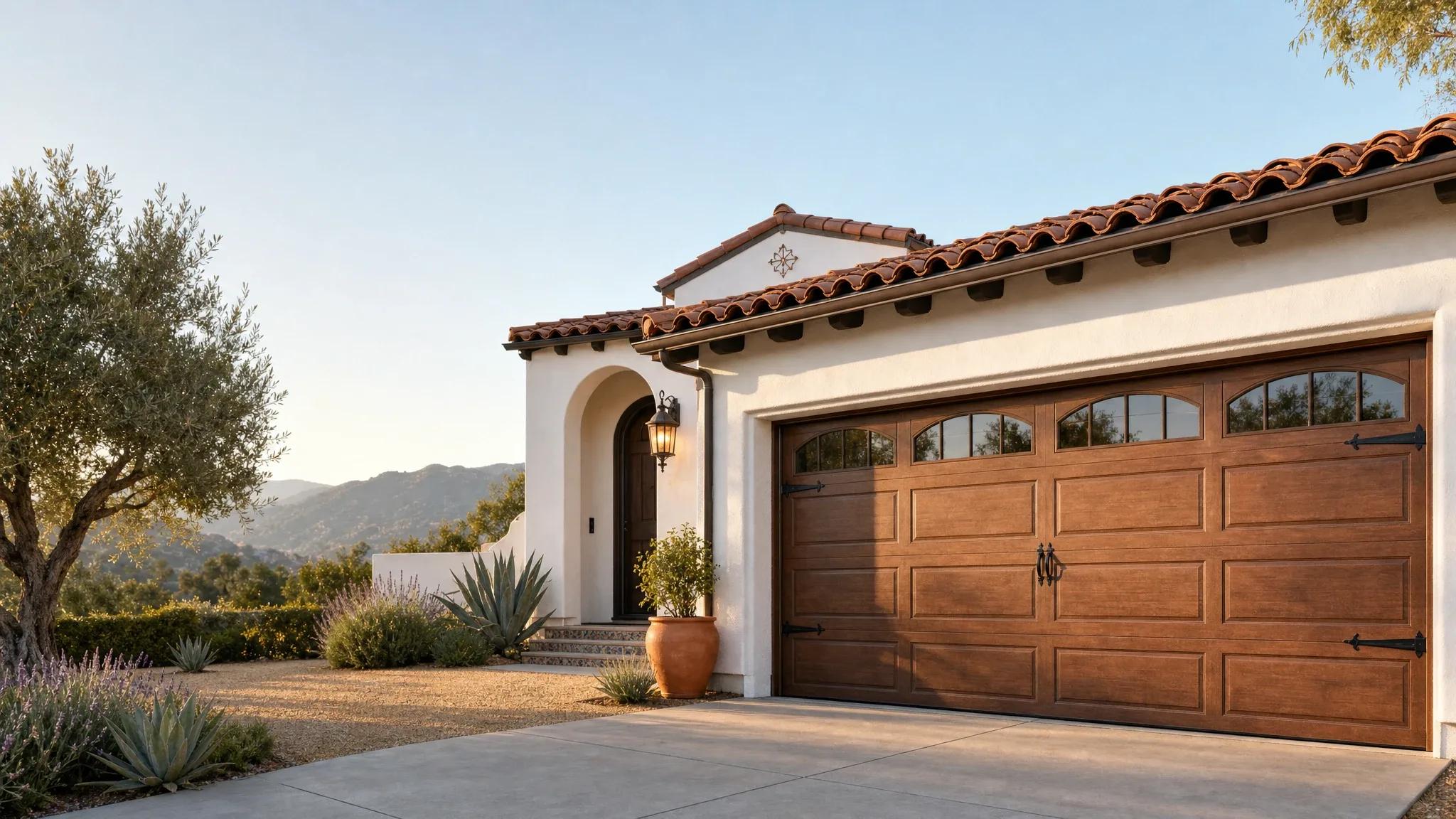
Garage Doors. A Stronger California.
Garage Door Repair & Replacement in California
Serving homes from Bay Area fog to Central Valley heat, with service built around California's climate, older housing stock, and battery backup opener law.
- Repairs for springs, openers, cables, rollers and tracks
- New door selection, replacement and installation
- Advice written for California homes and weather
Request Service
California Garage Pros — tell us what's happening.
California Garage Pros
Garage door information for California homes
California's size means garage doors face very different conditions from one region to the next. Homes near the coast deal with salt-laden marine air and year-round humidity that speeds up rust on springs, rollers, and hinges, while inland valleys swing from cool, damp winters to summer heat that regularly tops 100°F and dries out weatherstripping and lubricant. Wildfire-prone foothill communities add a third factor: keeping small gaps around doors and vents in good repair during fire season.
Housing stock is just as varied. Coastal and Southern California neighborhoods still have large numbers of mid-century Eichler-style homes with wide, glass-paneled sectional doors, Spanish Revival stucco houses with carriage-style doors, and post-war ranch houses with single-car attached garages. Northern California cities have older Craftsman bungalows, many with narrow detached garages set back from the street. Newer construction across the Central Valley and Inland Empire tends toward larger two- and three-car attached garages on production-built tract homes.
Because of this range, a single one-size-fits-all service approach does not hold up well across the state. A door and opener that perform fine in a mild coastal climate can wear differently fifty miles inland, and a detached garage from the 1920s has different track, hardware, and clearance needs than a builder-grade door installed in the last decade.
- Southern California / Los Angeles Basin & Orange County
- Dense mid-century and Spanish Revival housing stock with a mix of attached and older detached garages.
- San Diego & the South Coast
- Coastal marine air and consistent onshore humidity accelerate hardware corrosion near the water.
- San Francisco Bay Area
- Fog-driven marine layer, hillside lots, and a large stock of Craftsman and mid-century homes with narrow driveways.
- Central Valley (Sacramento to Bakersfield)
- Hot, dry summers and cool, foggy winters put extra strain on weatherstripping, lubricant, and door balance.
- Inland Empire & High Desert
- Newer tract-home developments with larger attached garages face wide day-to-night temperature swings.
Every request is reviewed before anything is scheduled.
Services
California garage door services
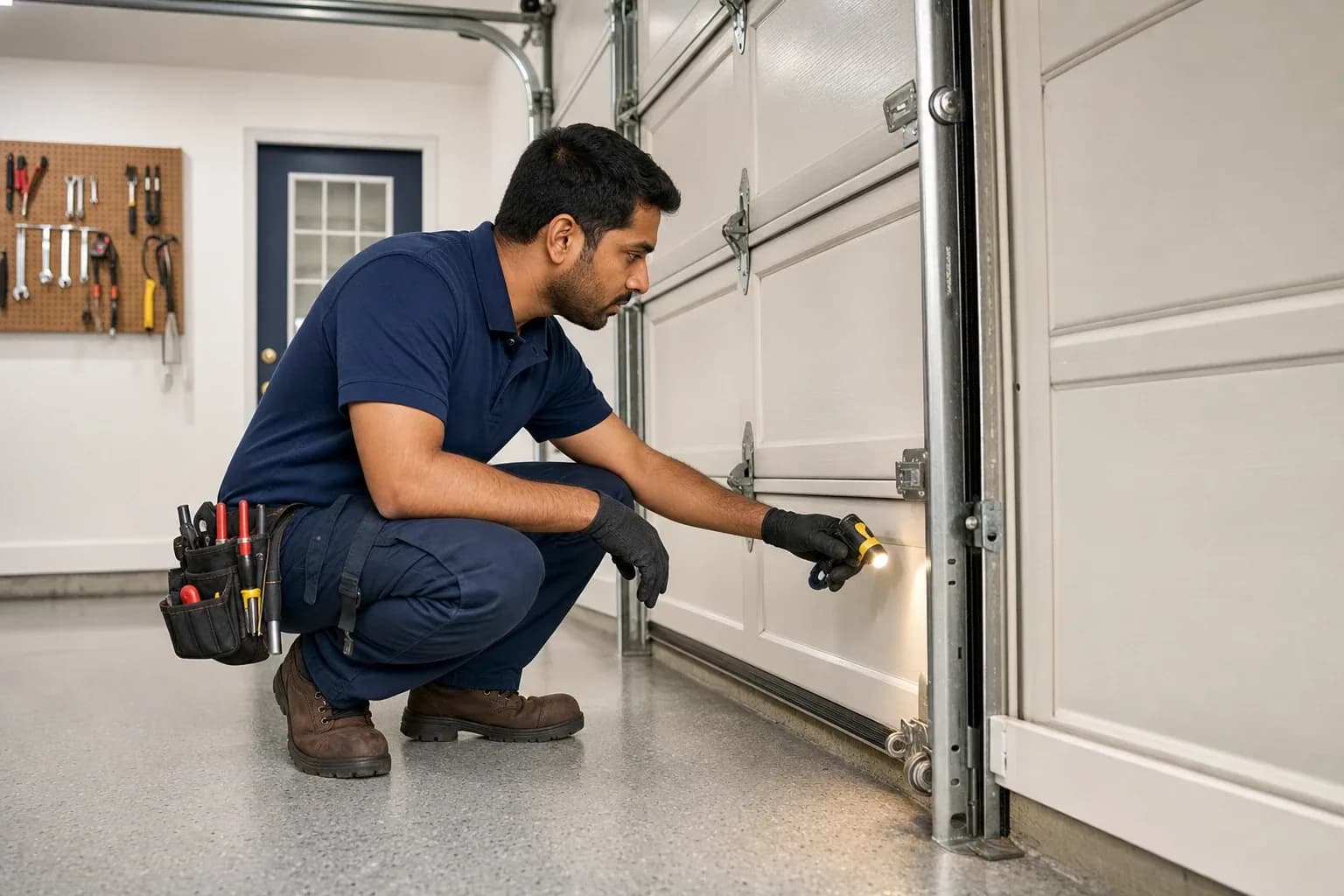
Illustrative image Repair
Repair needs in California often trace back to heat-cycling on inland doors or corrosion on coastal hardware, so a technician typically checks springs, cables, and rollers for wear patterns tied to the local climate before recommending a fix.
Repair details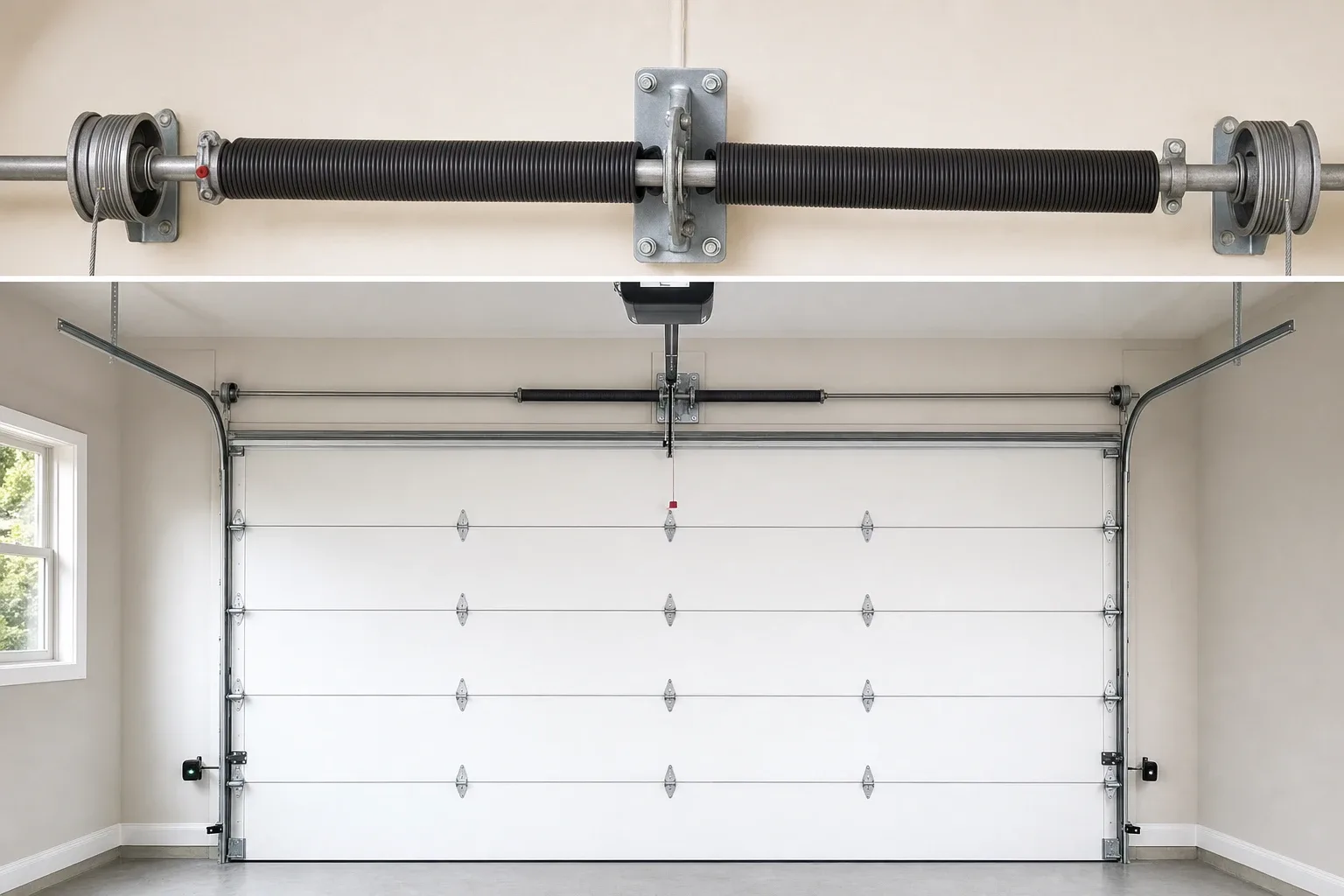
Illustrative image Spring Repair
Torsion and extension springs on inland California doors cycle through wider daily temperature swings than in milder climates, which can shorten their working life, while coastal-home springs see more wear from surface corrosion than from heat.
Spring Repair details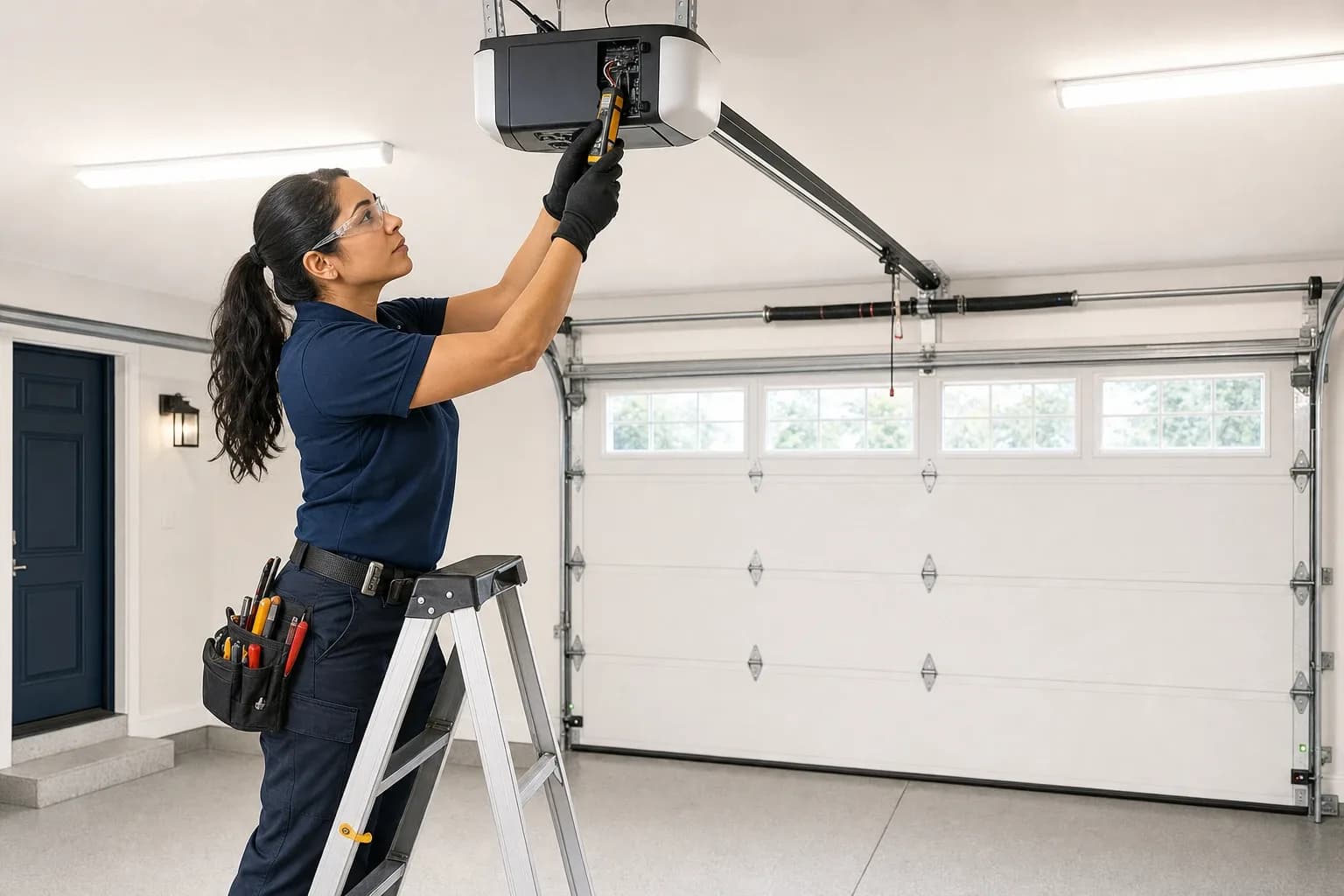
Illustrative image Opener Repair
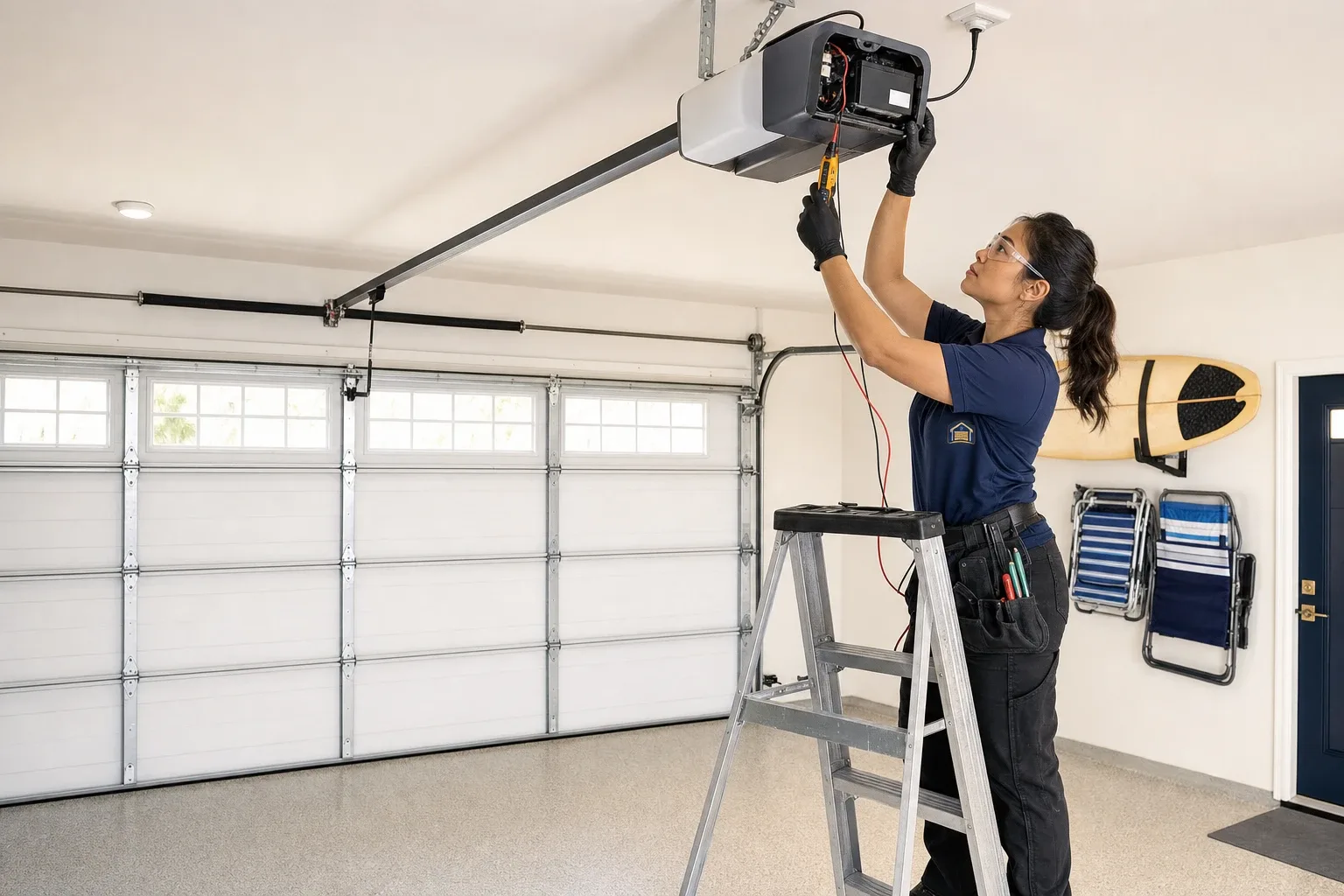
Opener troubleshooting in California frequently includes confirming the battery backup component is present and functioning, since this is a state requirement rather than an optional upgrade.
Opener Repair details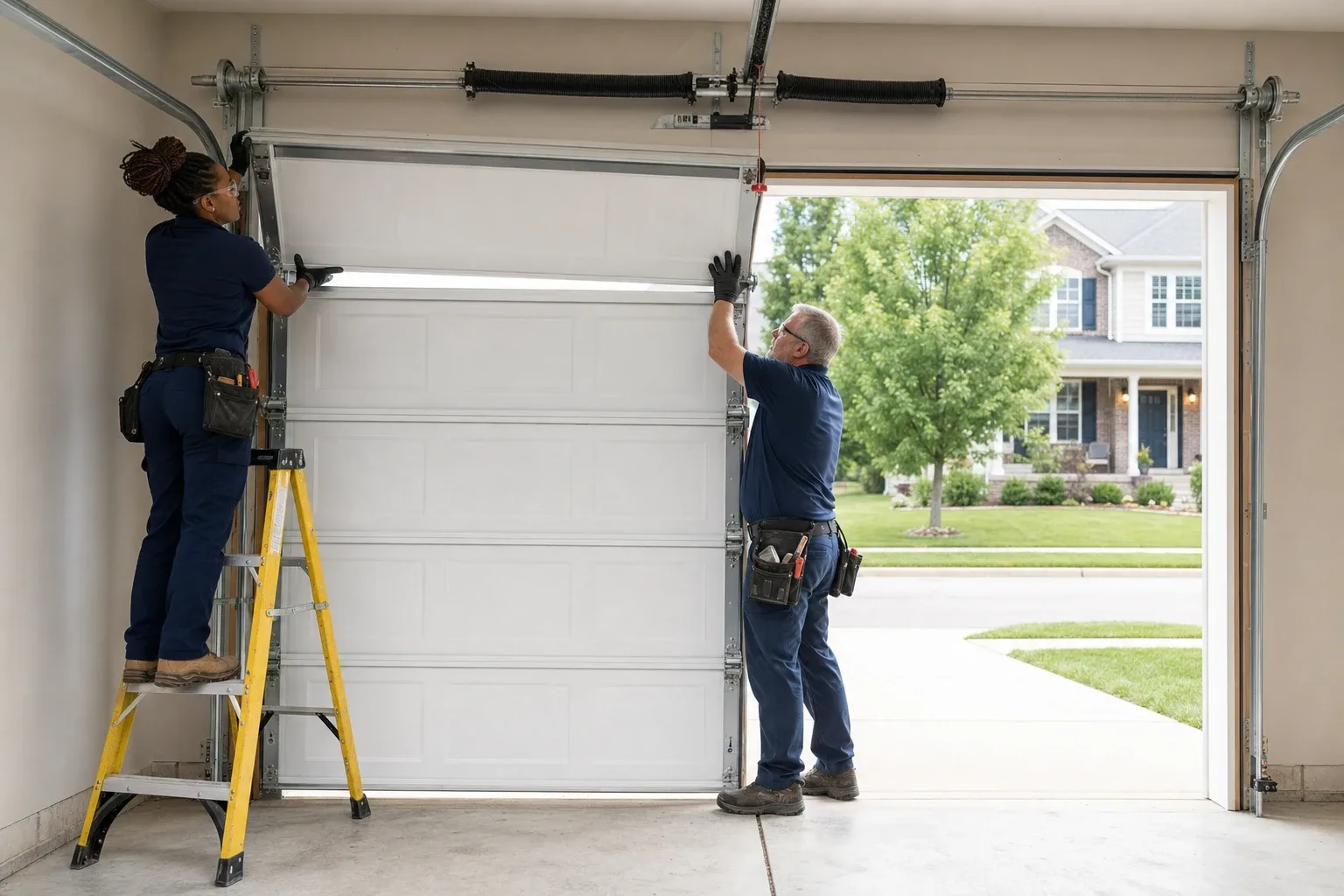
Illustrative image Replacement
Replacing an older door in California is also the moment to address a non-compliant opener, since a replacement door cannot legally be connected to an opener that lacks battery backup under state law.
Replacement detailsIllustrative image Installation
New installations in California range from wide glass-paneled doors on Bay Area mid-century homes to insulated steel doors on Central Valley tract homes, and every opener installed must include a battery backup to meet the state's requirement.
Installation details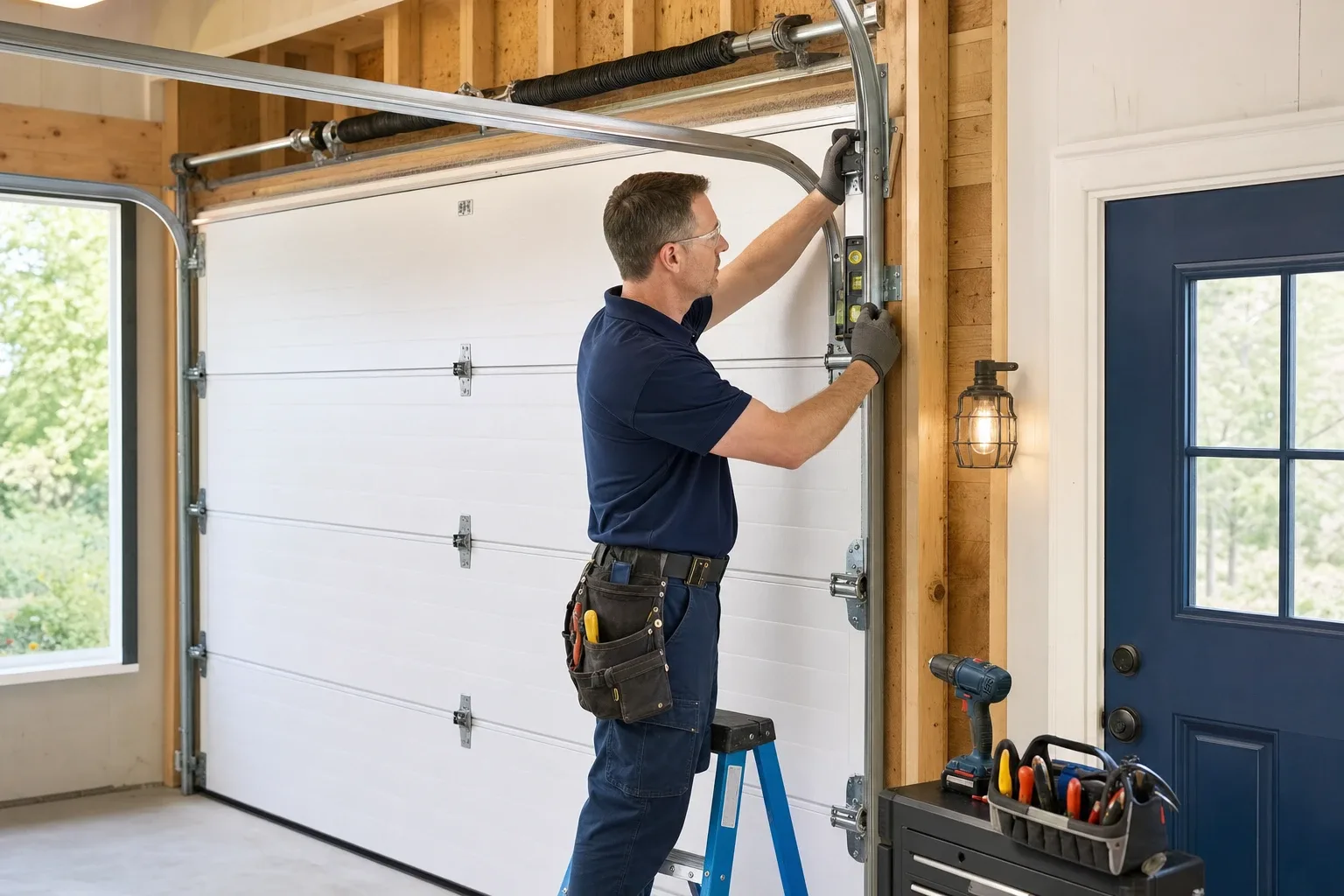
Illustrative image Off-Track Repair
Doors can come off track after years of routine wear on older detached garages, and coastal hardware corrosion can accelerate the roller and track wear that leads to off-track issues.
Off-Track Repair details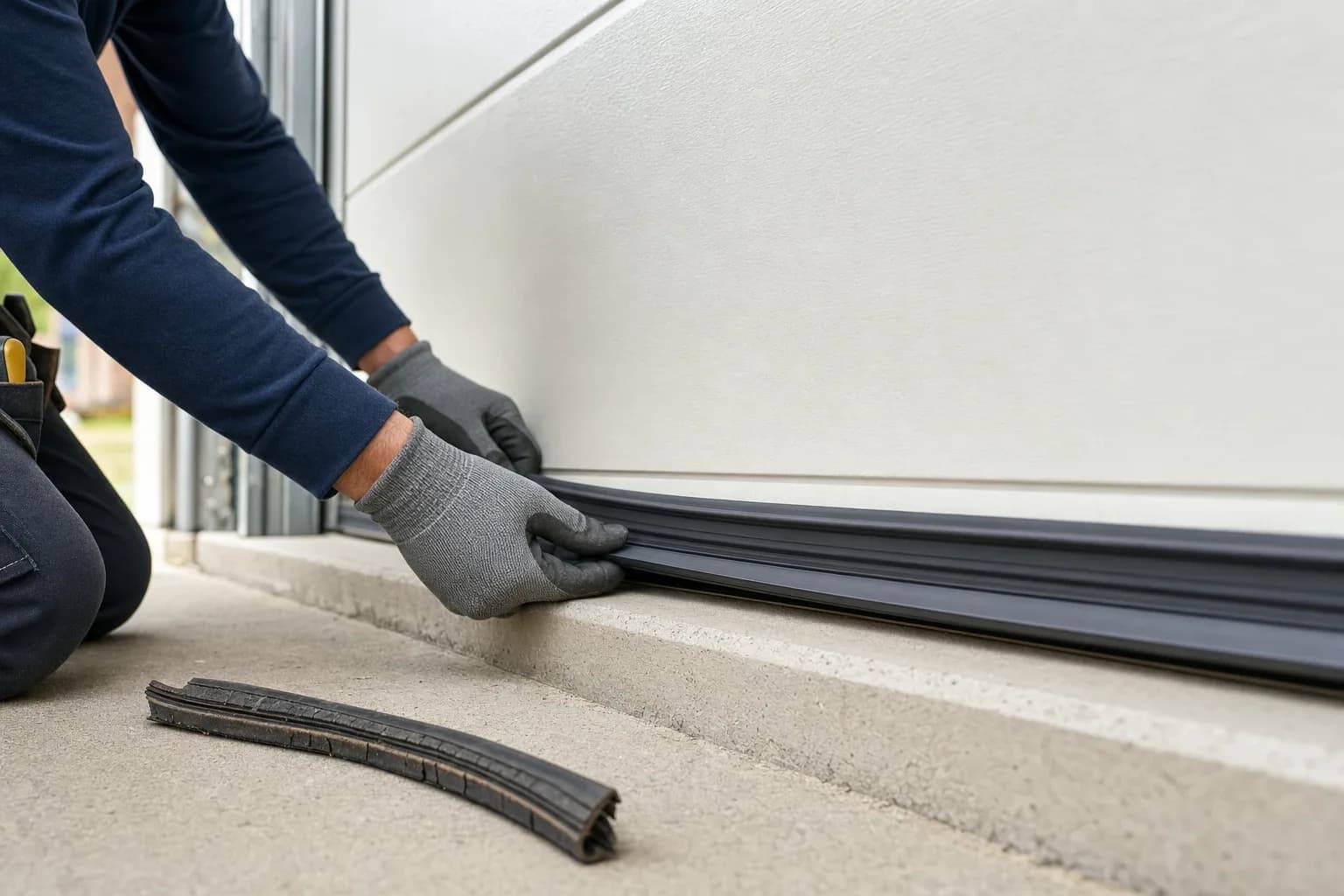
Illustrative image Weather Sealing
Weather sealing matters differently by region in California: coastal homes benefit from sealing against wind-driven moisture, while inland homes benefit from sealing that reduces dust and heat infiltration.
Weather Sealing details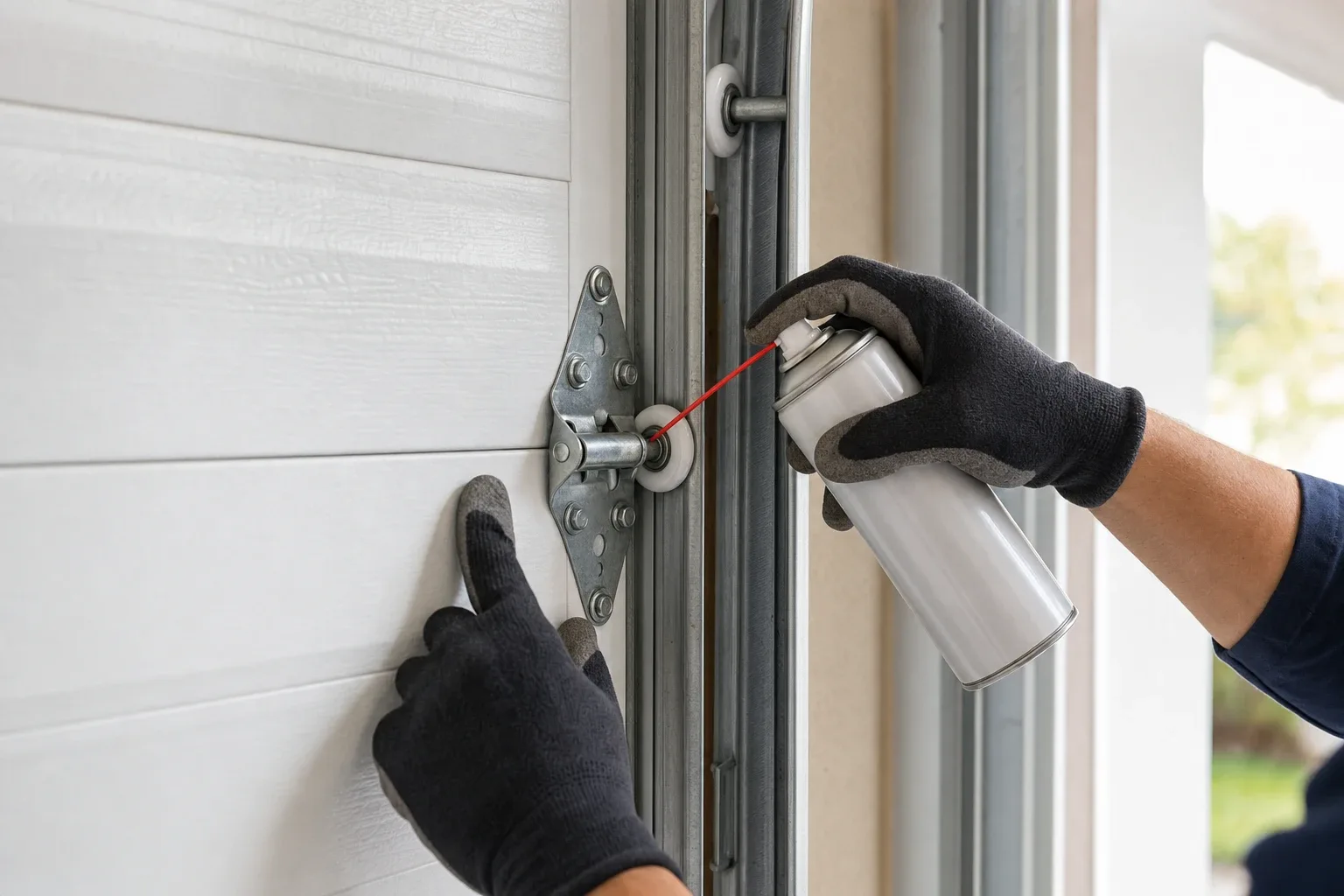
Illustrative image Maintenance
A maintenance visit in California typically checks for the two most common regional issues: dried-out lubricant and weatherstripping from summer heat, and early hardware corrosion in coastal homes.
Maintenance details
Built for California
What local conditions mean for your door
- 01
Coastal Salt Air and Marine Humidity
Communities along the coast, from San Diego through the Bay Area, see near-constant humidity and salt-bearing air. This combination speeds up corrosion on springs, cable, rollers, and exposed hardware, and can leave steel doors more prone to surface rust if the factory coating is compromised.
- 02
Central Valley Heat and Dry Summers
Inland cities such as Sacramento, Fresno, and Bakersfield see long stretches of triple-digit summer heat with very low humidity. That combination dries out lubricant and rubber weatherstripping faster and can cause metal components to expand and contract more than in milder climates, which shows up as noise or minor misalignment over time.
- 03
Wildfire-Prone Foothill and Wildland-Urban Interface Areas
Many foothill and hillside communities sit inside California's wildland-urban interface. CAL FIRE's defensible-space guidance highlights the first five feet around a home, called Zone 0, as the highest-priority area for reducing ember-ignition risk, and that same ember-resistance principle extends to keeping a garage door's bottom seal and perimeter gaps in good repair.
- 04
California's Battery Backup Requirement for Garage Door Openers
Under California Health and Safety Code Section 19892, enacted by Senate Bill 969, residential garage door openers manufactured, sold, or installed in California since July 1, 2019 must include a battery backup so the door can still operate during a power outage, and a replacement door cannot be connected to an older opener that lacks this feature.
- 05
Older Detached Garages in Established Neighborhoods
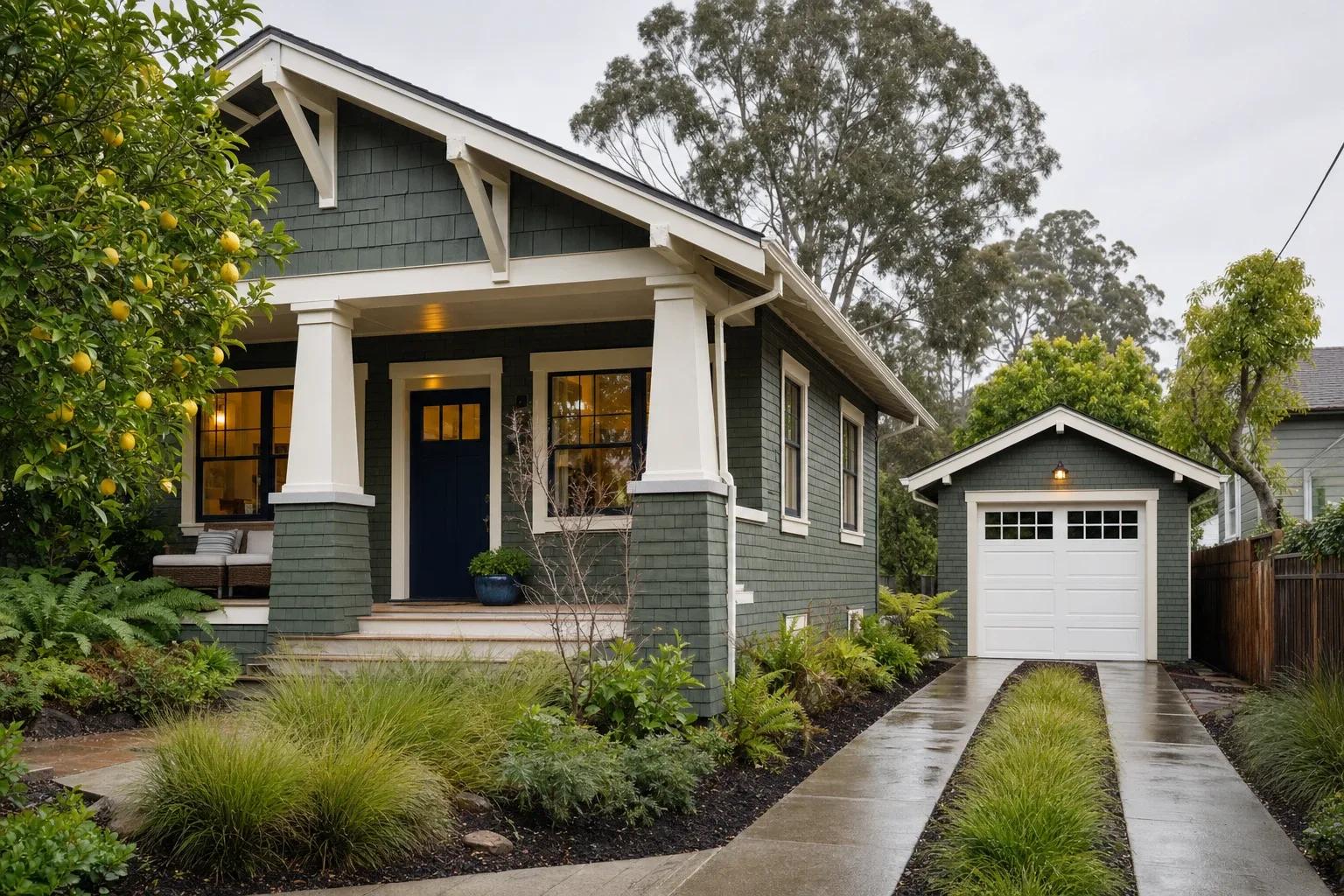
Many pre-1960s neighborhoods in Los Angeles, the Bay Area, and older Central Valley cities have detached single-car garages set back from the house, often with narrower openings and non-insulated doors. These structures can need different hardware and clearance solutions than an attached two-car garage on a newer home.
Cities
California cities
Local pages for the cities our technicians serve, and what matters for doors in each one.
- Los AngelesLos Angeles County · Los Angeles-Long Beach-Anaheim, CA
- San DiegoSan Diego County · San Diego-Chula Vista-Carlsbad, CA
- San JoseSanta Clara County · San Jose-Sunnyvale-Santa Clara, CA
- San FranciscoSan Francisco County · San Francisco-Oakland-Berkeley, CA
- SacramentoSacramento County · Sacramento-Roseville-Folsom, CA
- FresnoFresno County · Fresno, CA
- BakersfieldKern County · Bakersfield, CA
- RiversideRiverside County · Riverside-San Bernardino-Ontario, CA
Local guides
California garage door guides
Local guides are being prepared.
How it works
What happens after you ask for help
- 1
Request
Tell us what the door is doing and your ZIP code. The form takes about a minute.
- 2
Confirm
We review the request and contact you to confirm details and timing before anything is scheduled.
- 3
Diagnose
A technician inspects springs, cables, rollers, tracks and the opener, then explains what is wrong and your options.
- 4
Fix or install
The agreed repair or new door is completed, then the balance and the opener's safety reverse are checked.
Answers
California garage door questions
Does California require a battery backup on garage door openers?
Yes. Under Health and Safety Code Section 19892, residential garage door openers manufactured, sold, or installed in California since July 1, 2019 must include a battery backup function, and a replacement door cannot be connected to an opener that lacks one.
Why do garage door springs wear out faster in some parts of California?
Inland areas with hot, dry summers put more stress on springs through daily heat-cycling, while coastal areas see springs affected more by humidity and salt air, which can lead to surface corrosion over time.
Can wildfire conditions affect my garage door?
Homes in wildfire-prone foothill areas can benefit from keeping bottom seals and perimeter gaps in good repair, since small openings are part of the broader defensible-space approach that agencies like CAL FIRE recommend for the area closest to the home.
Do older detached garages in cities like Los Angeles or Oakland need special parts?
Many pre-1960s detached garages have narrower openings and older jambs, so hardware and door sizing sometimes need to be matched to the existing structure rather than a standard modern opening.
Is salt air actually a problem for garage doors near the coast?
Yes. Homes near the coast in areas like San Diego or the Bay Area see faster corrosion on exposed springs, cables, and rollers than inland homes, so more frequent hardware inspection is worth considering in those areas.
What should happen if my garage door won't open during a power outage?
If your opener has a working battery backup, as required by California law since 2019, the door should still operate on battery power; if it does not respond, a professional can check the battery backup component and the manual release mechanism.
California Garage Pros
Request service in California
Send the details in two quick steps. This isn't a booking — we contact you to confirm the problem, the timing and the location first.