
Arizona Garage Pros
Garage Door Maintenance in Arizona
A useful Arizona rhythm is one check before the heat builds in spring, one after the monsoon closes on September 30 and a third before snow in the high country, plus a yearly visit from a trained technician.
Maintenance · Arizona
Maintenance for Arizona homes
Arizona maintenance runs on a calendar, and it is longer than July and August. That leaves two natural windows: a look in spring before the heat builds, and another in October once the monsoon has ended and the dust has settled.
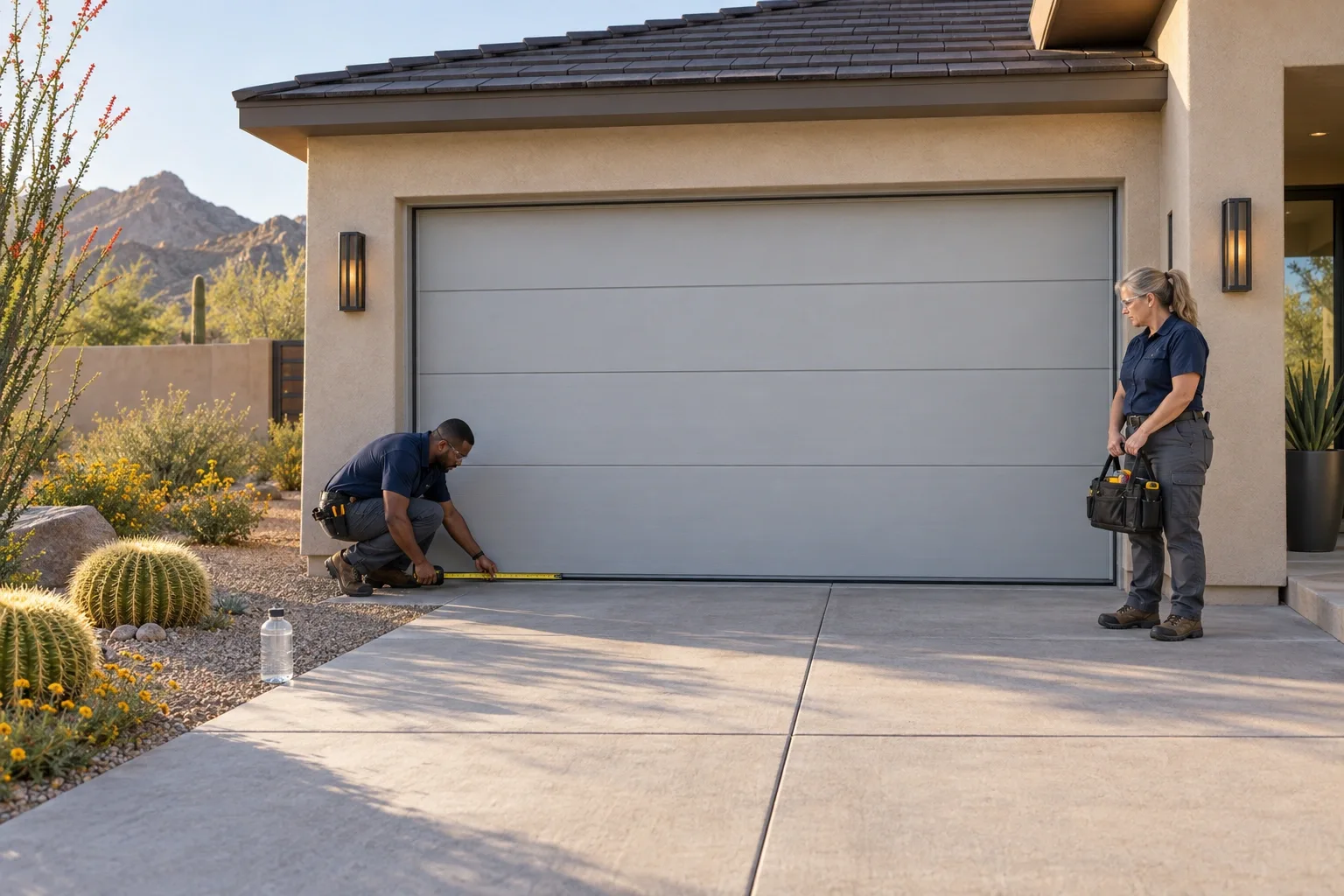
The monthly checks are short: a visual look at springs, cables, rollers and hardware from a safe distance, plus the monthly reversal and photo-eye check, with a yearly visit from a trained technician on top. Lubricate as the manual directs. Springs, cables and bottom brackets stay off the owner's list, since all of it is under extreme tension.
Arizona
What's different in Arizona
- 01
Spring: Before the Heat
A check around April sets a door up for its hottest months: seal condition, roller and hinge wear, and lubrication as the manufacturer directs, which helps spring cycle life. A door is better checked before the heat than during it.
- 02
Fall: After the Monsoon
October is the counterpart. Dust has settled on lenses, tracks and seals and storm winds have pushed on the door for months, so it is a good time to check rollers and hinges for grit wear, sensor alignment and seals.
- 03
High Country Runs on a Different Clock
NOAA's Flagstaff climate memo lists the average first fall 32°F date as 24 September and the average last spring 32°F date as 10 June, so a high-country door is better served by a fall look before the first frost and a late-spring look after the last one.
Know the signs
When you need maintenance
Common symptoms
- It's been a while since the door's hardware was last checked
- Door has become slightly noisier or stiffer, but nothing is broken yet
- Door is used heavily, such as multiple times a day, and hardware wears faster as a result
- Preparing the door for a change in season and temperature
What the service covers
- Inspection of springs, cables, tracks, rollers, and hinges for wear
- Lubrication of rollers, hinges, and the torsion shaft's bearing points
- Tightening of loose bolts, brackets, and hardware
- Testing of door balance, opener settings, and the auto-reverse safety feature
The process
How the work is done
- 1
Inspect all hardware
Springs, cables, tracks, rollers, and hinges are checked for wear, rust, or looseness before anything is adjusted.
- 2
Lubricate moving parts
Rollers, hinges, and the spring shaft's bearing points are lubricated to reduce friction and noise.
- 3
Tighten and adjust
Loose bolts, brackets, and track fasteners are tightened, and minor track alignment is corrected.
- 4
Test balance and safety features
The door's balance is checked and the opener's auto-reverse feature is tested to confirm it's working correctly.
Cost factors
What affects the price
Prices aren't published because they depend on your door, the parts involved and the access to the work. These are the things that move the cost — ask for the price before any work starts.
- Door size and hardware count
- A double door has more hinges, rollers, and hardware to inspect and service than a single door.
- Current condition
- A door that's gone a long time without service may need more adjustment or a part replaced during the visit.
- Opener age
- Checking and testing an older opener's settings can take more time than a newer unit.
- Add-on repairs
- If a specific worn part is found during the tune-up, addressing it changes the scope of the visit.
Safety first
- Maintenance work on or near the spring system should be done by a trained technician, since even routine inspection means working close to stored tension.
- Disconnect the opener before manually testing the door's balance.
- Keep the auto-reverse feature enabled and tested as part of every maintenance visit.
Safe things to check first
- Listen for new or increasing noise during a normal open-close cycle.
- Look at visible hardware, such as hinges, rollers, and track brackets, for rust, looseness, or wear since the last check.
- Test the auto-reverse feature per the opener manufacturer's guidance and confirm the door reverses on contact with an obstruction.
Answers
Maintenance questions in Arizona
How often should an Arizona garage door get professional service?
A yearly visit from a trained technician alongside monthly owner checks is the usual recommendation. In Arizona, a spring visit ahead of the heat or a fall one after the monsoon are natural anchor points, and high-country doors fit better around the first freeze.
What can I safely check on my own?
Monthly, look over the springs, cables, rollers and hardware without touching them and run the reversal and photo-eye check. Oil rollers, bearings and hinges only if the manual says so. Adjusting springs, cables or bottom brackets is technician-only work.
Related
Related services
Arizona Garage Pros
Request service
Send the details in two quick steps. This isn't a booking — we contact you to confirm the problem, the timing and the location first.
Sources
- Technical Data Sheets — Door & Access Systems Manufacturers Association (DASMA) (accessed 2026-09-24)
- Government and Industry Move To Reduce Garage Door Opener Child-Entrapment Deaths — U.S. Consumer Product Safety Commission (accessed 2026-09-24)