
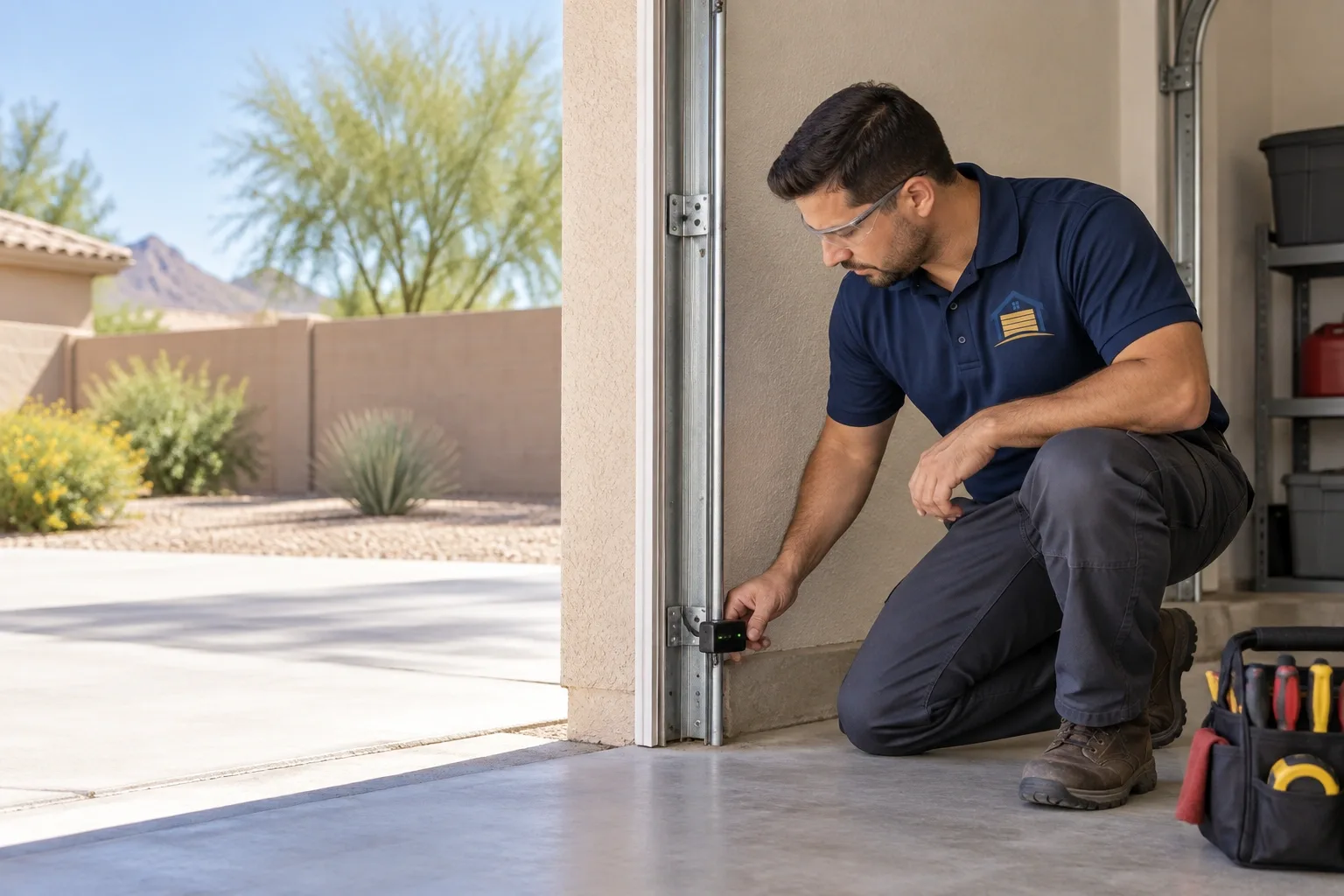
Arizona Garage Pros
Garage Door Roller Replacement in Arizona
Dust from monsoon storms and dry summers adds grit to rollers and bearings, one thing to check when a door gets loud. Lubrication advice varies, so a roller job should follow the door maker's instructions.
Roller Replacement · Arizona
Roller Replacement for Arizona homes
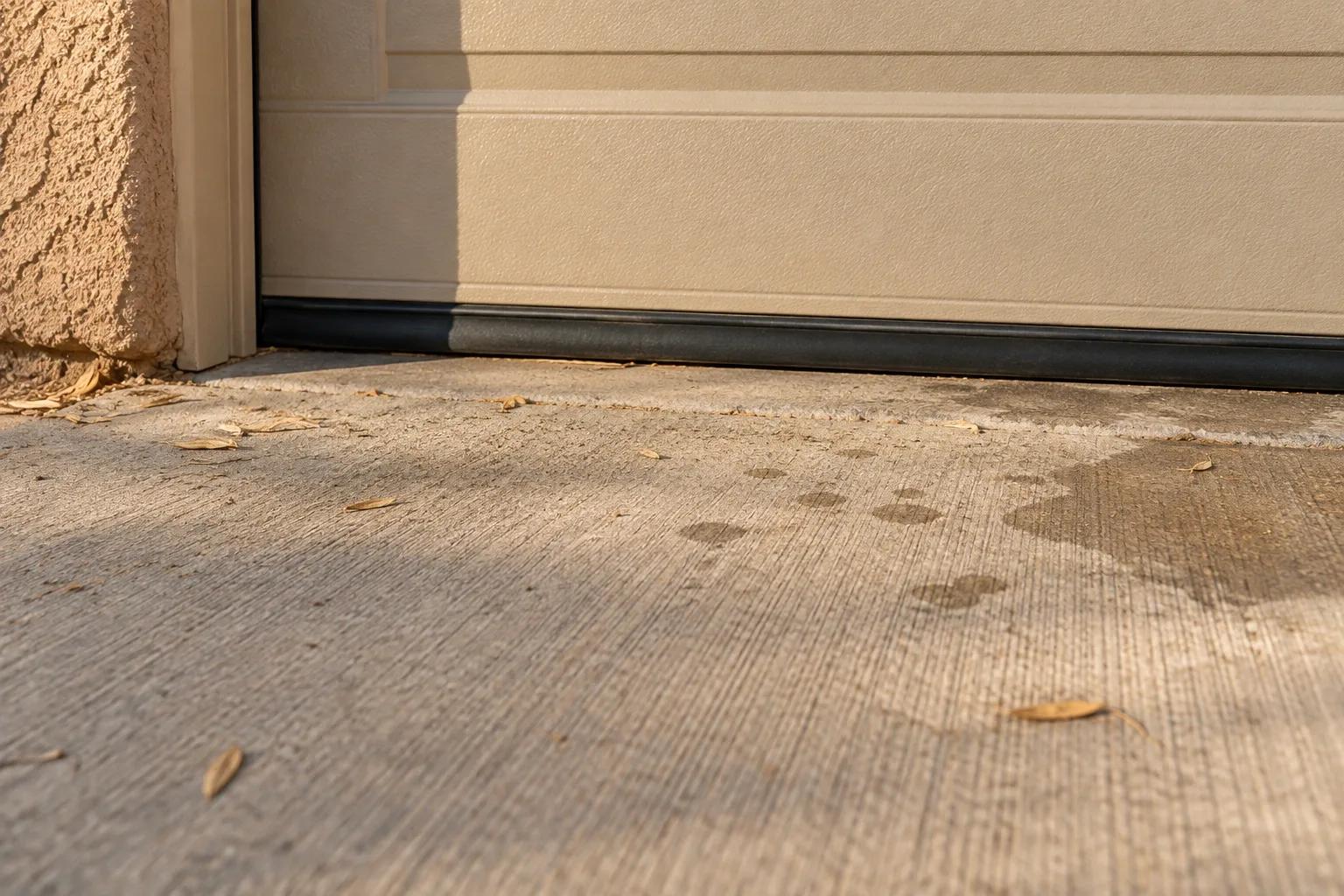
Arizona rollers meet dust in bulk. Fine grit carried by monsoon storms and dry summers settles into roller bearings and onto the track surface, and the first sign is usually sound: a new rumble, chatter or scraping as the door travels.
Heat is the second load, since expansion and contraction stress hardware and a lubricant that stays tacky holds onto fine dust. Lubrication advice is not uniform, so the manual for the specific door is the tiebreaker.
Arizona
What's different in Arizona
- 01
Noise Comes Before Failure
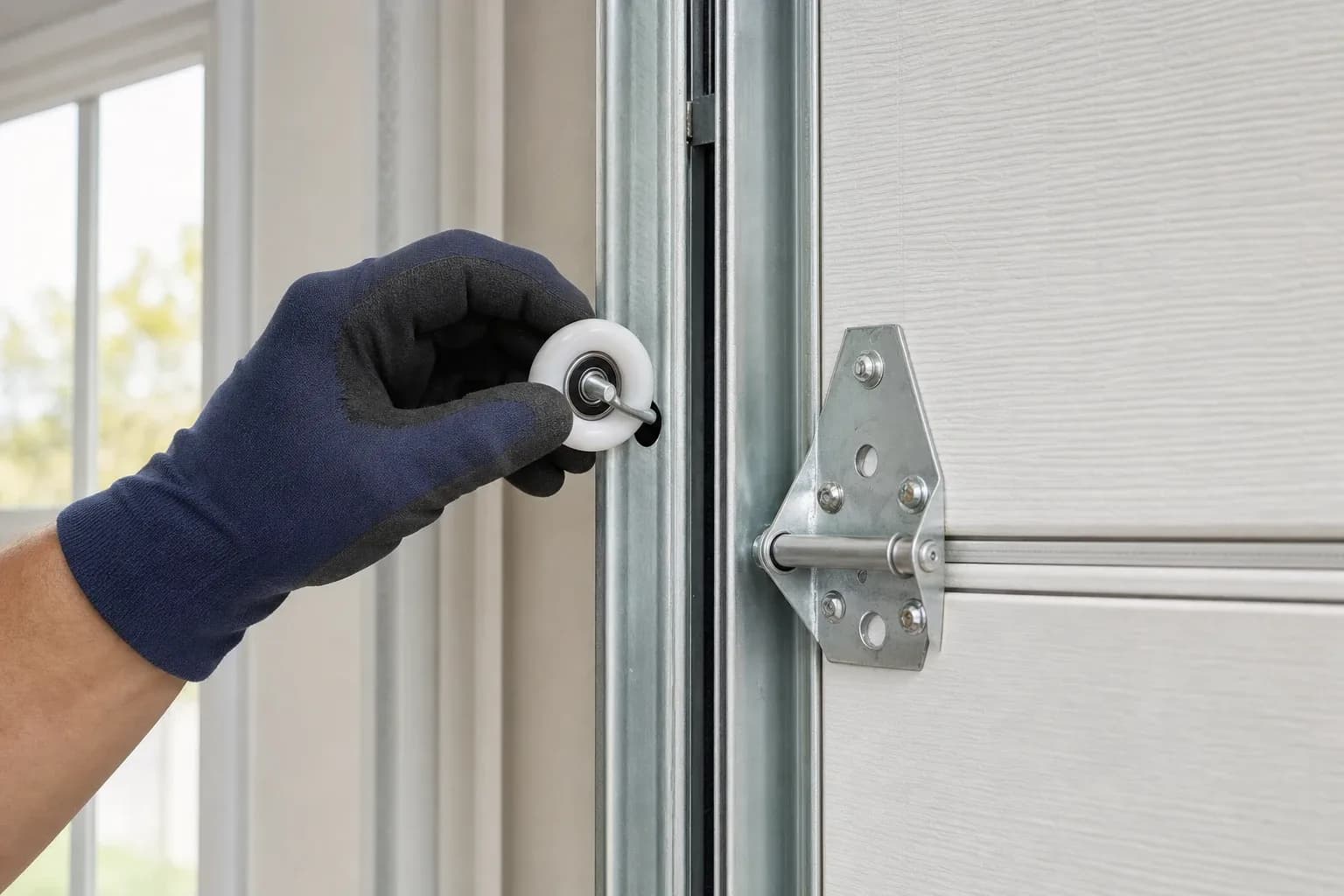
A worn roller usually announces itself with rumbling or chattering, a shudder on the way up, wobble in the stem or a flat spot on the wheel. A door that turns loud after dust season points to grit as one likely cause.
- 02
Bottom Rollers Are Not a Casual Swap
The roller in each bottom corner sits in a bracket the lift cable is tied to, and bottom brackets are under extreme tension. Rollers higher up look easy to slip out, but a door with hardware removed can bind or shift, so replacement stays with a trained technician.
Know the signs
When you need roller replacement
Common symptoms
- Loud rumbling, squeaking, or grinding as the door moves
- Visible cracks, flat spots, or missing pieces on a roller wheel
- Door moves roughly or catches at specific points along the track
- Rollers look worn unevenly compared to others on the same door
What the service covers
- Inspection of all rollers, hinges, and the tracks they ride in
- Removal of worn or damaged rollers one hinge point at a time
- Installation of new rollers seated correctly in the track
- Lubrication and a full-cycle test for smooth, quiet travel
The process
How the work is done
- 1
Inspect all rollers and hinges
Each roller is checked for cracking, flat spots, and bearing wear, along with the hinges and track sections they ride in.
- 2
Remove worn rollers one at a time
Rollers are replaced one hinge point at a time so the door stays supported throughout the process.
- 3
Seat new rollers in the track
Replacement rollers are fitted to the hinge and guided into the track so they sit and roll correctly.
- 4
Lubricate and test
Hinges and rollers are lubricated and the door is cycled to confirm quiet, even travel.
Cost factors
What affects the price
Prices aren't published because they depend on your door, the parts involved and the access to the work. These are the things that move the cost — ask for the price before any work starts.
- Number of rollers replaced
- A door typically has multiple rollers, and it's common to replace several that are wearing at a similar rate.
- Roller material
- Nylon rollers with sealed bearings run quieter and typically last longer than plastic rollers, which affects material cost.
- Track condition
- Rollers that have been grinding for a while can leave the tracks needing cleaning or minor adjustment too.
- Door usage
- A door that cycles frequently wears rollers faster and may benefit from a higher-cycle roller.
Safety first
- Rollers near the bottom of the door are removed one at a time while the door is supported, since taking out too many at once can let a section shift unexpectedly.
- Keep fingers clear of the track and hinge points while rollers are being removed or fitted.
- Avoid operating the door with a roller visibly popped out of the track until it's been addressed.
Safe things to check first
- Listen for a rumbling or grinding sound as the door moves and note whether it happens at the same spot each time.
- Look at the rollers you can see from the ground for obvious cracks or flat spots on the wheel.
Answers
Roller Replacement questions in Arizona
Why is my garage door louder after monsoon season?
Fine dust from storms can work into roller bearings and settle on the track, adding friction that shows up as rumbling or scraping. A worn or flat-spotted roller can sound the same, so if the noise persists after wiping visible dust from the track with the door closed, a technician can tell the two apart.
Should I grease garage door tracks in a desert climate?
Sources differ. One opener manual says to oil rollers, bearings and hinges yearly and not to grease the tracks, while a door-industry association's checklist lists hinges, rollers and tracks for lubrication twice a year. Follow the manual for your own door; if it is missing, a technician can confirm what the maker specifies.
Related
Related services
Arizona Garage Pros
Request service
Send the details in two quick steps. This isn't a booking — we contact you to confirm the problem, the timing and the location first.
Sources
- Technical Data Sheets — Door & Access Systems Manufacturers Association (DASMA) (accessed 2026-09-24)