
The short answer
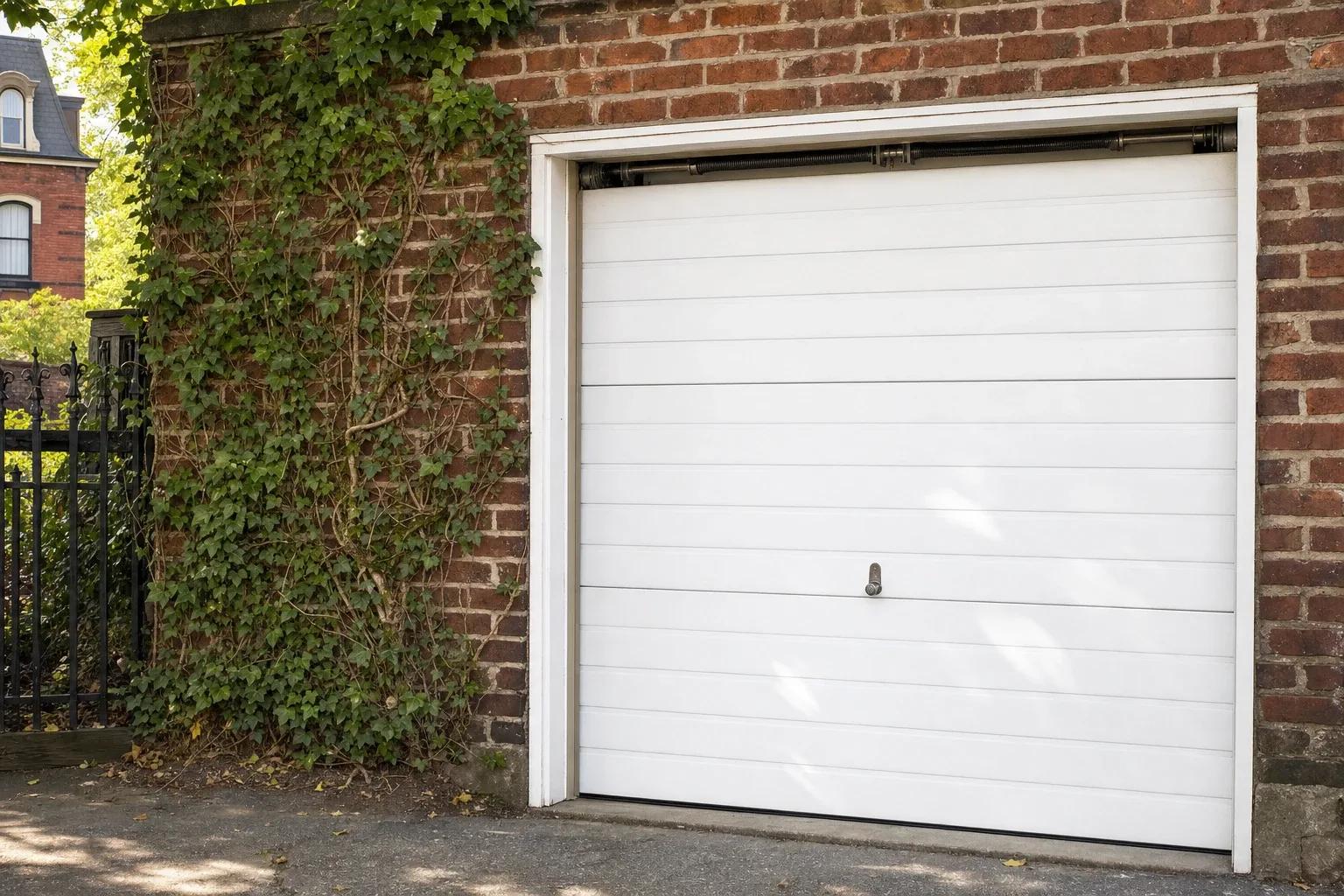
A garage door frozen to the floor after a Kentucky ice storm is usually a thin sheet of ice bridging the bottom seal to the concrete, not a mechanical failure. Don't force the opener — that can damage the opener or the track.
Why This Happens in Kentucky
The National Weather Service lists ice storms among the winter hazards Kentucky can see, along with snow squalls, high winds and flooding. When freezing rain coats a driveway apron, a thin glaze can form right at the base of the door, gluing the rubber bottom seal to the concrete. The door itself is usually fine — the ice is simply holding the seal in place until it's addressed.
Safe Steps Before Calling for Help
Start by looking, not pulling. Forcing an opener against a frozen seal can damage the opener or bend the track, turning a simple ice problem into a mechanical repair.
- Do not run the opener repeatedly if the door doesn't move on the first try.
- Work a plastic scraper — never metal — gently along the seal line to break the ice bond.
- Pour lukewarm, not hot, water along the seal and wipe it up right away so it doesn't refreeze into a thicker layer of ice.
- Clear ice from the outside of the track only; don't touch the spring, cables, or bottom brackets.
When to Call a Professional
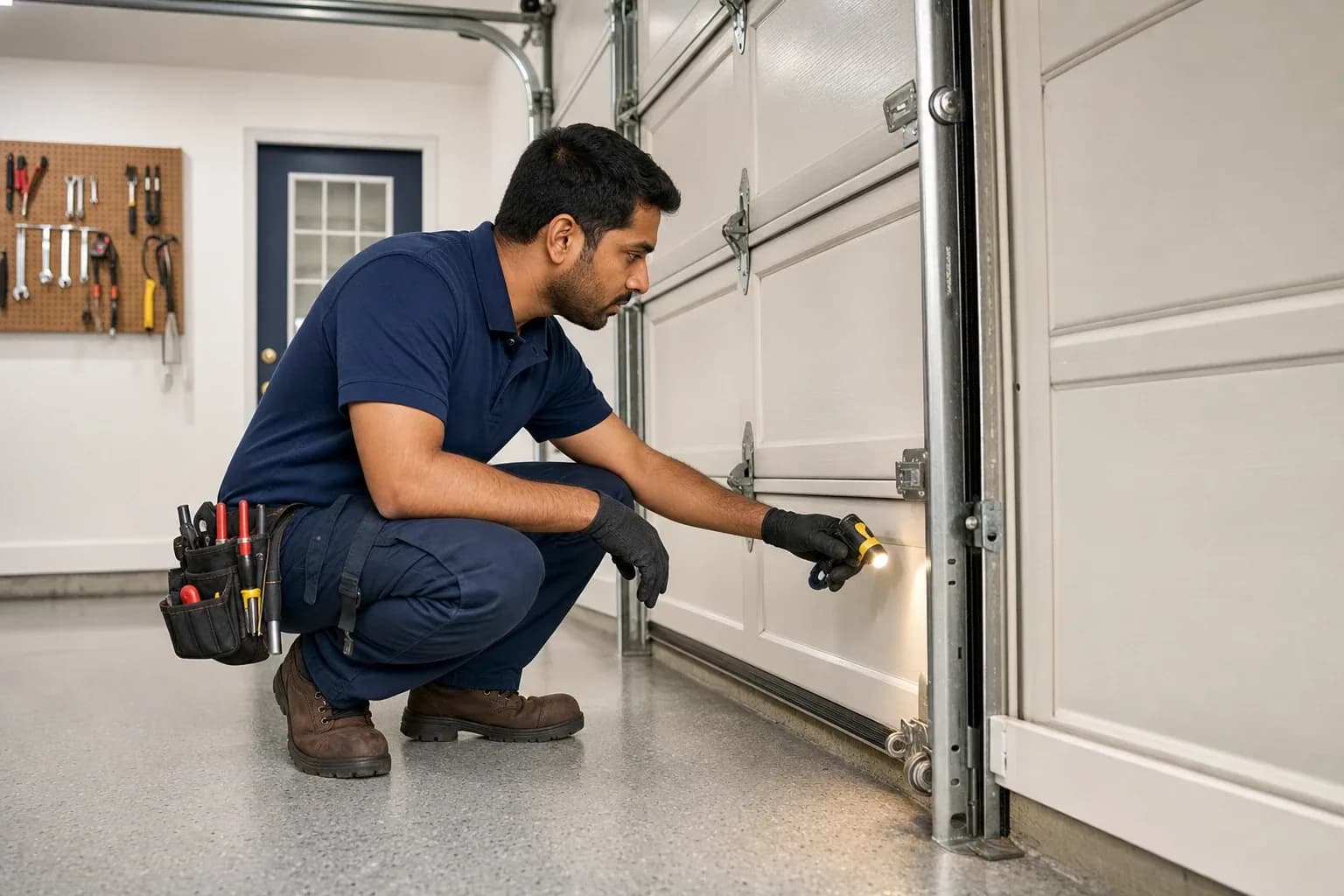
If the door still doesn't move freely once the seal is clear of ice, if a track looks bent or pulled away from the wall, if a spring looks stretched or sits at an odd angle, or if the opener strains or grinds, stop and request service rather than continuing to work at it yourself.
Published by Kentucky Garage Pros, a regional brand of USA Garage Pros · Updated 2026-10-19