
Kentucky Garage Pros
Garage Door Installation in Kentucky
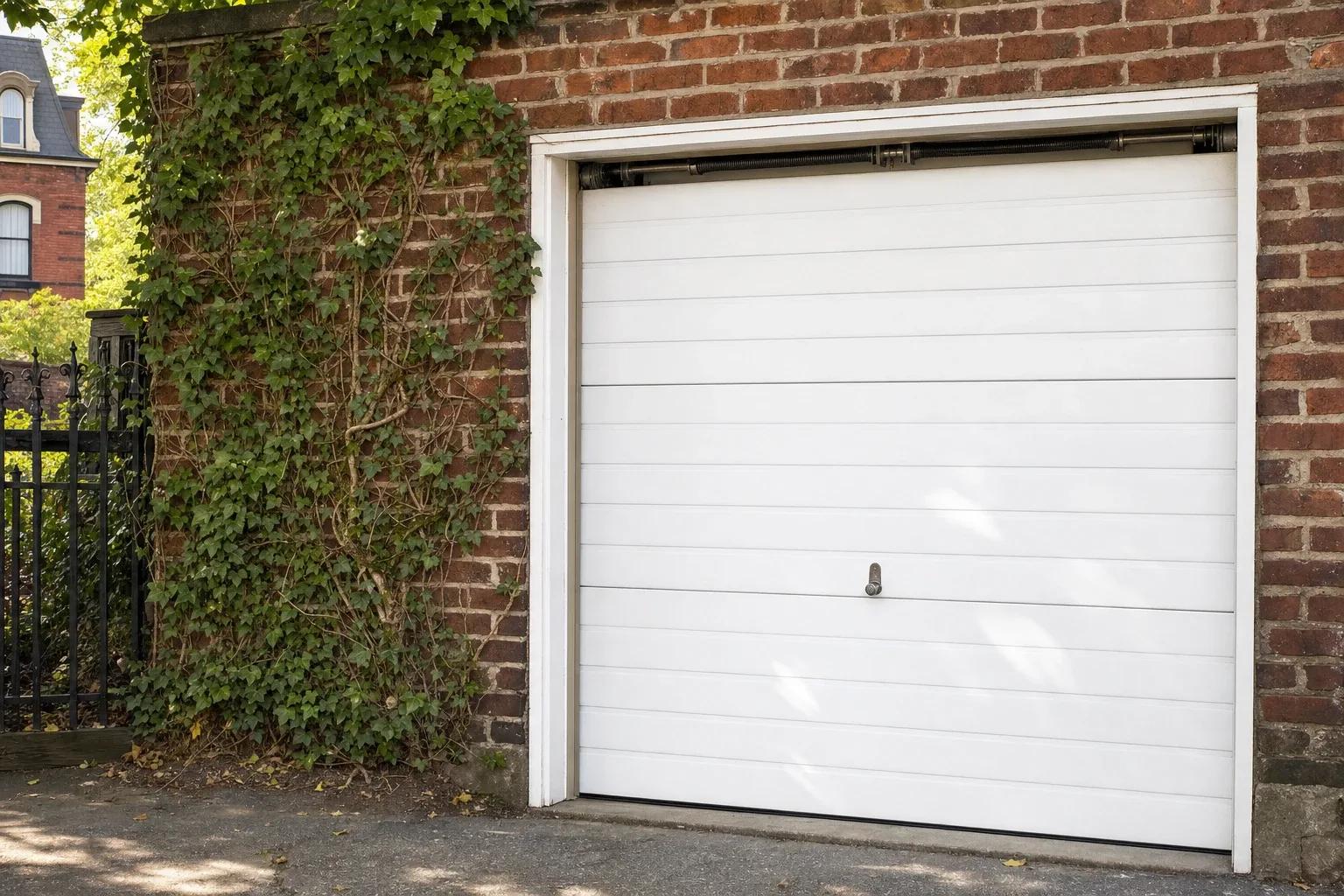
New installations in Kentucky range from narrow single-car openings on century-old Louisville and Lexington lots to standard-width openings in newer subdivisions, so confirming the actual opening size matters before ordering a door.
Installation · Kentucky
Installation for Kentucky homes
Ordering the right door starts with the opening itself, and Kentucky's mix of building eras makes that step less predictable than it sounds. A drive down almost any older Louisville or Lexington street turns up single-car openings built decades before today's two-car standard, while a newer subdivision in northern Kentucky or around Bowling Green is sized to current national norms from the start.
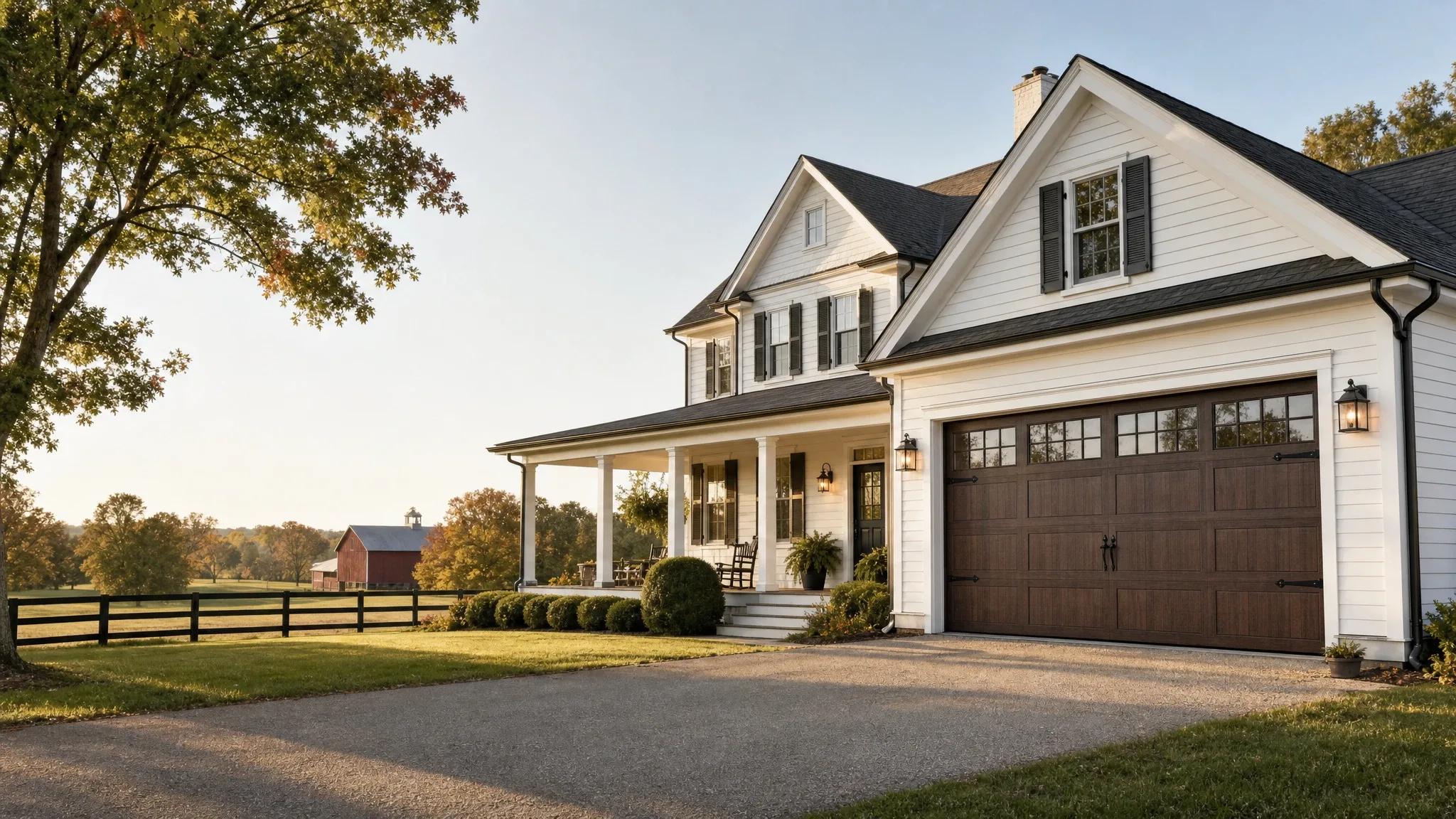
Central Kentucky adds its own wrinkle. Beyond ordinary homes, the Bluegrass region's horse farms and equipment buildings often need oversized carriage-style doors that behave more like barn hardware than a house garage, so an installation crew has to know which category a given building falls into before showing up with a door.
Kentucky
What's different in Kentucky
- 01
Measure Before Ordering, Not After
An opening built in a Kentucky neighborhood from the 1940s or 1950s can be several inches narrower than a modern standard, so confirming the actual width and height avoids ordering a door that doesn't fit.
- 02
New Construction Is More Predictable
Homes in newer Kentucky subdivisions, from northern Kentucky's river-adjacent growth to Bowling Green's expansion, are generally built to standard two-car dimensions, which simplifies the installation.
- 03
Barns and Equipment Buildings Are a Different Job
An oversized carriage door on a Bluegrass horse farm or equipment building uses different track and hardware sizing than a house garage, so it helps to specify the building type when scheduling.
Know the signs
When you need installation
Common symptoms
- Opening has no garage door yet, such as new construction or a converted opening
- Existing opening previously held a different door type, like a swing-out or non-sectional door
- Opening or framing has changed size and needs a door sized to match
- Planning to add insulation, windows, or a style not currently in place
What the service covers
- Measuring the opening and confirming jamb, header, and floor squareness
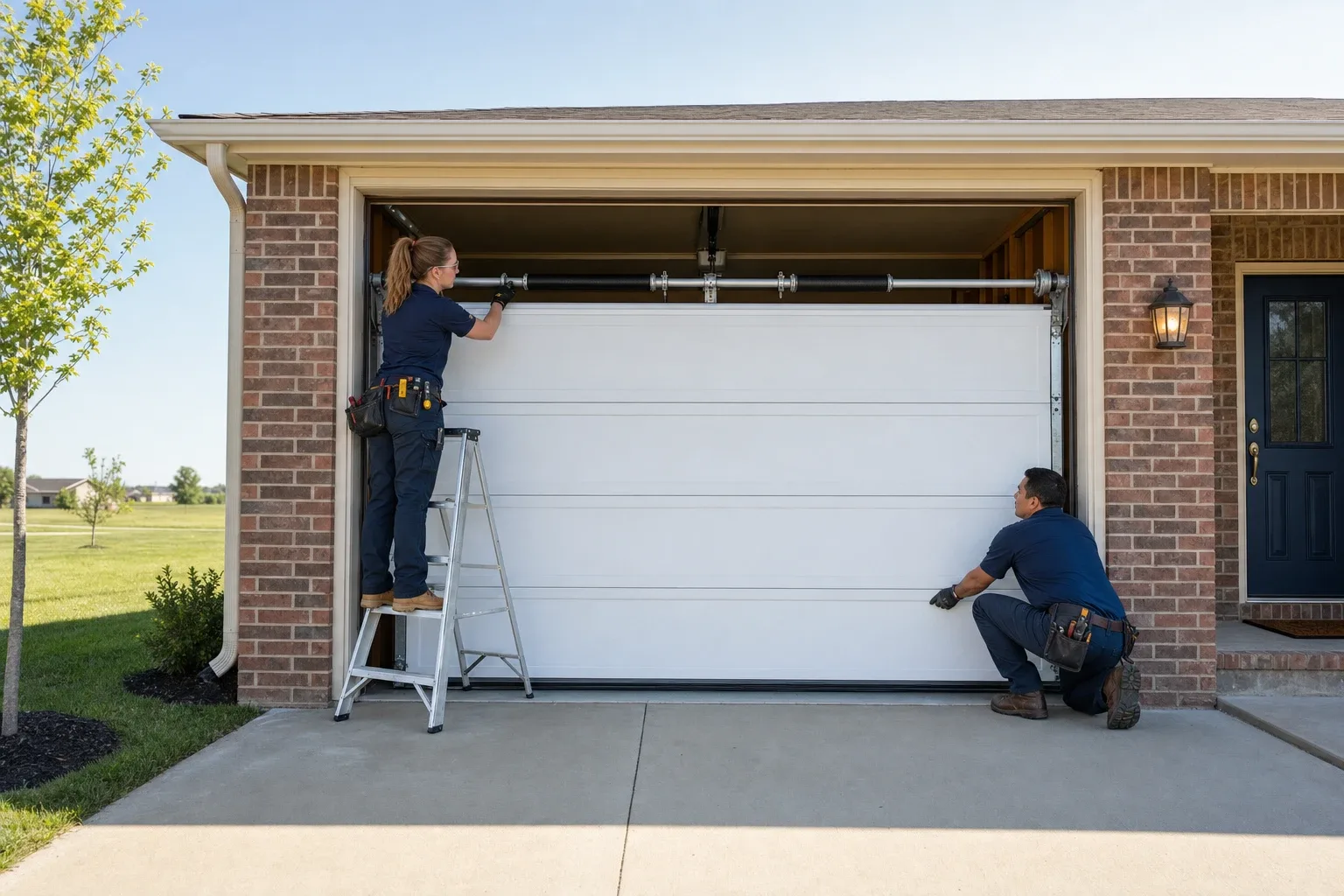
- Mounting new vertical and horizontal tracks and header hardware
- Installing the door sections, hinges, rollers, and a spring system sized to the door's weight
- Balancing the door and testing full travel and auto-reverse function
The process
How the work is done
- 1
Measure and confirm the opening
Width, height, headroom, and side room are measured and checked against the door and track system being installed, including any structural adjustments needed.
- 2
Set tracks and hardware
Vertical and horizontal tracks, the header bracket, and the spring system sized for the door's weight are mounted plumb and level to the framing.
- 3
Install and hang the door sections
Panels are set in place, connected with hinges and rollers, and the spring system is set to the correct torque for the door's weight and size.
- 4
Balance and test
The door is tested for even travel, proper balance when disconnected from an opener, and correct auto-reverse response before the job is considered complete.
Cost factors
What affects the price
Prices aren't published because they depend on your door, the parts involved and the access to the work. These are the things that move the cost — ask for the price before any work starts.
- Door material and construction
- Steel, wood-composite, and insulated multi-layer doors differ in weight and installation requirements.
- Opening size and headroom
- Wider or taller openings and low-headroom situations may call for different track hardware.
- Condition of the existing structure
- Framing, jambs, or a header that need adjustment add time before the door itself goes in.
- Opener and accessories
- Adding a new opener, windows, or specific hardware in the same visit changes the scope of work.
- Local wind exposure
- In areas subject to high wind events, the door and its track hardware may need to meet a specific design pressure rating rather than relying on aftermarket reinforcement added later.
Safety first
- Never let anyone stand under a door section while it's being lifted or fitted into the tracks.
- The spring system must be set to match the door's exact weight — an improperly set spring is a serious hazard and should only be handled by a trained professional.
- Keep the opening area clear of children and pets during installation, since tools, panels, and open track sections are present.
Safe things to check first
- Note the opening's rough width and height and whether there's a step, slope, or uneven floor at the threshold.
- Note how much room is above the opening and to the sides, since this affects which track hardware fits.
Local pages
Installation by city
Answers
Installation questions in Kentucky
Will a new garage door fit my older Kentucky home's opening?
Not always without adjustment. Many pre-war Kentucky garages were built narrower than today's standard sizes, so confirming the exact opening dimensions before ordering is an important first step.
Do horse farm buildings need a different kind of garage door installation?
Yes. Bluegrass-region barns and equipment buildings typically use oversized carriage-style doors with different hardware than a home garage, so mentioning the building type helps when planning the installation.
Related
Related services
Kentucky Garage Pros
Request service
Send the details in two quick steps. This isn't a booking — we contact you to confirm the problem, the timing and the location first.
Sources
- TDS #152 — Garage Doors and High Wind Events — Door & Access Systems Manufacturers Association (DASMA) (accessed 2026-09-24)
- Technical Data Sheets — Door & Access Systems Manufacturers Association (DASMA) (accessed 2026-09-24)