
The short answer
Garage door springs, cables, and track hardware corrode faster across most of North Carolina than in a drier climate, because sustained humidity keeps moisture on exposed metal. Homes near the Atlantic coast see this even sooner, since salt-laden air adds to the effect.
Why North Carolina's climate speeds up corrosion
North Carolina's humid subtropical climate keeps moisture in the air for long stretches, especially through the summer, which is enough on its own to accelerate oxidation on unprotected steel hardware. Along the coast, salt aerosol carried inland by onshore wind adds to that effect, which is why corrosion tends to show up soonest on homes closest to the Atlantic.
Where corrosion shows up first
A few spots tend to show early wear before corrosion becomes a bigger problem.
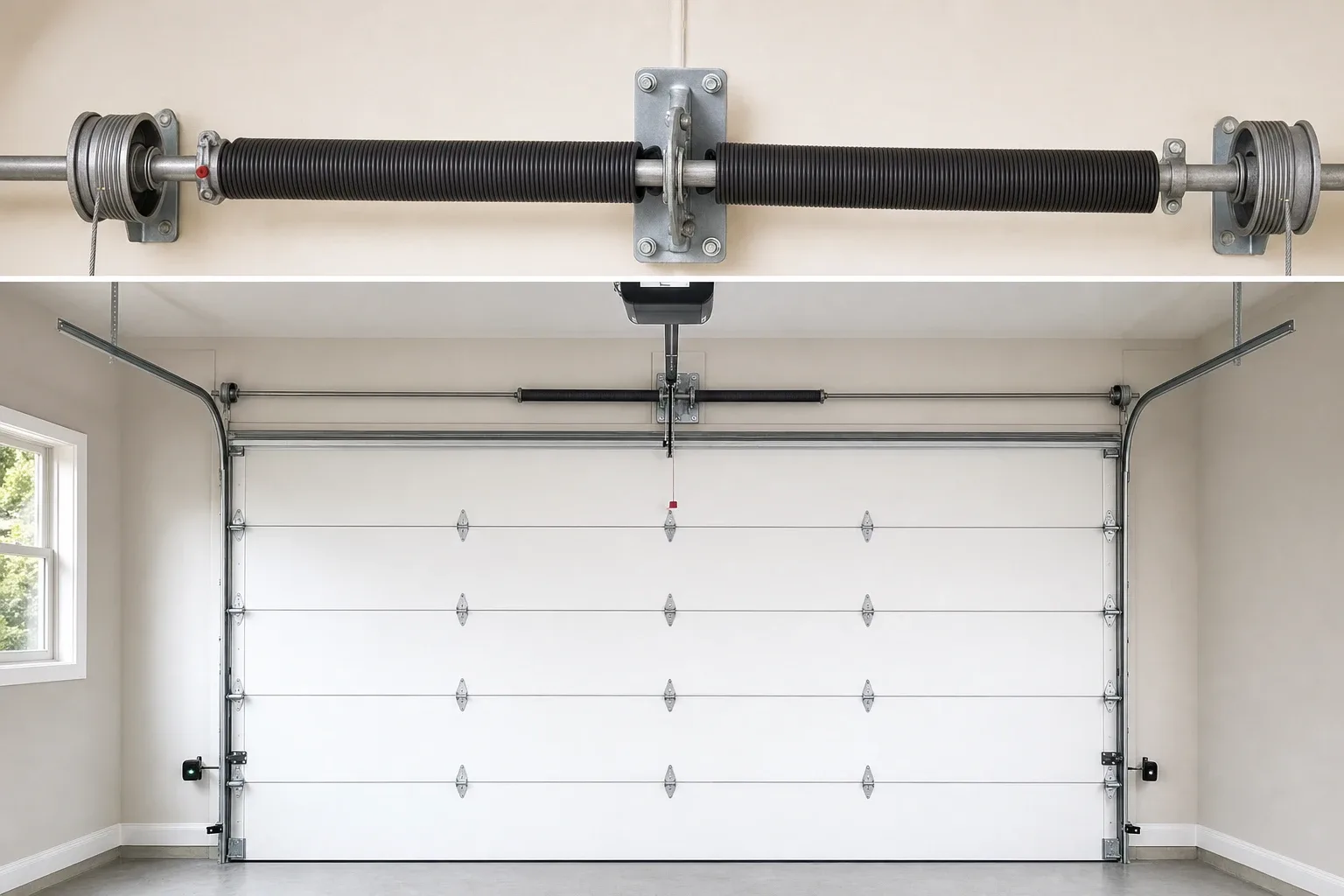
- Spring coils losing their coating and developing surface rust
- Cable strands fraying or discoloring near the bottom bracket
- Track bolts, hinges, and rollers rusting at exposed edges
- Bottom brackets and end bearing plates showing pitting
Slowing down corrosion
Choosing galvanized or coated hardware where possible, keeping the door closed where possible rather than leaving it open for long stretches, and periodically wiping down the lower track and hardware can all help. The goal of routine maintenance is to catch surface rust early, before it reaches a load-bearing part like a spring or cable — and any hardware showing more than light surface rust on a spring or cable should be evaluated by a professional rather than serviced by hand.
Published by North Carolina Garage Pros, a regional brand of USA Garage Pros · Updated 2026-10-19