
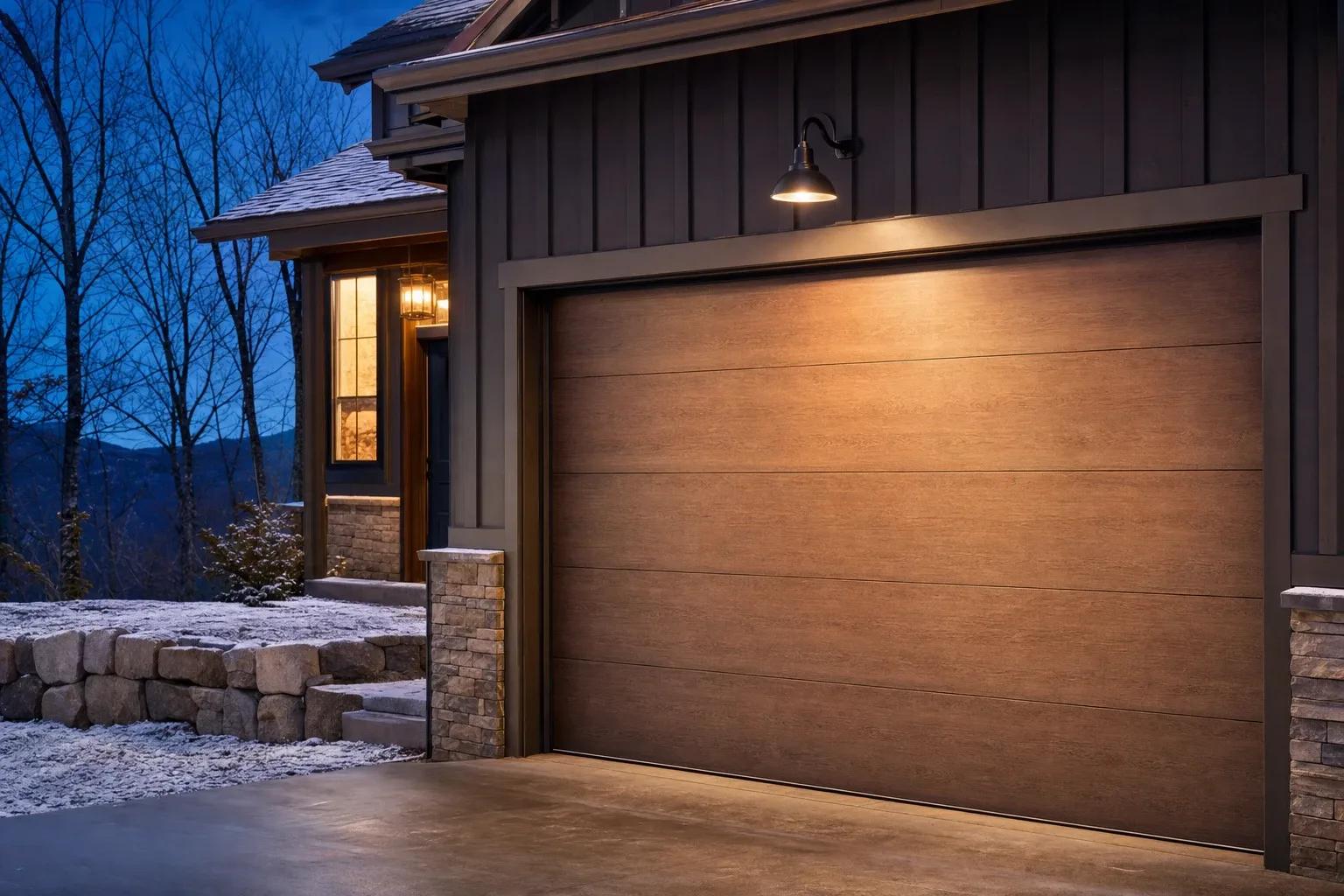
The short answer
A garage door on the North Carolina coast that's been racked, bowed, or pushed off its tracks during a tropical storm or hurricane-force wind event usually needs a full check of the tracks, hinges, and header hardware before it's used again, since a door that looks straight can still have a bent track or a stressed panel seam underneath.
Why coastal NC garage doors take wind damage
North Carolina's coastal counties, including the Outer Banks, are assigned some of the highest design wind speeds in the state's building code, up to 150 mph in the highest-risk zones, specifically because these areas see hurricane and tropical-storm-force wind more often than inland North Carolina. A garage door is one of the largest moving surfaces on a home's exterior, and sustained wind pressure on a closed door, or wind getting behind a door that flexes under load, can rack the panels, bend a track, or pull anchor hardware loose.
Signs a door needs inspection after a storm
A visual check after any significant coastal storm should cover more than just the obvious dents.
- Panels that look slightly bowed or racked out of square
- A track that's bent, loose, or pulled away from the wall at any bracket
- New gaps at the door's edges where it used to sit flush
- Grinding, binding, or uneven movement when the door opens or closes
What a wind-rated door does differently
A wind-pressure-rated garage door is tested to standards such as ASTM E330 or ANSI/DASMA 108 and built to resist a specified design wind pressure, rather than being a standard door built for an inland location. In North Carolina's high-wind coastal zones, the required pressure rating depends on the door's size and the building's height, which is why a two-car door on a taller coastal home can call for a different rating than a single-car door on a one-story home.
Published by North Carolina Garage Pros, a regional brand of USA Garage Pros · Updated 2026-10-19