

The short answer
A garage door's noise usually tells you exactly where to look: squeaking or grinding points to rollers and hinges that need attention, rattling points to loose hardware, and a sudden loud bang can mean a spring has broken. Most rattles and squeaks are routine wear that basic maintenance addresses, but a bang or a grinding opener motor is worth treating as urgent and leaving to a professional rather than continuing to run the door.
Squeaking or grinding as the door moves
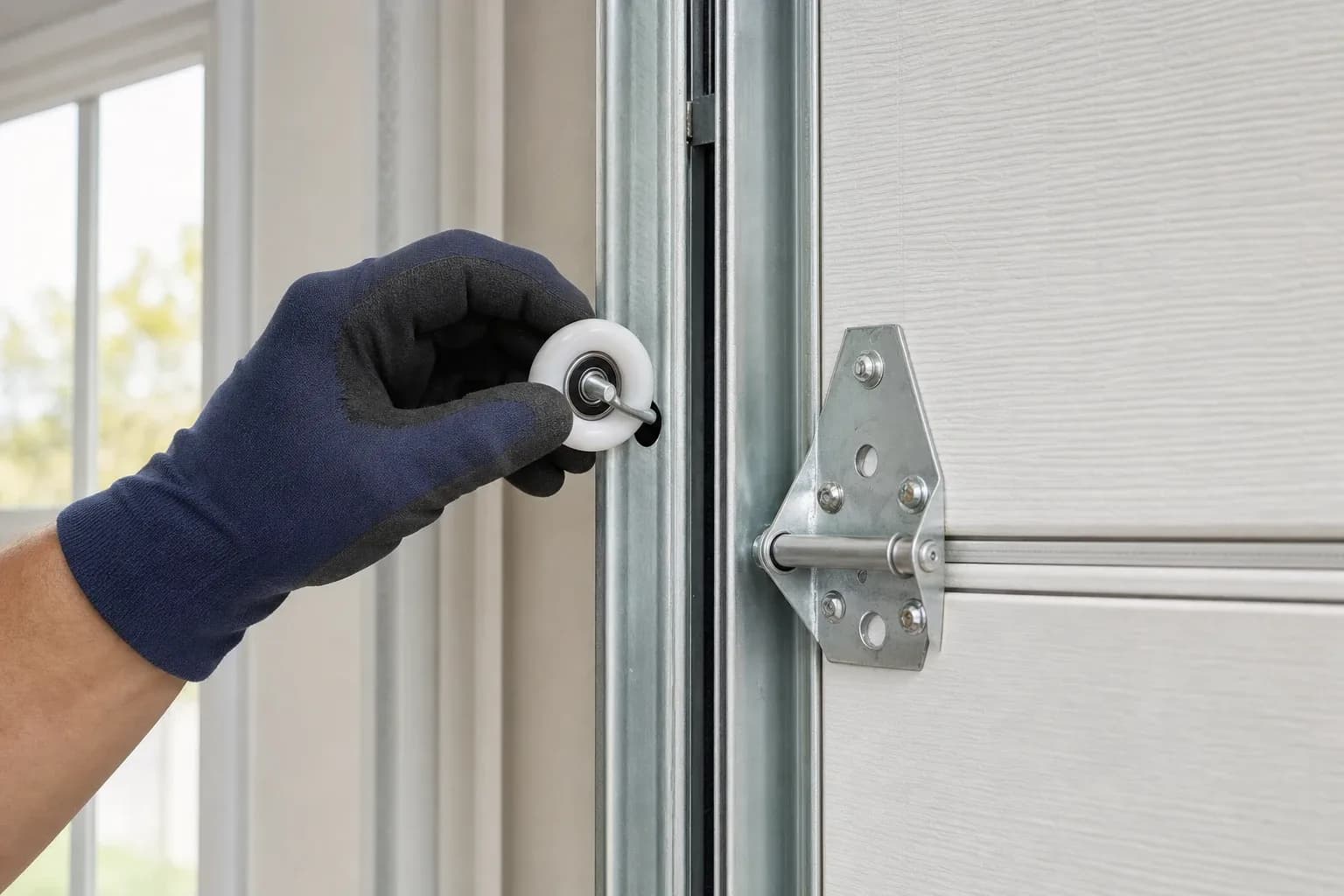
A steady squeak that repeats with every roller as it passes is typically dry hinges or rollers that have gone past their normal lubrication cycle. Older steel rollers on ball bearings tend to get louder with age faster than nylon rollers, which run quieter but still need occasional attention where they meet the hinge.
Rattling or clattering hardware
A rattle that shakes the whole door, rather than a single point of contact, is usually loose mounting hardware. The repeated vibration of daily use works bolts and track brackets loose over months and years, and a visible check of the track fasteners and hinge bolts often finds the source. Tightening hardware you can see and reach is a reasonable homeowner task; the track itself should stay properly aligned rather than pulled tight against a misaligned bolt.
A sudden loud bang
A single loud bang, especially if the door becomes noticeably harder to open right after, is a common sign of a broken torsion spring. Stop using the door and do not attempt to open or close it further. Springs are under continuous high tension and a broken one changes the door's balance immediately and dangerously — this is a professional repair, not a DIY fix, even if the door still appears to move.
Humming or grinding from the opener itself
Noise coming specifically from the opener unit rather than the door — a persistent hum, a grinding whir, or a chain that's slapping against its rail — usually points to wear in the drive system: a stretched chain or belt, a worn drive gear, or a trolley that needs attention. This is generally an opener repair rather than a door hardware issue.
Maintenance that reduces everyday noise
A garage-door-specific lithium or silicone-based lubricant on the rollers, hinges, and the track's roller-contact surface handles most routine squeaking. Avoid heavy grease, which attracts dirt and can gum up over time. Tightening visible, reachable hardware like track brackets and hinge bolts helps with rattling. Springs, cables, and the bottom brackets they attach to are not part of routine homeowner maintenance and should be left to a technician even if they appear to be the noise source.
Published by USA Garage Pros · Updated 2026-09-24