
USA Garage Pros
Garage Door Opener Repair
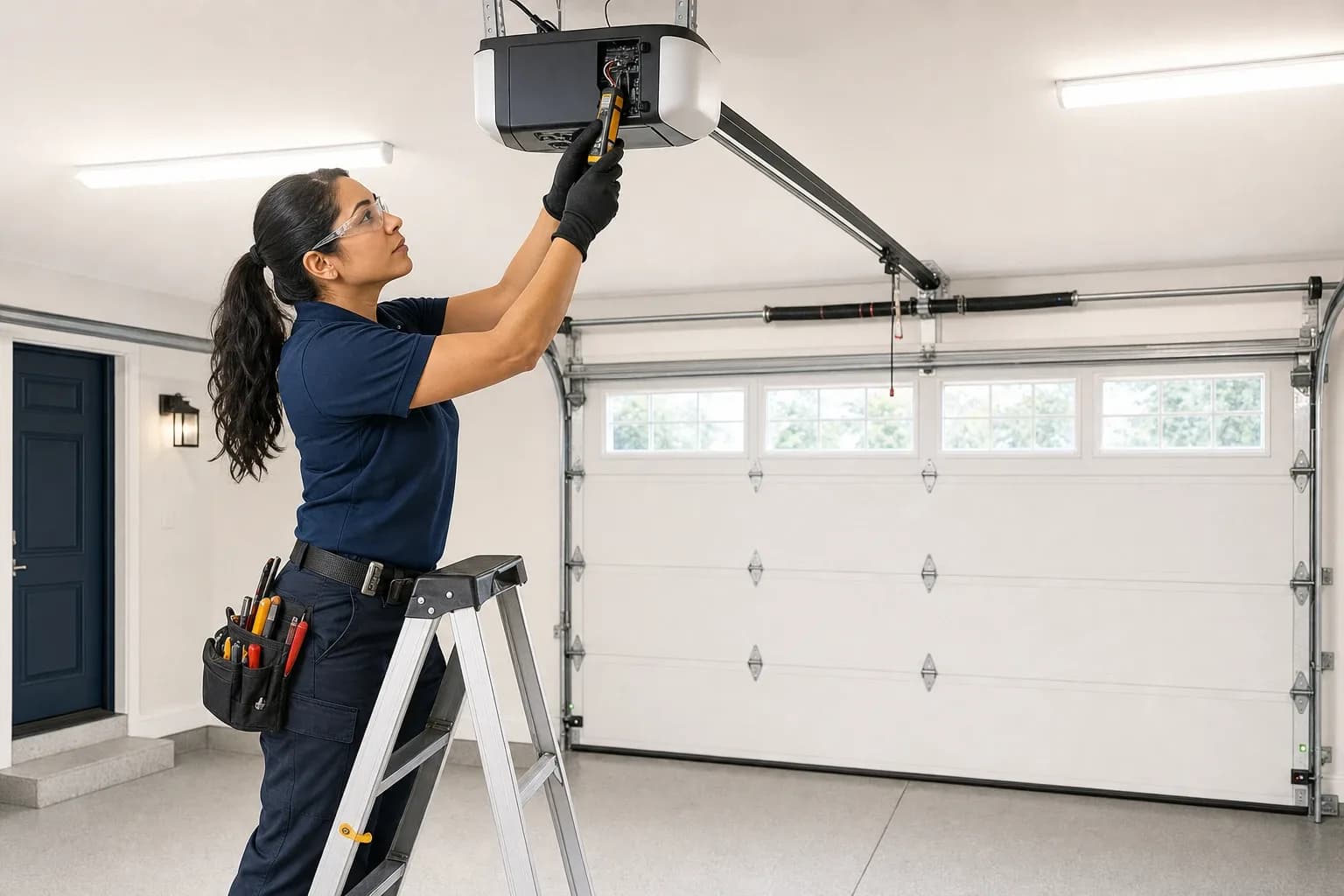
Diagnosis and repair of garage door opener motors, drive systems, logic boards, and safety features when the opener stops working correctly.
Opener Repair
Garage door opener repair
The opener is the part of a garage door system most homeowners interact with directly, and it's often the first thing blamed when a door misbehaves — even though the actual cause can be in the door's springs, tracks, or hardware instead. Opener repair starts by figuring out whether the motor, drive system, logic board, remote, or a safety sensor is behind the symptom.
Openers use a chain, belt, or screw drive to move a trolley along a rail connected to the door, along with a logic board that manages travel limits, force settings, and the federally required auto-reverse safety feature. A repair addresses whichever of these is causing the door to stop, reverse, or fail to respond.
Know the signs
When you need opener repair
Common symptoms
- Opener runs but the door doesn't move, or moves only partway
- Door reverses immediately after touching the floor, or won't close at all
- Remote or wall button works inconsistently or not at all
- Opener makes grinding, clicking, or straining noises during operation
- Light on the opener flashes to indicate an error
What the service covers
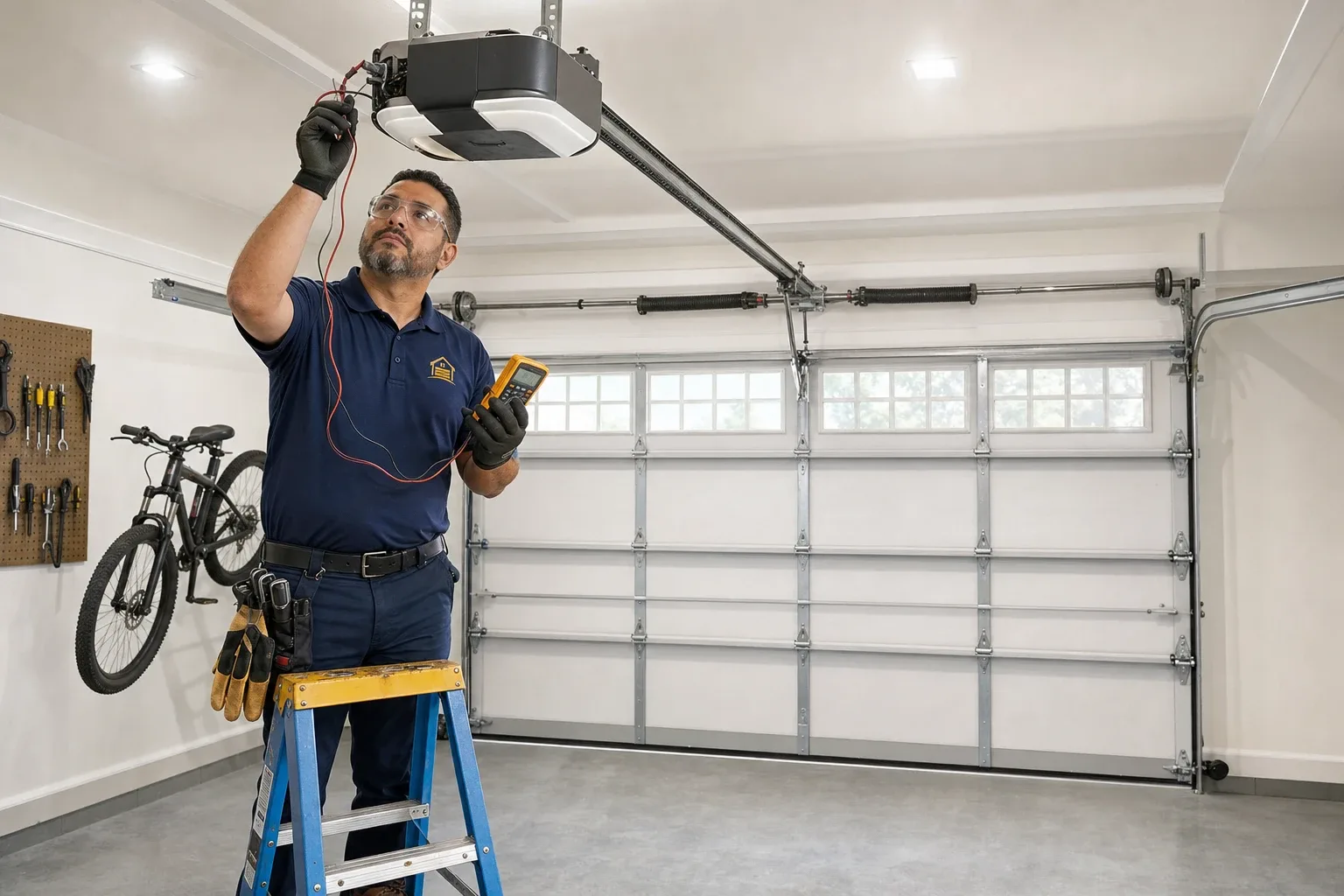
- Diagnosis of the motor, drive system, and logic board
- Testing and adjustment of travel limits and force settings
- Repair or replacement of the drive chain, belt, or screw drive as needed
- Confirmation that the auto-reverse safety feature responds correctly
The process
How the work is done
- 1
Test opener function
The opener is run through several cycles to see exactly where it fails: on start, mid-travel, or when reversing.
- 2
Check the drive and logic board
The chain, belt, or screw drive and the opener's logic board are inspected for wear, damage, or incorrect settings.
- 3
Repair the specific fault
Depending on the cause, this may mean adjusting travel limits and force, replacing a worn drive component, or repairing wiring to a control or sensor.
- 4
Verify the safety reversal
The auto-reverse feature is tested to confirm the door reverses immediately on contact with an obstruction, as required for residential openers.
Decide
Repair or replace?
| Repair usually makes sense when… | Replacement is worth considering when… |
|---|---|
| The motor and logic board are functioning and the issue is a specific worn part, sensor, or setting | The motor or logic board itself has failed and parts aren't available |
| Replacement parts are available for the opener's age and model | The opener no longer meets current safety requirements and can't be brought up to standard |
Cost factors
What affects the price
Prices aren't published because they depend on your door, the parts involved and the access to the work. These are the things that move the cost — ask for the price before any work starts.
- Drive type
- Chain, belt, and screw-drive openers use different parts for repair.
- Which component has failed
- A remote or sensor issue is typically quicker to resolve than a motor or logic-board fault.
- Opener age and part availability
- Older openers may need parts sourced or, if unavailable, a full unit replacement.
- Related door issues
- If a door-side problem, such as an unbalanced door, is straining the opener, that gets addressed too.
Safety first
- Never bypass, disconnect, or block a photo-eye sensor to force a door to close — this removes a required safety feature.
- Disconnect power to the opener before inspecting the motor unit or wiring.
- Test the auto-reverse feature regularly per the opener manufacturer's guidance; the door should reverse on contact with an obstruction.
Safe things to check first
- With the door in view, note at what point in the cycle it stops, reverses, or makes noise.
- Check whether the indicator lights on the two photo-eye sensors near the floor are lit steadily; a blinking or dark light can point to a sensor issue.
- Test the auto-reverse feature per the opener manufacturer's guidance and confirm the door reverses on contact with an obstruction.
Answers
Frequently asked questions
Why does my door reverse before closing all the way?
This is often the auto-reverse safety feature responding to a misaligned photo-eye sensor, an obstruction in the track, or force settings that need adjustment.
How do I know if it's the opener or the door itself?
If the door moves smoothly and evenly by hand with the opener disconnected, the issue is likely in the opener; if the door itself feels heavy or uneven, the problem may be in the springs or hardware.
Can a garage door opener be repaired, or does it need to be replaced?
Many opener problems, such as sensors, remotes, drive components, and settings, can be repaired. Replacement becomes the better option when the motor or logic board itself has failed.
What is the auto-reverse feature and why does it matter?
It's a required safety feature that makes the door immediately reverse direction if it senses an obstruction while closing, reducing the risk of entrapment.
Related
Related services
USA Garage Pros
Request service
Send the details in two quick steps. This isn't a booking — we contact you to confirm the problem, the timing and the location first.
Sources
- Automatic Residential Garage Door Operators — U.S. Consumer Product Safety Commission (accessed 2026-09-24)
- UL 325 50th Anniversary & Key Safety Issues — UL Solutions (accessed 2026-09-24)