
USA Garage Pros
Garage Door Replacement
Removing an existing garage door and its hardware and fitting a new door in its place, for doors that are too worn, damaged, or outdated to keep repairing.
Replacement
Garage door replacement
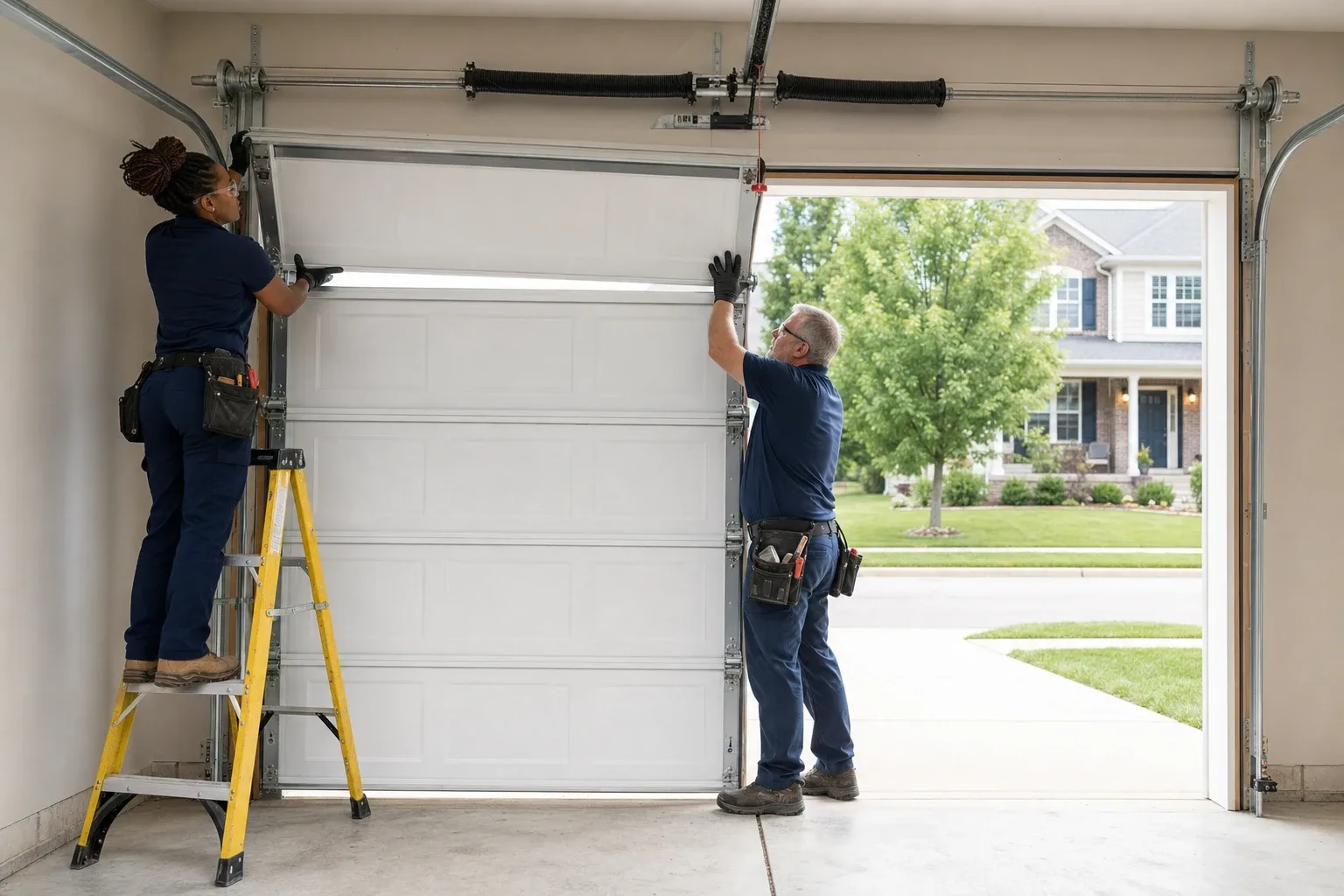
A garage door replacement swaps out an existing door — and usually its tracks, springs, and cables — for a new one, rather than repairing what's there. It's the right move when the current door has reached a point where individual repairs would only be temporary, or when a homeowner wants a different look, better insulation, or hardware the old door can't accommodate.
Replacement work involves safely removing the old door and hardware, confirming the opening and header can support the new door's weight, and installing new tracks and a spring system sized correctly for it. Reusable components, like an opener in good condition, are evaluated rather than replaced automatically.
Know the signs
When you need replacement
Common symptoms
- Door has multiple worn or damaged systems at once, such as springs, tracks, and panels together
- Panels are dented, cracked, warped, or rusted through in ways that affect how the door sits or seals
- Repairs have become frequent, or the same problems keep coming back
- Door no longer matches a home's style, insulation needs, or security expectations
What the service covers
- Removal of the existing door, tracks, and spring system
- Inspection of the opening, jambs, and header before the new door goes in
- Installation of a new door with tracks and hardware sized to its weight
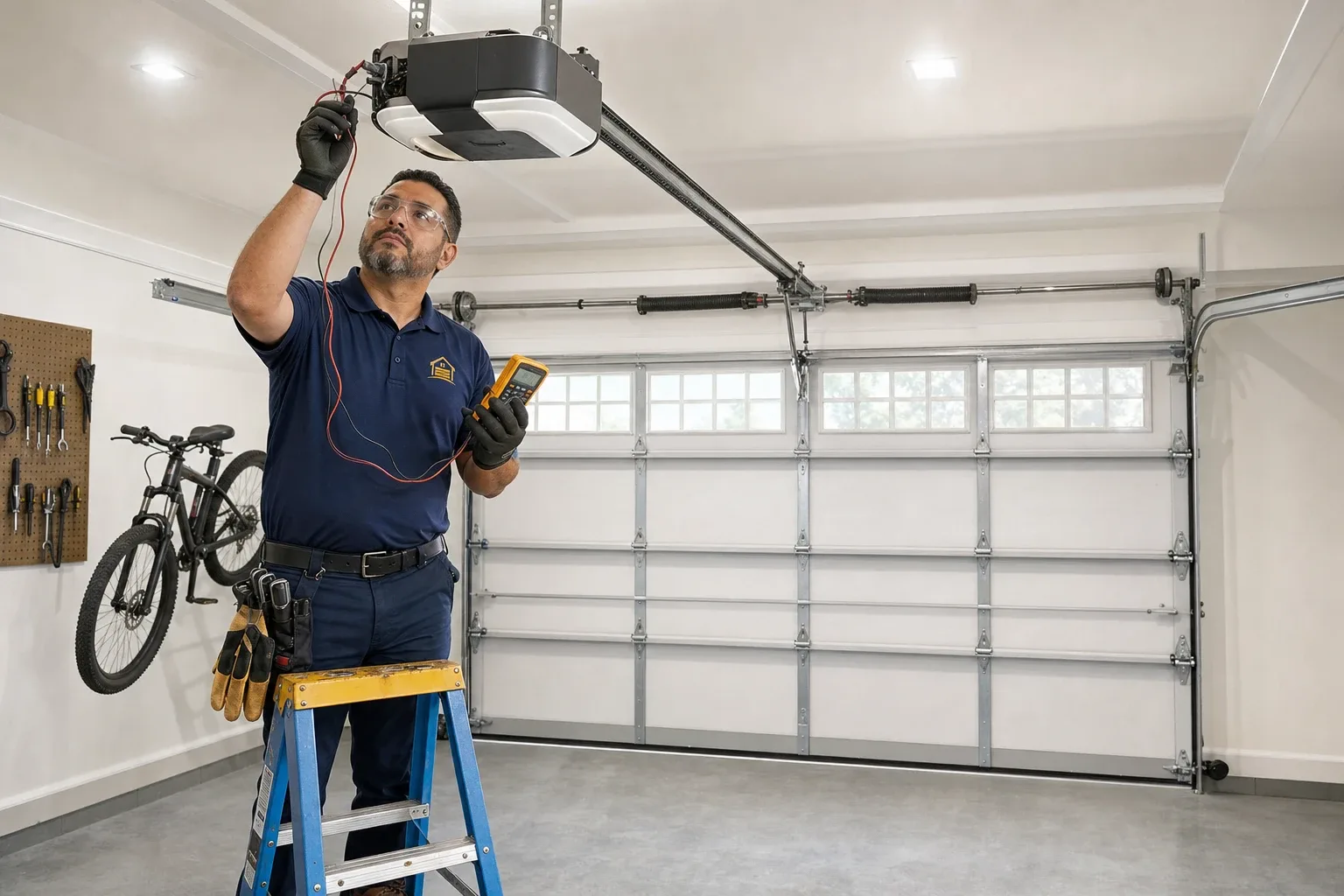
- Evaluation of the existing opener for reuse or replacement
The process
How the work is done
- 1
Assess the current door and opening
The existing door, tracks, and opening are inspected to confirm replacement is the right call and to plan for the new door's fit.
- 2
Remove the old door and hardware
The door, tracks, and spring system are safely taken down, with the spring's stored energy released using proper equipment before removal.
- 3
Install the new door and hardware
New tracks and a spring system matched to the new door's weight are mounted, and the door panels are hung and connected.
- 4
Balance, test, and finish
The new door is balanced, cycled for smooth even travel, and checked for a proper seal along the sides, top, and bottom.
Decide
Repair or replace?
| Repair usually makes sense when… | Replacement is worth considering when… |
|---|---|
| Only one or two components have failed and the panels and structure are otherwise sound | Panels are cracked, rusted through, or warped enough to affect fit and seal |
| The door still balances and seals correctly once the specific issue is fixed | Repairs keep recurring, or several systems are failing around the same time |
| A different material, insulation level, or style is wanted than the current door offers |
Cost factors
What affects the price
Prices aren't published because they depend on your door, the parts involved and the access to the work. These are the things that move the cost — ask for the price before any work starts.
- New door material and style
- Insulated, multi-layer, and higher-end finishes use more material than a basic steel door.
- Reusable vs. new hardware
- Whether the opener, tracks, or other hardware can be reused affects how much new material is needed.
- Condition of the opening
- An opening needing jamb or header repair before the new door goes in adds time.
- Disposal of the old door
- Removing and hauling away the old door and hardware is part of the scope.
Safety first
- Removing an old door's spring system involves releasing stored energy and should only be done by someone trained to do it safely.
- Never stand under a door or its tracks while the old system is being taken down or the new one is being fitted.
- Keep the work area clear of children and pets while tools, panels, and open hardware are present.
Safe things to check first
- Look at the current door's panels for cracks, rust-through, or warping, and note which sections are affected.
- With the opener disconnected, watch whether the door stays roughly in place when raised partway, or drops and rises on its own — either can suggest the balance is off.
Answers
Frequently asked questions
Is it better to replace the whole door or just repair it?
That depends on how many parts are affected and the panels' condition. A replacement makes more sense when several systems are worn together or the panels themselves are damaged.
Can the existing opener be kept with a new door?
Often yes, if it's in good working condition and compatible with the new door's weight; this is confirmed as part of the visit.
What happens to the old door and hardware?
The old door, tracks, and springs are removed and hauled away as part of the replacement.
How long does a full garage door replacement take?
A typical single-door replacement is usually completed in about a day, though the exact time depends on the door's size, style, and the opening's condition.
Related
Related services
USA Garage Pros
Request service
Send the details in two quick steps. This isn't a booking — we contact you to confirm the problem, the timing and the location first.
Sources
- Technical Data Sheets — Door & Access Systems Manufacturers Association (DASMA) (accessed 2026-09-24)