
Resources
Garage Door Help
Understand common symptoms, explore the relevant service, and learn when to leave a problem to a technician.
Start here
Troubleshooting & decisions
Understanding Garage Door R-Value (and Its Limits)
R-value measures how well a material resists heat flow, but on a garage door it's typically calculated for the center of a single section — it doesn't account for the seams between sections, the steel end stiles, the hardware, or the perimeter seal on the actual installed door. The door industry's own technical guidance describes the calculated R-value as being of limited usefulness on its own for that reason, and points to U-factor, a lab-tested measurement of the complete assembled door, as the more representative number when comparing options.
A Garage Door Maintenance Schedule Worth Actually Following
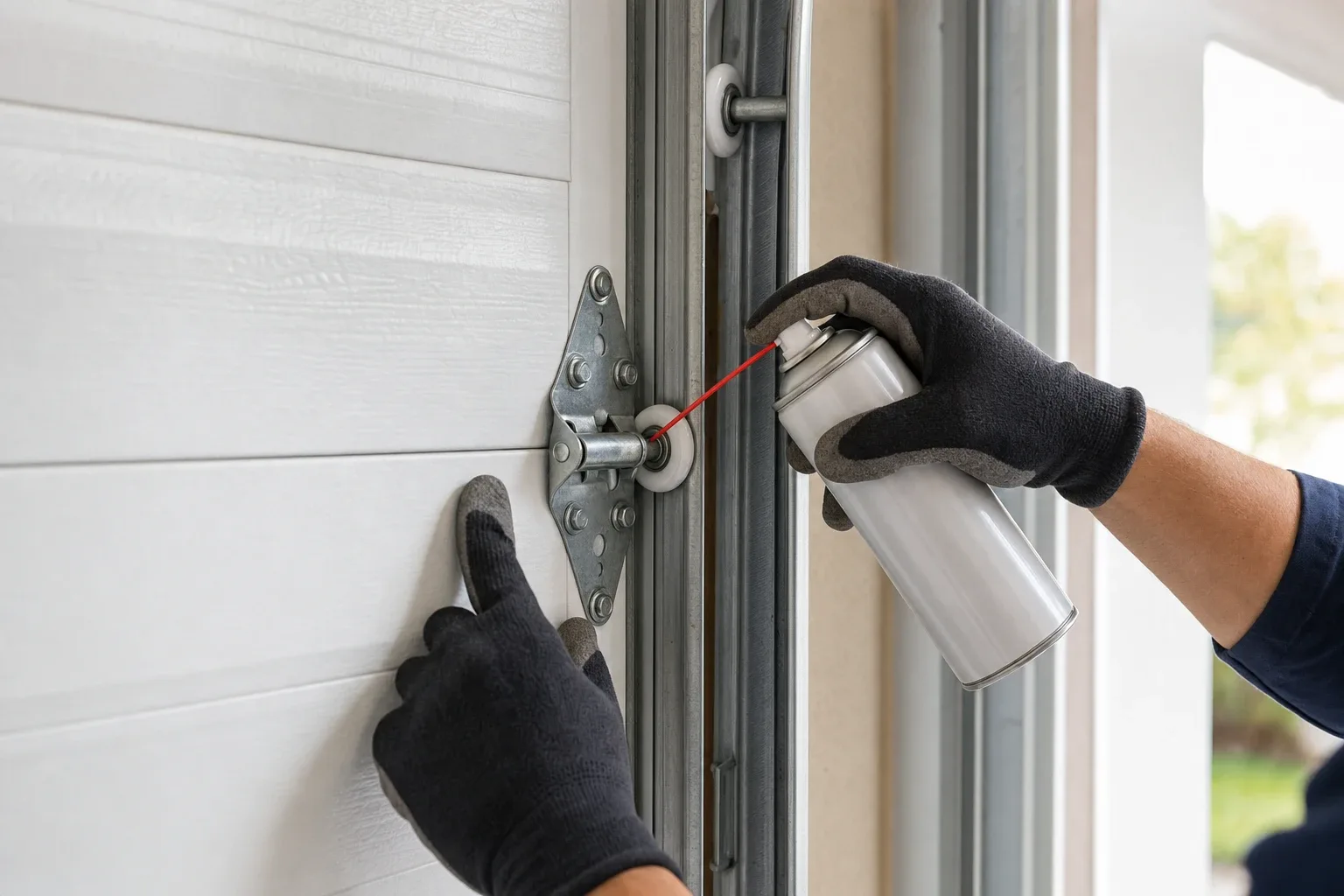
Manufacturer safety guidance centers on a short monthly routine: a visual check of the hardware, a balance test, and two specific safety tests on the opener. Seasonal lubrication and a weatherseal check round out what a homeowner can reasonably do. Anything involving the springs, cables, or bottom brackets is professional-only work, and an annual inspection by a trained technician covers those components along with a full calibration of the opener's force and travel settings.
Why Your Garage Door Reverses Instead of Closing
When a garage door starts down and then reverses back up, that's the entrapment-protection system built into every opener sold in the U.S. doing its job, not a random malfunction. Federal rules require an opener to reverse within two seconds of contacting an object on the floor, and most reversals come from a blocked photo-eye, an obstruction in the track, or force and limit settings that are more sensitive than they need to be. A door that reverses violently, drops suddenly, or behaves differently after any hardware was touched is a different situation and needs a technician, not a settings tweak.
Garage Door Won't Close: What's Actually Going On
Most doors that stop, reverse, or refuse to close are being stopped by their own safety system, not failing outright. The three most common causes are a blocked or misaligned photo-eye sensor, an obstruction or misalignment in the track, and an opener limit setting that's out of adjustment. Work through the sensors first, since federal safety rules have required them since 1993 and they're the single most common reason a door won't finish its cycle. If the door reverses hard the moment it touches the floor, or won't move at all, stop and get a professional to look at it rather than forcing an adjustment.
Decoding a Noisy Garage Door
A garage door's noise usually tells you exactly where to look: squeaking or grinding points to rollers and hinges that need attention, rattling points to loose hardware, and a sudden loud bang can mean a spring has broken. Most rattles and squeaks are routine wear that basic maintenance addresses, but a bang or a grinding opener motor is worth treating as urgent and leaving to a professional rather than continuing to run the door.
Is It the Garage Door Opener or the Door Itself?
The fastest way to tell whether the opener or the door is at fault is the manual release test: disconnect the opener and move the door by hand. A door that lifts smoothly and holds its position points to an opener problem, while a door that feels heavy, uneven, or won't stay put on its own points to the door's springs, cables, or track. Skip the test if a spring or cable already looks visibly broken or frayed, since the door could be unbalanced or dangerous to handle.
Repair or Replace: How to Think About an Aging Garage Door
A single damaged panel, worn rollers, one broken spring, or a sensor fault are usually straightforward repairs on an otherwise sound door. Widespread rust or rot, repeated breakdowns of different parts within a short span, an opener old enough to predate current sensor requirements, or structural damage across multiple panels are the signals that repair is becoming a series of patches rather than a real fix. An in-person inspection is the only reliable way to get a recommendation specific to your door, since the right call depends on the door's construction, age, and exact damage.