

The short answer
The fastest way to tell whether the opener or the door is at fault is the manual release test: disconnect the opener and move the door by hand. A door that lifts smoothly and holds its position points to an opener problem, while a door that feels heavy, uneven, or won't stay put on its own points to the door's springs, cables, or track. Skip the test if a spring or cable already looks visibly broken or frayed, since the door could be unbalanced or dangerous to handle.
The manual release test
With the door fully closed, pull the manual release cord hanging from the opener's trolley to disconnect it from the door. Lift the door by its handle or a suitable grip point and see how it moves. A properly balanced door should lift with moderate, even effort and stay wherever you let go of it, roughly three to four feet above the floor, without drifting up or crashing down.
Reconnect the opener afterward using the same release mechanism and confirm the door engages properly before using it normally again.
Signs that point to the opener
If the door moves smoothly and holds its balance by hand but won't respond correctly to the remote, wall button, or app, the opener itself is the likely source. A motor that runs but the door doesn't move often means a worn or disconnected trolley or drive gear. Grinding or straining sounds from the unit, error codes or blink patterns on the control panel, and inconsistent response to the remote versus the wall button are also opener-side symptoms.
- Remote works inconsistently or not at all
- Motor runs but the door doesn't move
- Grinding, straining, or clicking from the opener unit
- Error light patterns described in the opener's manual
Signs that point to the door itself
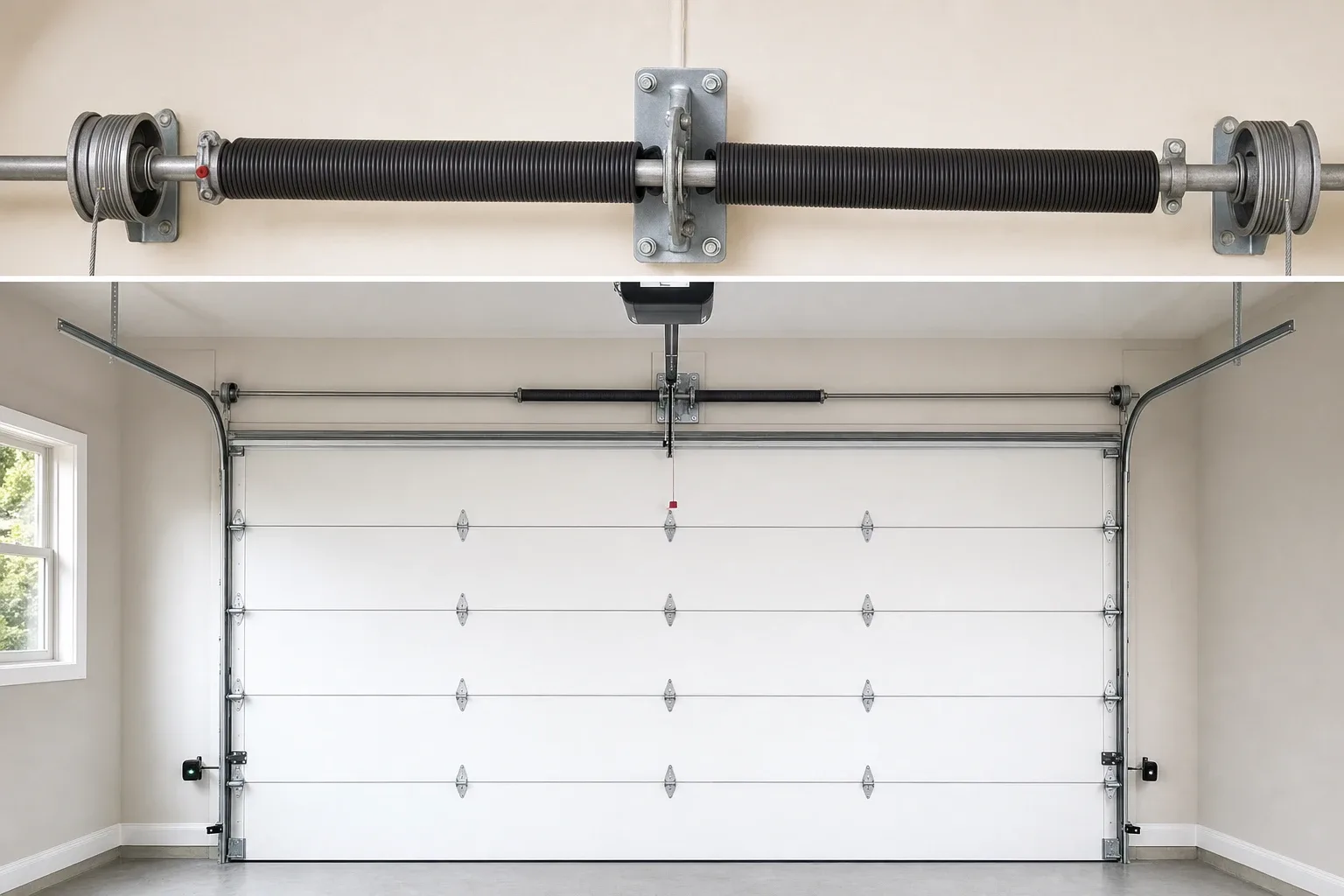
A door that feels heavy, jerks unevenly, drifts down on its own, or sags to one side during the manual test has a hardware problem — most often the spring balance, a cable, or the track — rather than the opener. These issues tend to show up gradually: a door that used to lift easily and now takes real effort is a strong signal something in the balance system has changed.
The balance test, specifically
Manufacturer guidance describes this test directly: with the opener disconnected, the door should stay partially open, roughly three to four feet above the floor, without you holding it. If it drifts closed or shoots upward on its own, the spring tension is no longer matched to the door's weight, and that's a job for a trained technician rather than a DIY adjustment.
When to call a professional either way
If the manual test shows a heavy or unbalanced door, stop there — torsion springs, extension springs, and the cables and bottom brackets they connect to are under continuous high tension and are not a homeowner repair. If the door passes the balance test cleanly but the opener still isn't behaving correctly, a technician can diagnose the opener's logic board, gear, or wiring without you needing to open the unit yourself.
Published by USA Garage Pros · Updated 2026-09-24