
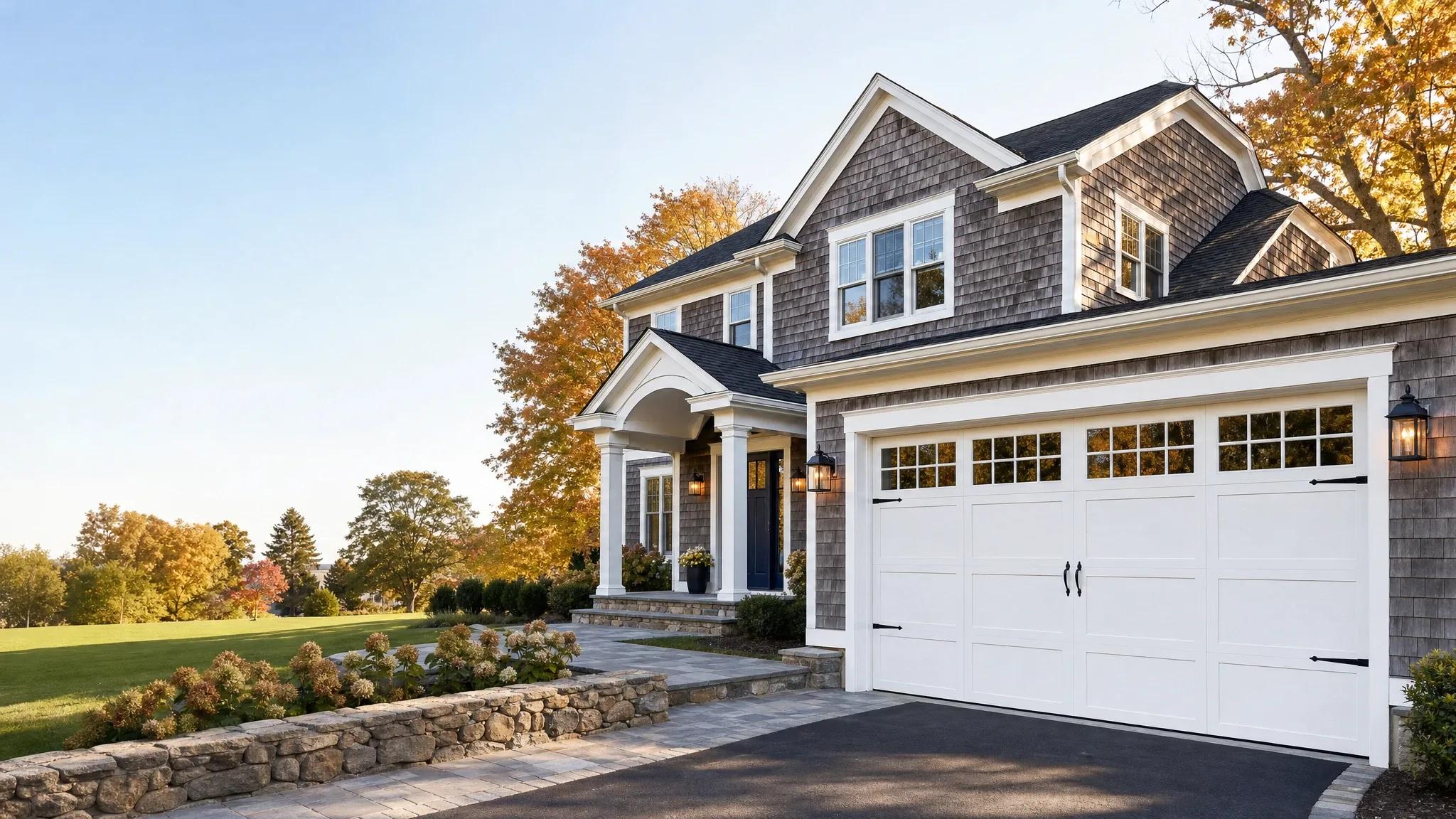
Garage Doors. A Stronger Connecticut.
Garage Door Repair & Replacement in Connecticut
Repair, installation, and replacement for sectional garage doors from Fairfield County's shoreline towns to the Litchfield Hills and the Quiet Corner.
- Repairs for springs, openers, cables, rollers and tracks
- New door selection, replacement and installation
- Advice written for Connecticut homes and weather
Request Service
Connecticut Garage Pros — tell us what's happening.
Connecticut Garage Pros
Garage door information for Connecticut homes
Connecticut's garage doors do double duty: they seal out a genuine four-season climate and they sit on some of the oldest housing stock in the country. A colonial in Litchfield County and a 1950s cape in New Haven County were not built with the same garage in mind, and the service a door needs often has more to do with when and where the house was built than with the brand of door on it.
Coastal towns along Long Island Sound deal with salty, humid air that works on unprotected steel and hardware year-round, while inland and northern towns see harder freezes, more snow load, and bigger swings between a January cold snap and a July heat wave. Housing ranges from attached two-car garages in postwar suburbs to single-bay detached garages and converted carriage barns in older mill towns and rural areas, so track configurations, door widths, and opener setups vary block to block.
None of that changes the basics of a safe, functioning door: springs, cables, tracks, and openers all wear on a predictable schedule, and that schedule moves faster where humidity, salt, or hard winters are part of daily life. The sections below cover what actually differs about garage doors in Connecticut, not a rewritten national overview.
- Fairfield County / Gold Coast
- Coastal Long Island Sound towns with dense, older suburban housing, high humidity, and significant salt-air exposure on hardware.
- Greater Hartford / Central Connecticut
- Inland river-valley suburbs and older colonial-era towns with harder winter cold and more consistent snow load than the coast.
- New Haven / Shoreline
- A mix of urban multi-family housing and coastal single-family neighborhoods along the Sound, sharing the coast's salt-air exposure.
- Litchfield Hills / Northwest Connecticut
- Rural, hilly terrain with older farmhouses and detached garages or barns, and the coldest, snowiest microclimate in the state.
- Eastern Connecticut / Quiet Corner and southeastern shoreline
- Rural inland towns and a separate stretch of Long Island Sound coastline, combining coastal exposure with a more rural, wooded housing pattern.
Every request is reviewed before anything is scheduled.
Services
Connecticut garage door services
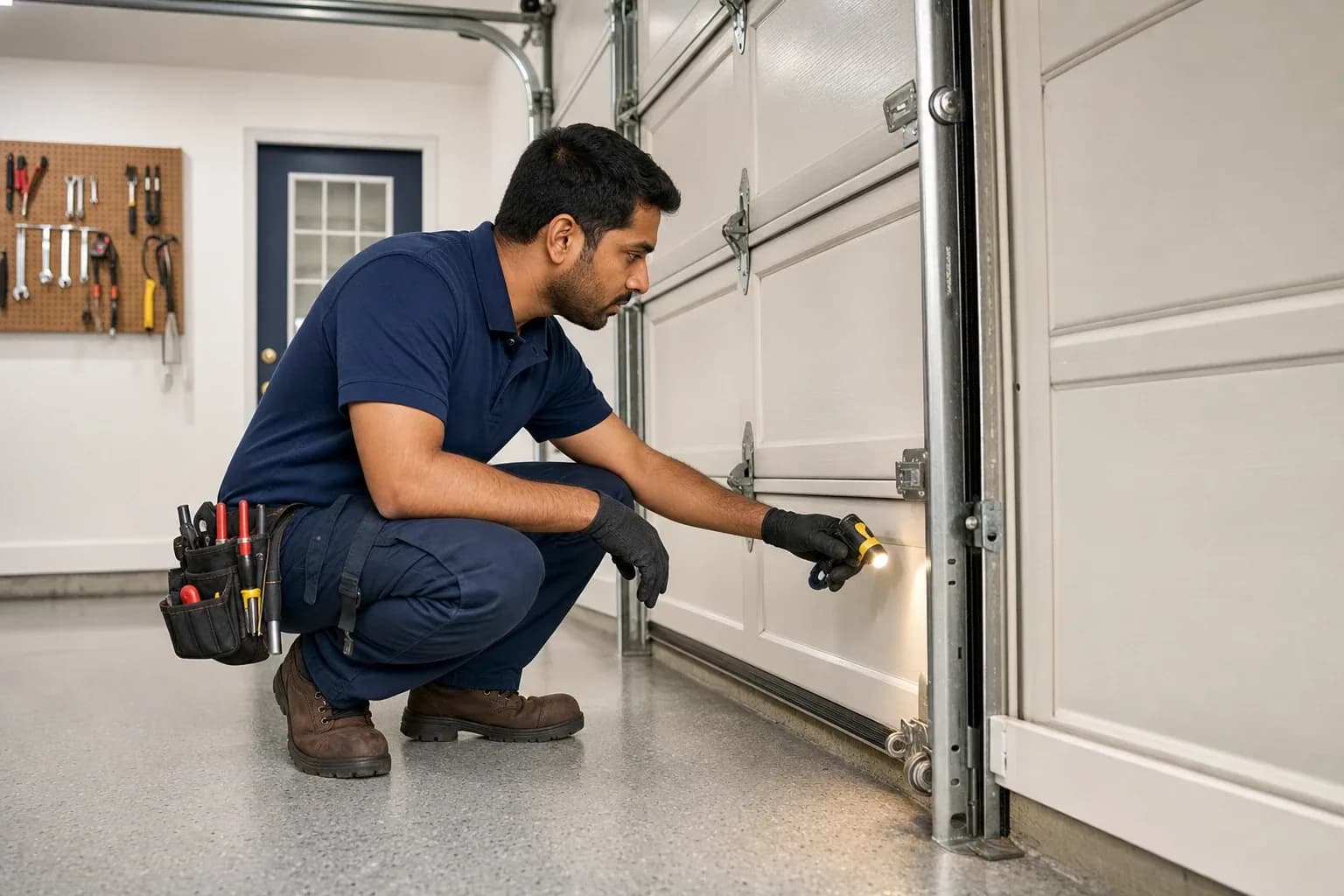
Illustrative image Repair
General repair calls in Connecticut cluster around two causes: hardware that has corroded or stiffened from coastal humidity, and mechanisms strained by a hard winter's cold and snow load. What a repair actually involves often depends on which of those two conditions applies.
Repair details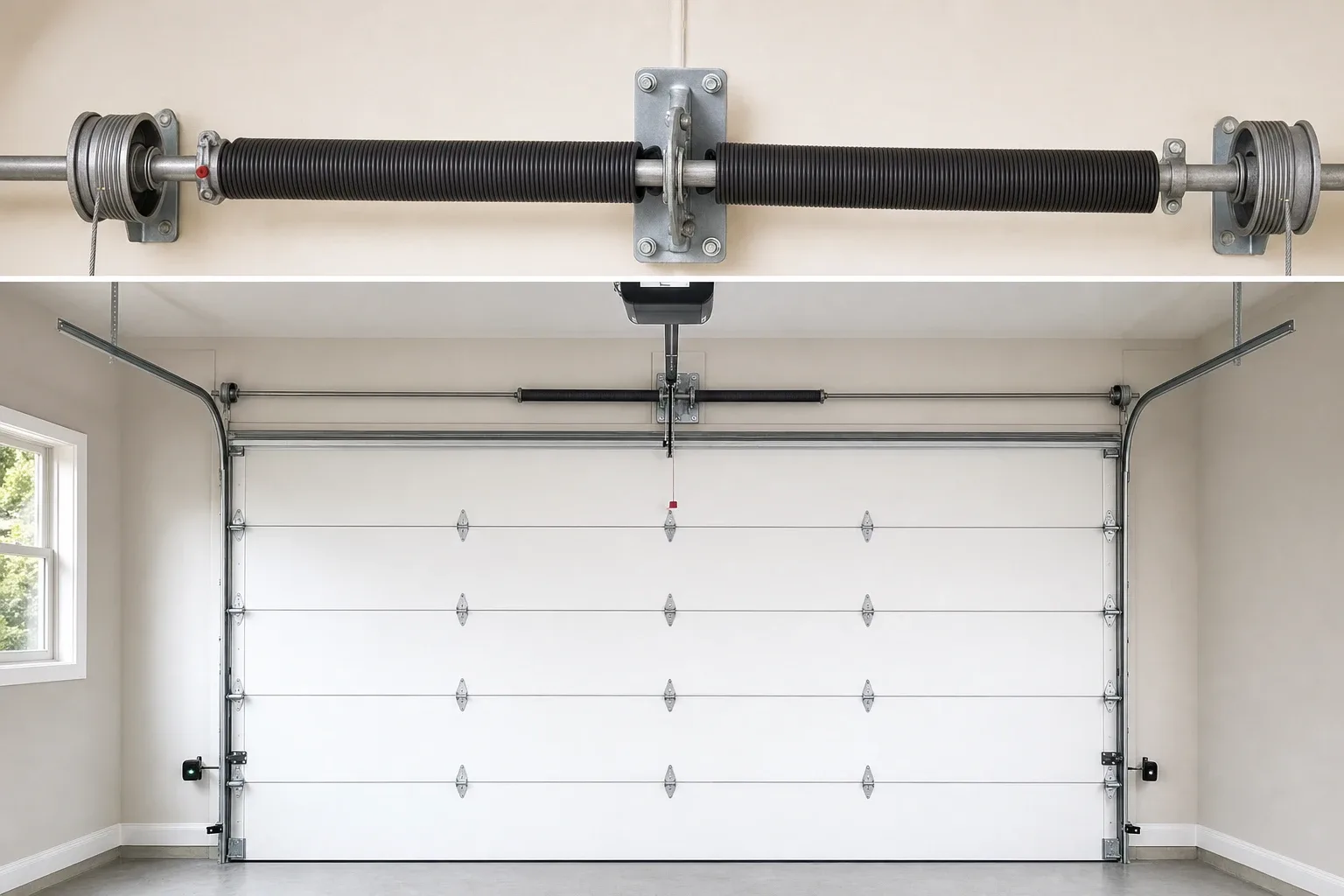
Illustrative image Spring Repair
Torsion and extension springs work harder in Connecticut's cold winters, since cold steel is more brittle and heavy snow-loaded doors cycle under more strain. Coastal humidity adds a second stress by corroding spring coils and mounting hardware faster than in a dry inland garage.
Spring Repair details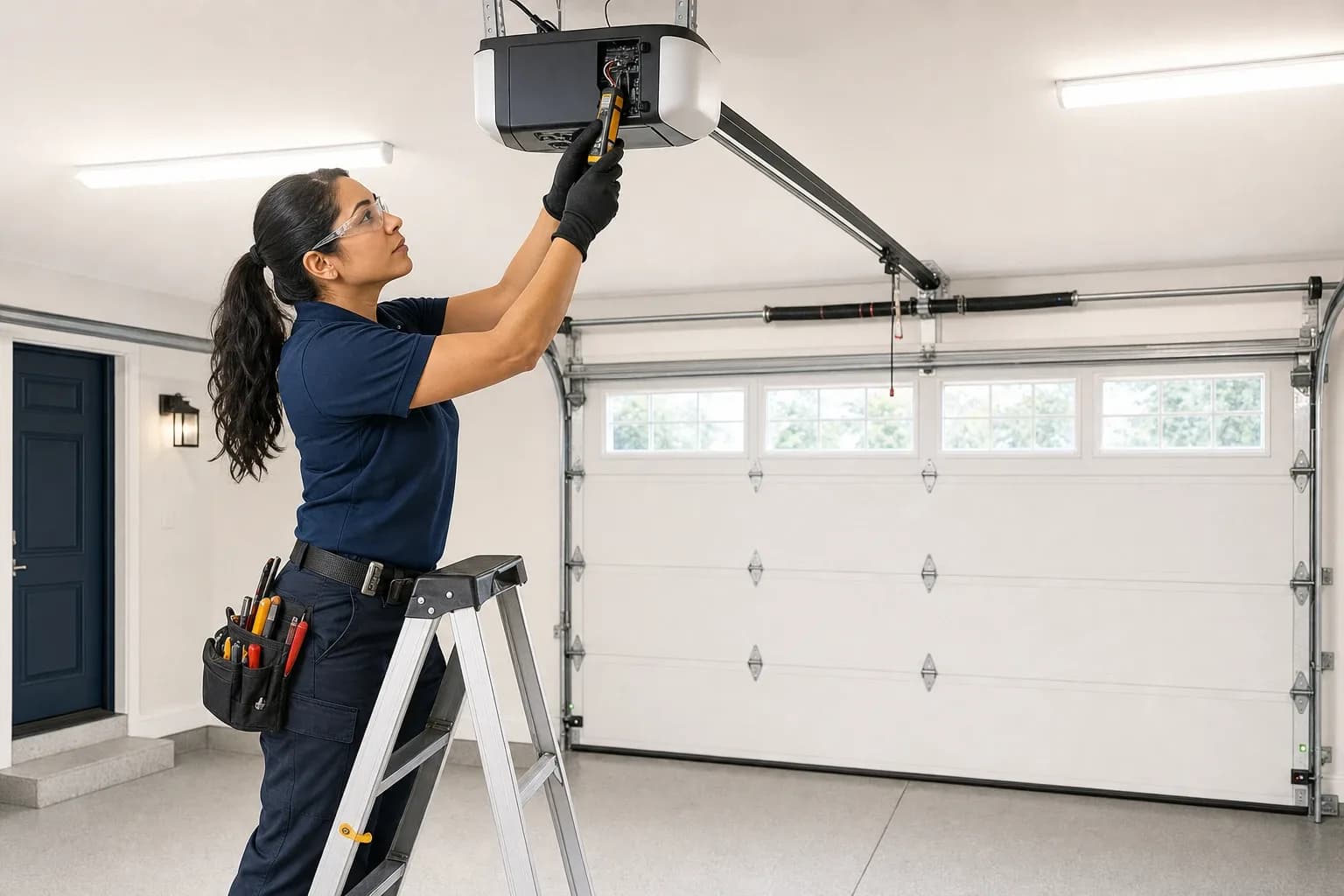
Illustrative image Opener Repair
Openers in unheated Connecticut garages can slow down or misbehave in deep cold, and coastal units are more prone to corroded circuit contacts and sensor wiring. A nor'easter power outage is also a common trigger for opener and battery-backup service calls.
Opener Repair details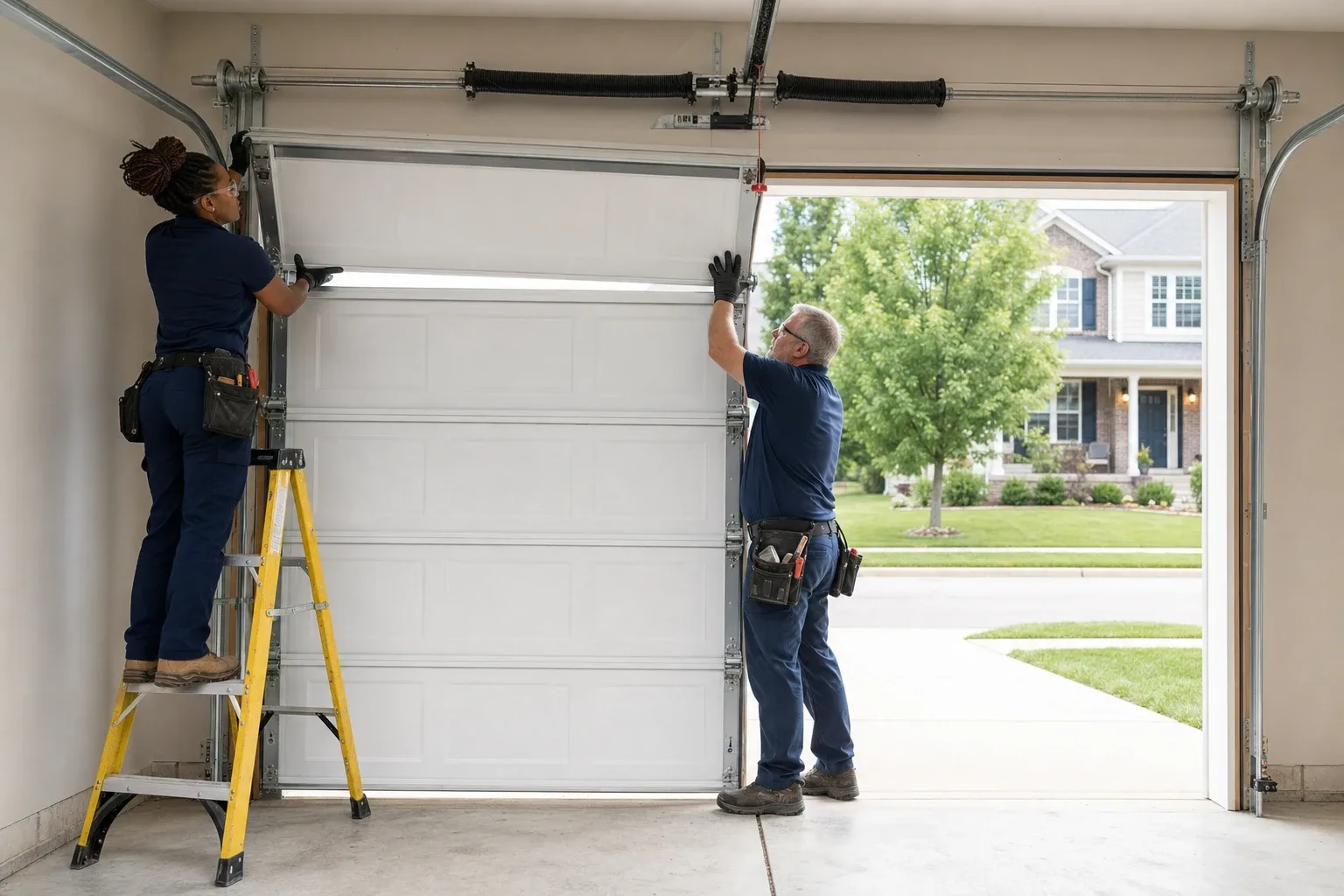
Illustrative image Replacement
Replacement is common on Connecticut's older housing stock, where an original door has outlasted its hardware, insulation value, and weatherseal. Coastal homeowners also often replace doors specifically to get ahead of salt-air corrosion rather than waiting for a failure.
Replacement detailsIllustrative image Installation
New installations in Connecticut range from replacing an original door on a postwar attached garage to fitting a first door into an older detached structure or converted carriage barn. Opening sizes and framing are less standardized on older Connecticut homes, so accurate measurement matters more than on newer construction.
Installation details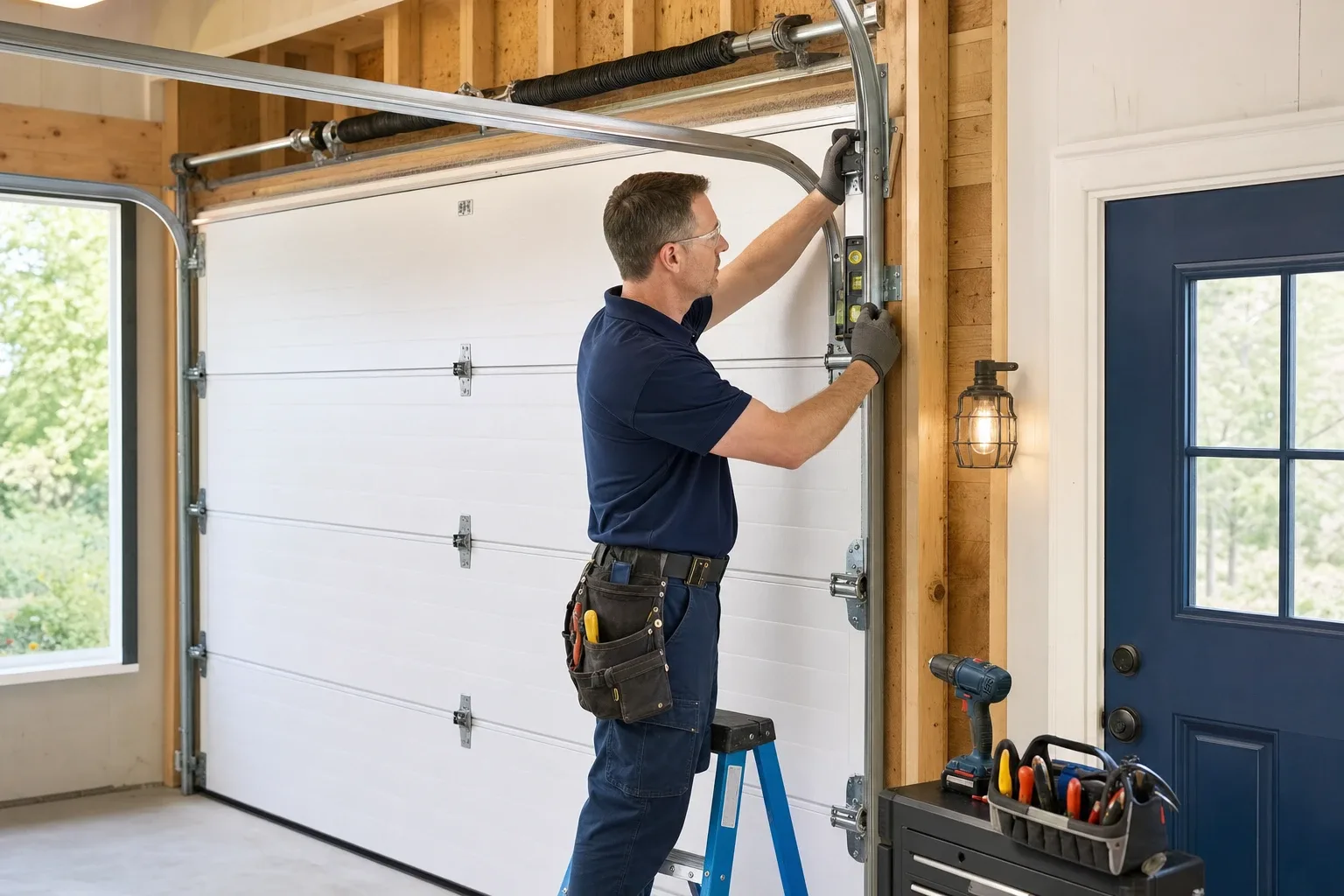
Illustrative image Off-Track Repair
Doors come off track in Connecticut most often after heavy wet snow builds up against the bottom section, or after a bent track from years of coastal corrosion finally lets a roller jump the rail. Both causes point to problems that predate the day the door actually jams.
Off-Track Repair details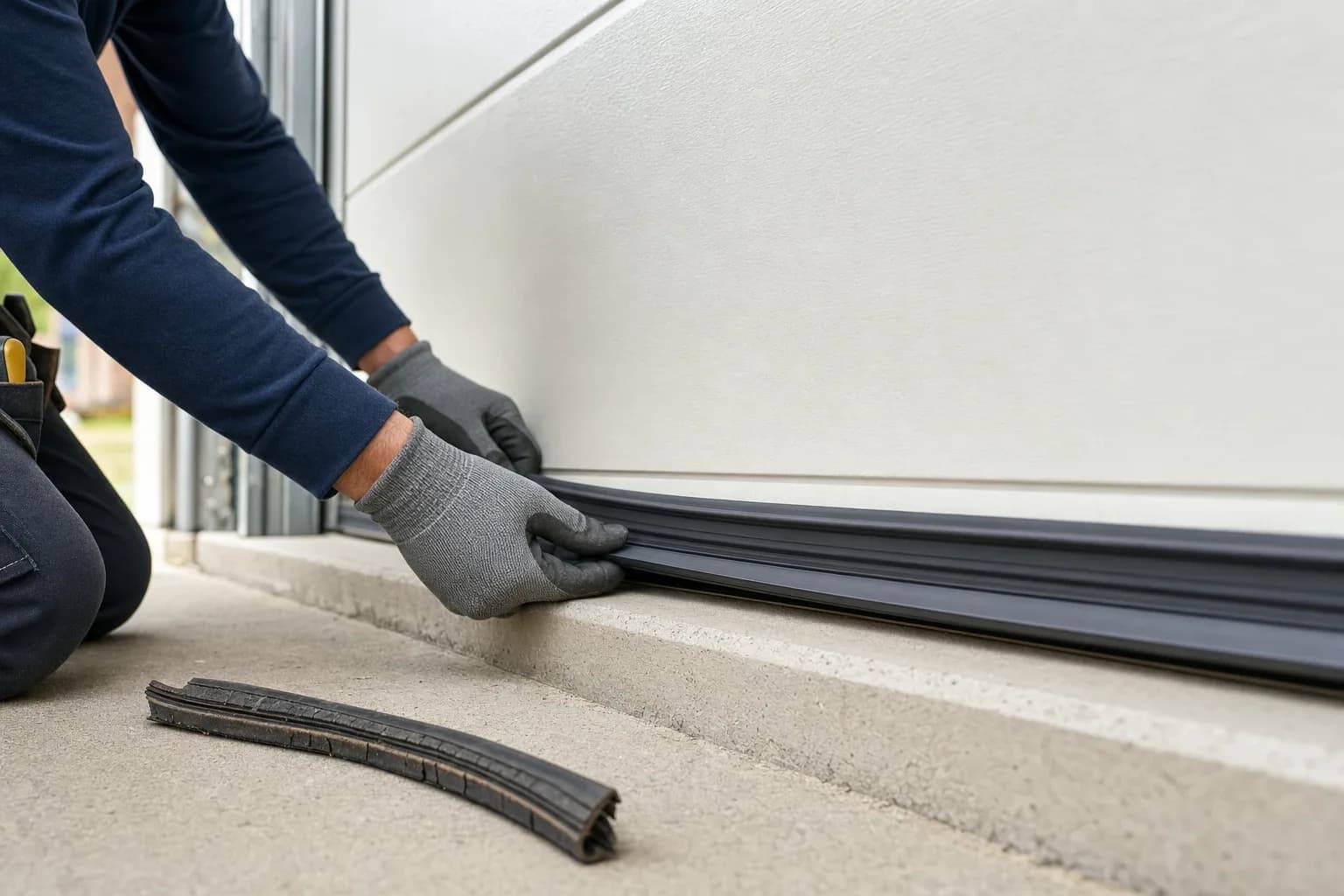
Illustrative image Weather Sealing
Weather sealing is one of the highest-value services for Connecticut homeowners, since a worn bottom seal or side seal lets in wind-driven nor'easter rain and cold air, and a good seal also slows the salt-laden humidity that reaches interior hardware near the coast.
Weather Sealing details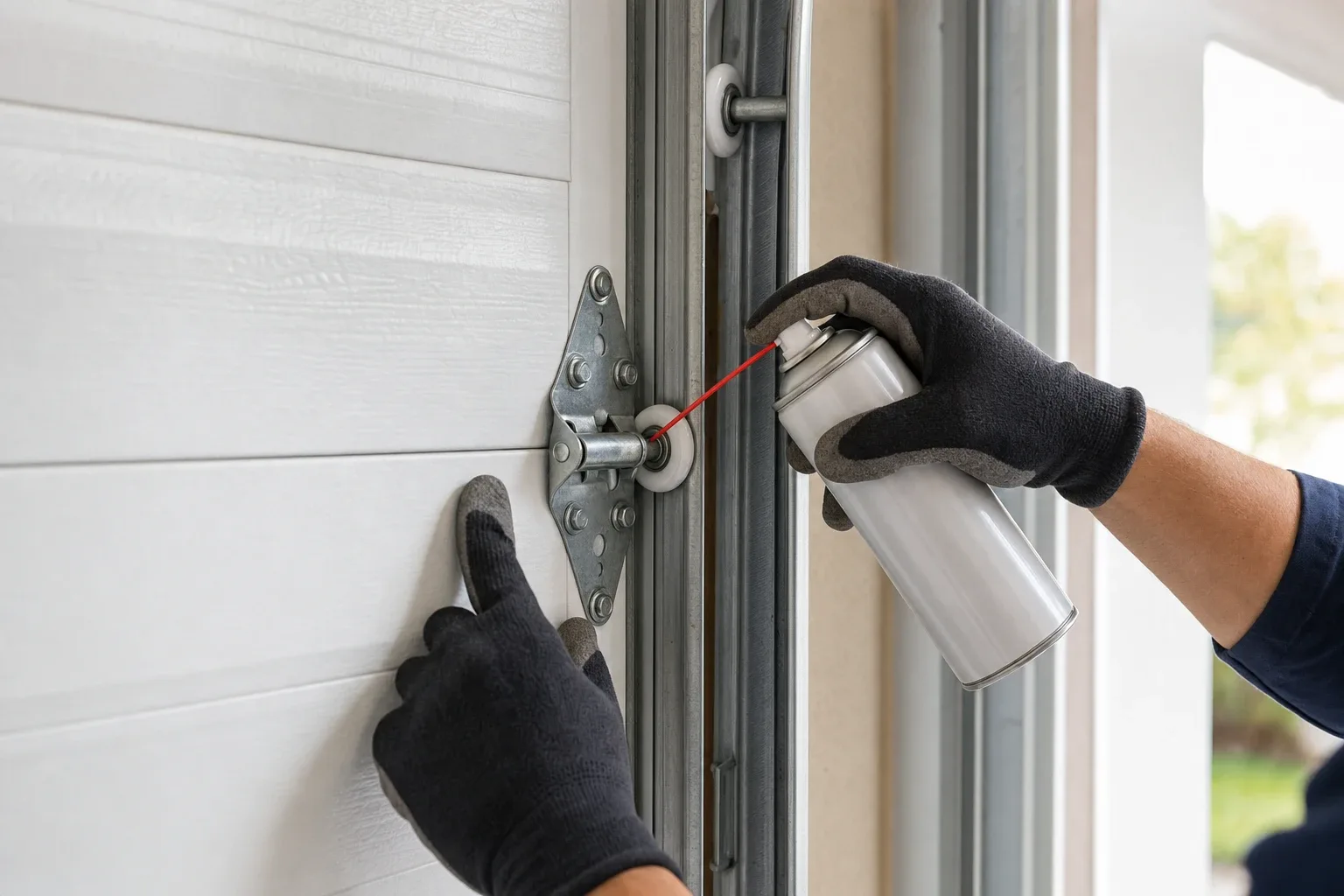
Illustrative image Maintenance
A seasonal maintenance visit matters more in Connecticut than in milder climates, since hardware needs a pre-winter check before sustained cold sets in and coastal hardware benefits from more frequent inspection for corrosion than an inland garage would need.
Maintenance details
Built for Connecticut
What local conditions mean for your door
- 01
Cold winters and nor'easter snow load
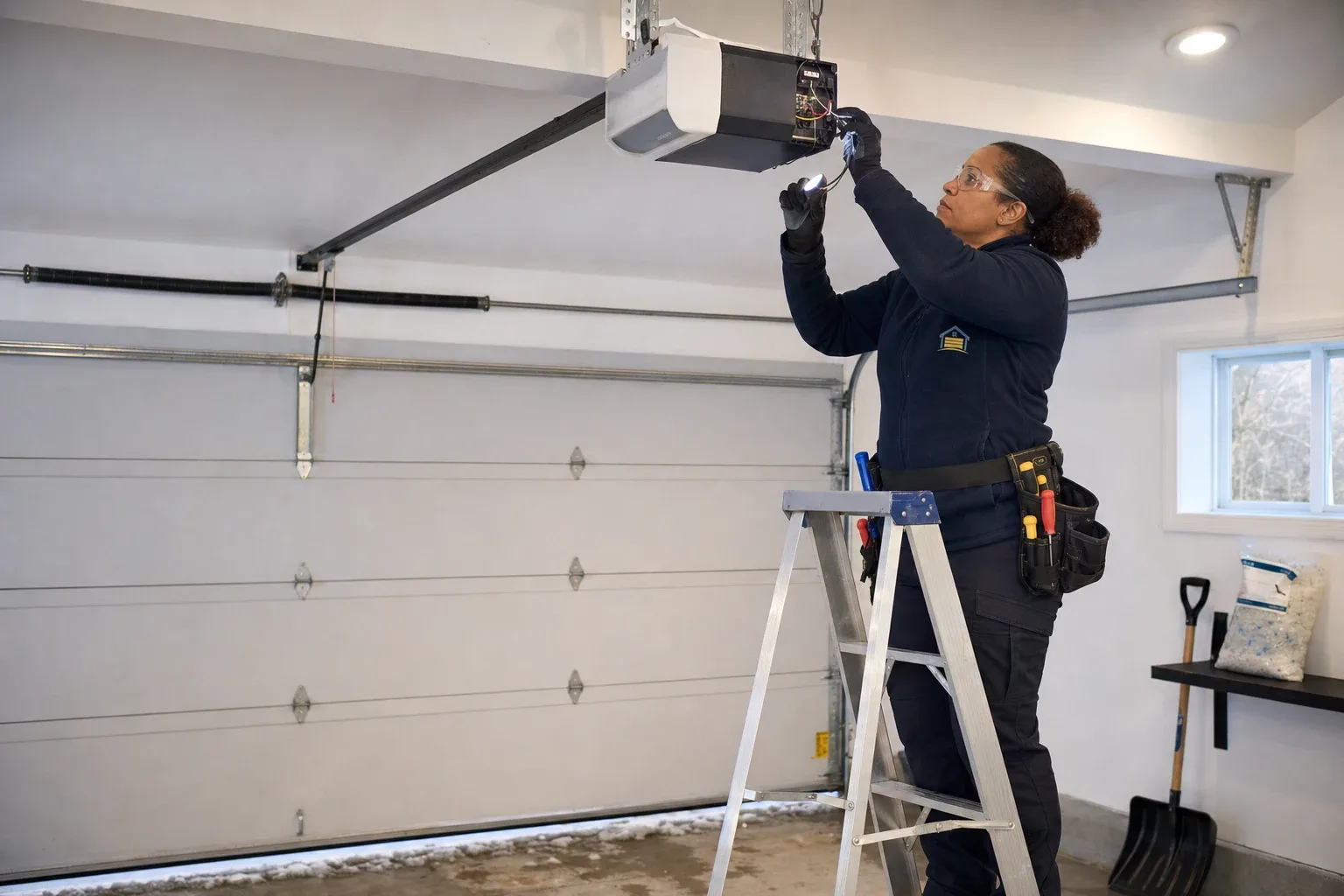
Interior and northern Connecticut see sustained sub-freezing stretches and heavy, wet nor'easter snowfall that can pile up against a door's bottom seal and threshold. That combination is what typically causes a door to bind or freeze at the floor after a storm, and it puts extra load on springs and rollers through a long winter.
- 02
Coastal humidity and salt air
Shoreline communities along Long Island Sound, from Greenwich to Stonington, carry salt-laden humid air well inland of the beach itself. Unprotected steel hardware, exposed springs, and unsealed panel edges corrode faster here than in interior towns, which is why hardware finish and weatherstripping condition matter more near the coast.
- 03
Coastal storms and wind exposure
Long Island Sound towns are exposed to nor'easters and the occasional remnant of a tropical system, which can bring sustained wind and wind-driven rain against a garage door's face. A door and track system that is properly fastened and in good repair holds up far better against that kind of wind loading than one with worn rollers or a bent track.
- 04
Older housing stock and detached garages
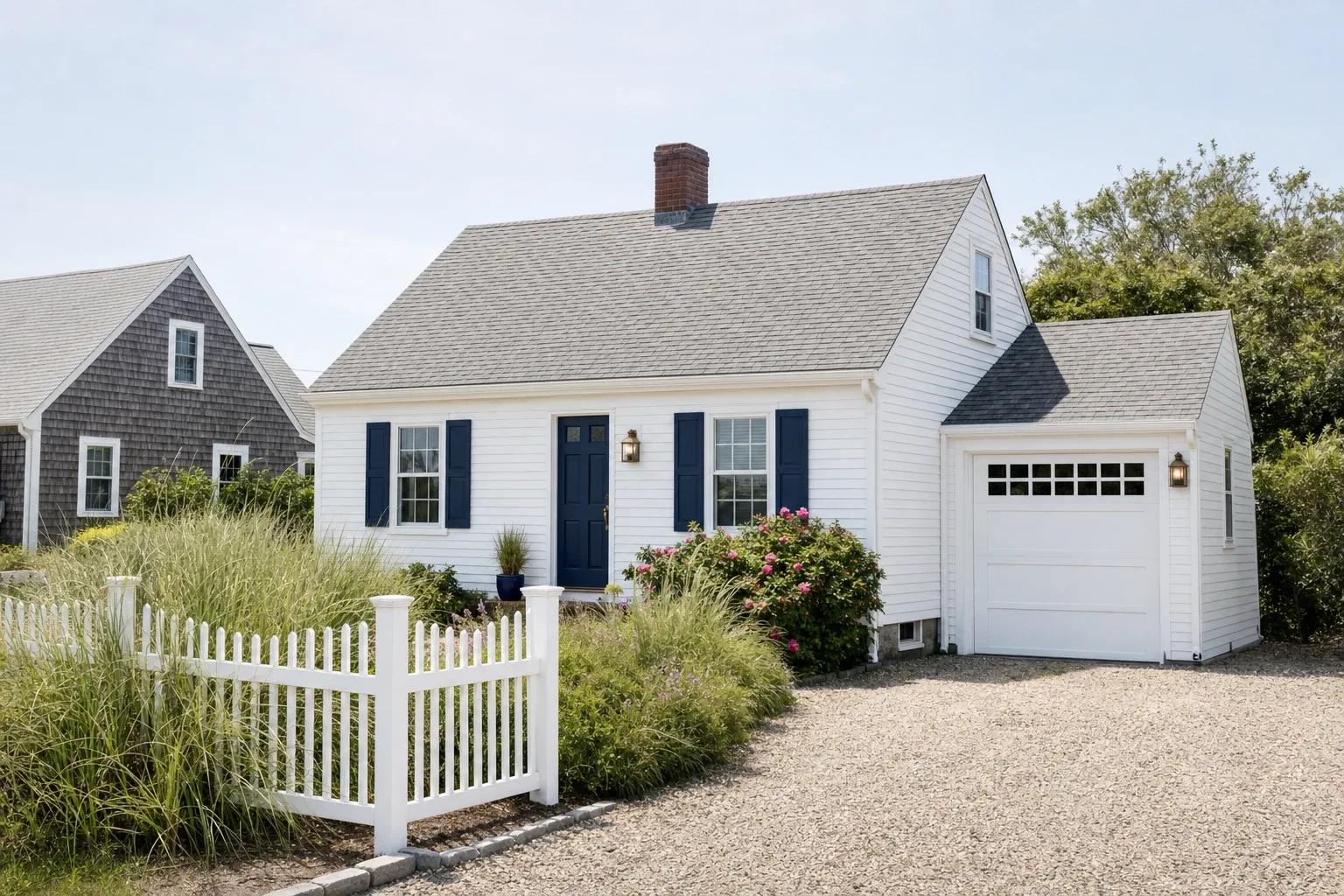
A large share of Connecticut's homes predate the era of the standard two-car attached garage, so single-bay detached garages, converted carriage houses, and narrower openings are common, especially in older mill towns and rural areas. Older detached structures often have simpler, older opener and track hardware that has not been updated in step with the house.
Cities
Connecticut cities
Local pages for the cities our technicians serve, and what matters for doors in each one.
- BridgeportFairfield County · Bridgeport-Stamford-Norwalk
- StamfordFairfield County · Bridgeport-Stamford-Norwalk
- New HavenNew Haven County · New Haven-Milford
- HartfordHartford County · Hartford-East Hartford-Middletown
- WaterburyNew Haven County · Waterbury
- DanburyFairfield County · Danbury
- TorringtonLitchfield County · Torrington
- New LondonNew London County · Norwich-New London
Local guides
Connecticut garage door guides
How it works
What happens after you ask for help
- 1
Request
Tell us what the door is doing and your ZIP code. The form takes about a minute.
- 2
Confirm
We review the request and contact you to confirm details and timing before anything is scheduled.
- 3
Diagnose
A technician inspects springs, cables, rollers, tracks and the opener, then explains what is wrong and your options.
- 4
Fix or install
The agreed repair or new door is completed, then the balance and the opener's safety reverse are checked.
Answers
Connecticut garage door questions
Why does my garage door freeze to the floor in the winter?
Melting snow or ice under the door can refreeeze against the bottom seal and the floor, especially after a Connecticut nor'easter followed by a hard freeze. Never force a frozen door with the opener; a gentle attempt to clear visible ice, or requesting service, protects the springs and cables from damage.
Does living near Long Island Sound affect my garage door?
Yes. Salt-laden coastal air accelerates corrosion on exposed hardware, springs, and unsealed panel edges well beyond the immediate beachfront. Homes throughout Fairfield, New Haven, and New London counties can see faster hardware wear than inland Connecticut towns.
Should I have my garage door checked before winter?
A pre-winter check is worth requesting in Connecticut, since cold steel is more brittle under spring tension and a door that is already slightly off-adjustment tends to get worse once heavy snow load and hard freezes start.
Can I use my garage as a workshop or storage space with Connecticut's humidity?
Many Connecticut garages, especially older detached ones, are not built to manage summer humidity or winter condensation well. Weather sealing and a properly adjusted door help, but ventilation and insulation choices for the space itself are separate from the garage door service we provide.
Do you serve older detached garages and converted carriage barns?
Older detached garages and converted barns are common on Connecticut's older housing stock, and they often have narrower openings or dated hardware. Request service and describe your structure so the visit can be scoped to it.
What should I do if my garage door won't close after a storm?
A door that won't close after a nor'easter or heavy snow is often a photo-eye sensor knocked out of alignment, or ice interfering with the track. Avoid forcing it with the opener and request service so the actual cause can be checked safely.
Connecticut Garage Pros
Request service in Connecticut
Send the details in two quick steps. This isn't a booking — we contact you to confirm the problem, the timing and the location first.