
Connecticut Garage Pros
Garage Door Opener Repair in Connecticut
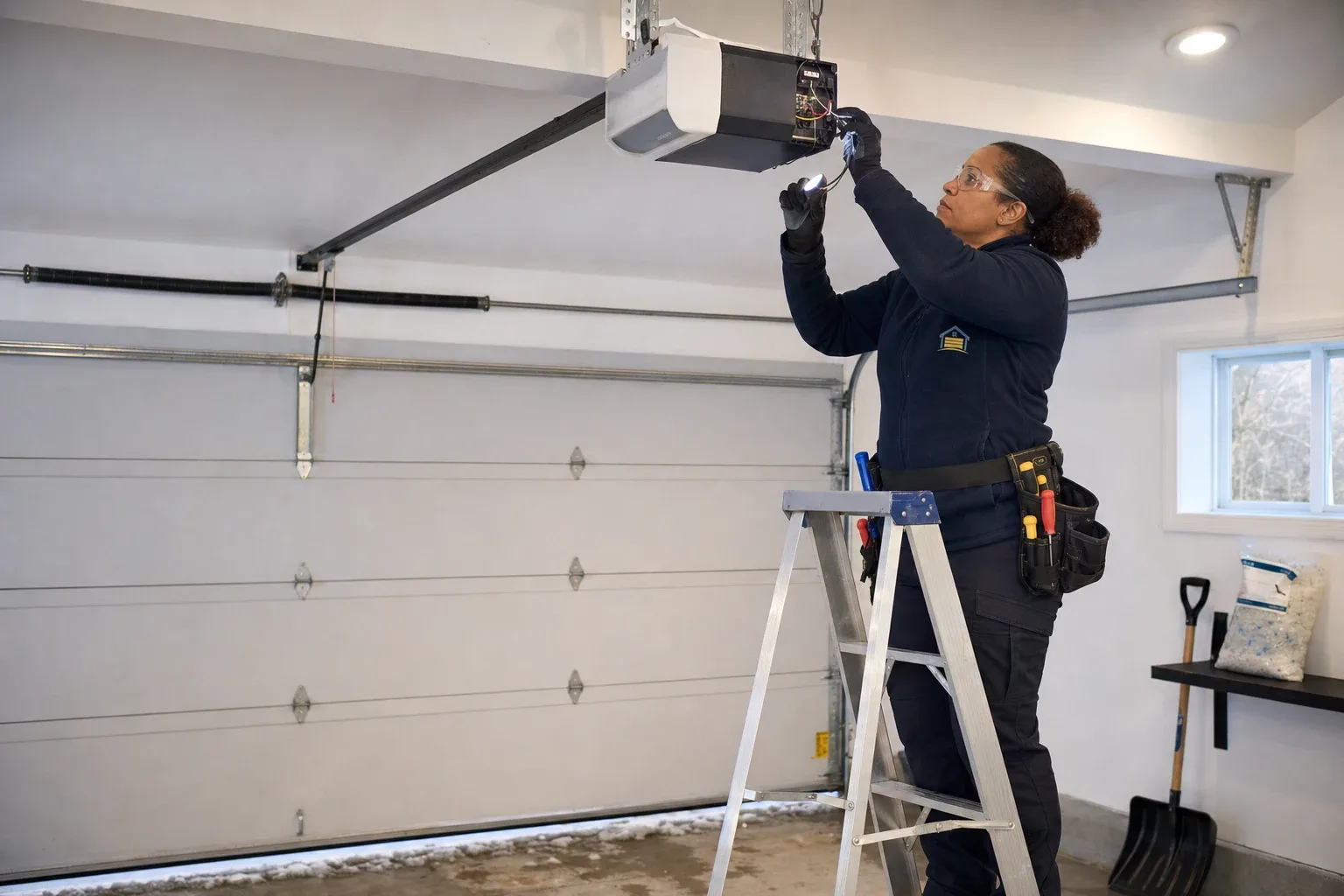
Openers in unheated Connecticut garages can slow down or misbehave in deep cold, and coastal units are more prone to corroded circuit contacts and sensor wiring. A nor'easter power outage is also a common trigger for opener and battery-backup service calls.
Opener Repair · Connecticut
Opener Repair for Connecticut homes
An opener in an unheated Connecticut garage has to work through real cold, and that cold can slow the motor, stiffen the gear assembly, or reveal a battery backup that was already marginal. Deep winter is when a lot of Connecticut opener calls happen, often right after a nor'easter knocks out power and the battery backup either carries the door or does not.
Near the coast, corrosion adds a separate failure mode. Circuit contacts and sensor wiring exposed to salt-laden humid air can corrode faster than the same components in a dry inland garage, leading to intermittent operation that has nothing to do with the cold at all.
Connecticut
What's different in Connecticut
- 01
Cold-weather opener strain
Deep cold can slow an opener's motor and stress its gear assembly, particularly in an unheated Connecticut garage that is not insulated from winter temperatures.
- 02
Storm-related power interruptions
A nor'easter that knocks out power is a common trigger for opener service calls, especially when a battery backup was already weak going into the storm.
- 03
Coastal corrosion on electrical components
Salt-laden air near Long Island Sound can corrode circuit contacts and sensor wiring faster than an inland Connecticut garage would experience, causing intermittent rather than complete failures.
Know the signs
When you need opener repair
Common symptoms
- Opener runs but the door doesn't move, or moves only partway
- Door reverses immediately after touching the floor, or won't close at all
- Remote or wall button works inconsistently or not at all
- Opener makes grinding, clicking, or straining noises during operation
- Light on the opener flashes to indicate an error
What the service covers
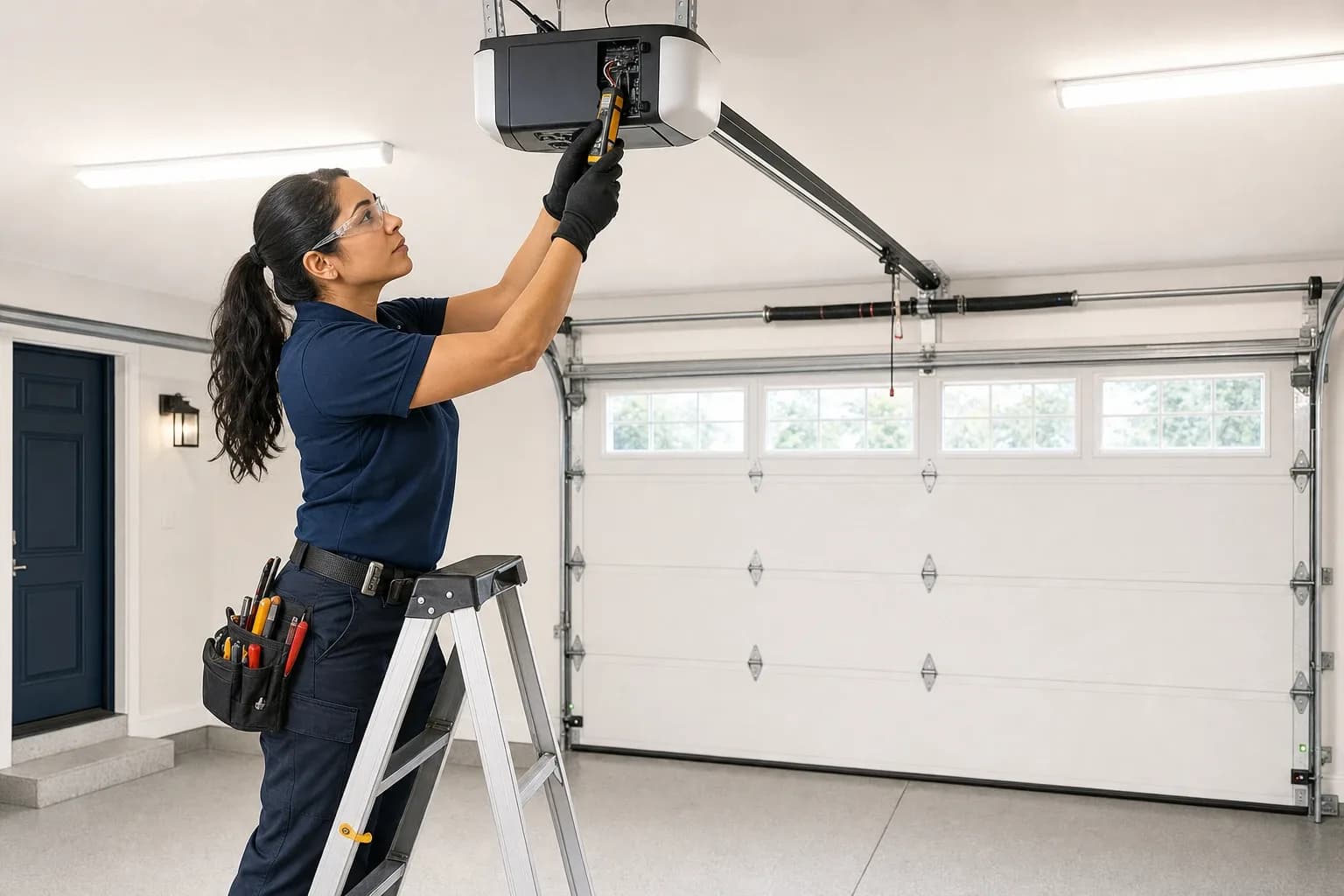
- Diagnosis of the motor, drive system, and logic board
- Testing and adjustment of travel limits and force settings
- Repair or replacement of the drive chain, belt, or screw drive as needed
- Confirmation that the auto-reverse safety feature responds correctly
The process
How the work is done
- 1
Test opener function
The opener is run through several cycles to see exactly where it fails: on start, mid-travel, or when reversing.
- 2
Check the drive and logic board
The chain, belt, or screw drive and the opener's logic board are inspected for wear, damage, or incorrect settings.
- 3
Repair the specific fault
Depending on the cause, this may mean adjusting travel limits and force, replacing a worn drive component, or repairing wiring to a control or sensor.
- 4
Verify the safety reversal
The auto-reverse feature is tested to confirm the door reverses immediately on contact with an obstruction, as required for residential openers.
Cost factors
What affects the price
Prices aren't published because they depend on your door, the parts involved and the access to the work. These are the things that move the cost — ask for the price before any work starts.
- Drive type
- Chain, belt, and screw-drive openers use different parts for repair.
- Which component has failed
- A remote or sensor issue is typically quicker to resolve than a motor or logic-board fault.
- Opener age and part availability
- Older openers may need parts sourced or, if unavailable, a full unit replacement.
- Related door issues
- If a door-side problem, such as an unbalanced door, is straining the opener, that gets addressed too.
Safety first
- Never bypass, disconnect, or block a photo-eye sensor to force a door to close — this removes a required safety feature.
- Disconnect power to the opener before inspecting the motor unit or wiring.
- Test the auto-reverse feature regularly per the opener manufacturer's guidance; the door should reverse on contact with an obstruction.
Safe things to check first
- With the door in view, note at what point in the cycle it stops, reverses, or makes noise.
- Check whether the indicator lights on the two photo-eye sensors near the floor are lit steadily; a blinking or dark light can point to a sensor issue.
- Test the auto-reverse feature per the opener manufacturer's guidance and confirm the door reverses on contact with an obstruction.
Local pages
Opener Repair by city
Answers
Opener Repair questions in Connecticut
Why did my garage door opener stop working during a nor'easter?
A storm-related power outage combined with a weak or aging battery backup is a common cause. Cold temperatures can also slow an opener's motor independent of any power issue.
Does living near the Connecticut shoreline affect my garage door opener?
It can. Salt-laden coastal air can corrode circuit contacts and wiring connections faster than in an inland garage, sometimes causing intermittent problems before a full failure occurs.
Related
Related services
Connecticut Garage Pros
Request service
Send the details in two quick steps. This isn't a booking — we contact you to confirm the problem, the timing and the location first.
Sources
- Automatic Residential Garage Door Operators — U.S. Consumer Product Safety Commission (accessed 2026-09-24)
- UL 325 50th Anniversary & Key Safety Issues — UL Solutions (accessed 2026-09-24)