
The short answer
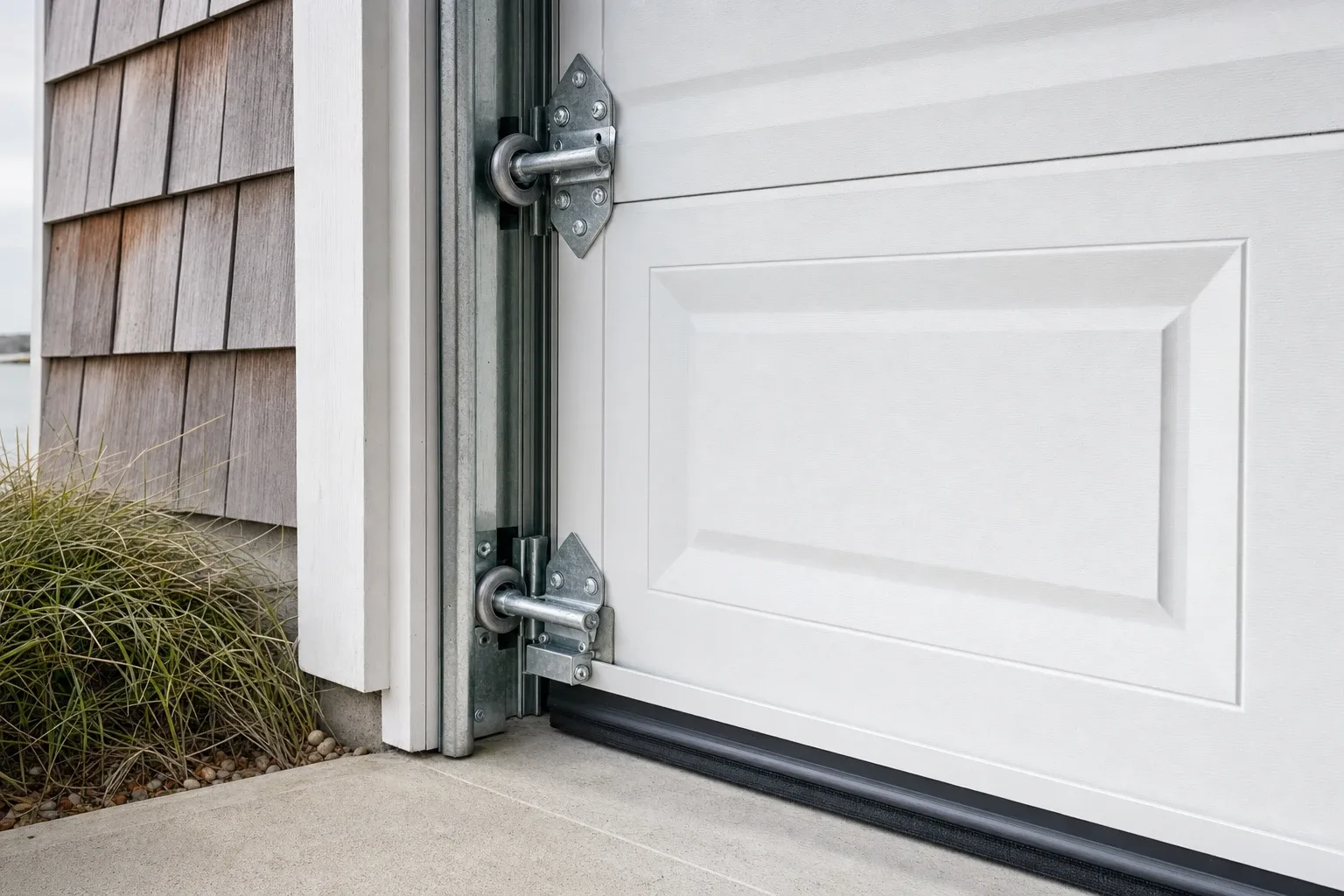
A garage door that is frozen to the floor is usually meltwater or slush that refroze against the bottom weatherstrip and the concrete after a snow event followed by a hard freeze, a common sequence in Connecticut winters. Do not force the door open with the opener; clear visible ice from the threshold if you can do so safely, and request service if the door still will not move.
Why it happens in Connecticut specifically
Connecticut's winter pattern often brings a nor'easter or plowable snowfall followed by a hard overnight freeze. Snow that was pushed against the garage door, or that melted slightly during the day from sun or garage heat, refreezes against the bottom seal and the slab, effectively gluing the door shut along its full width.
What is safe to check yourself
Look for visible ice along the base of the door from outside, and clear loose snow or ice with a plastic shovel or ice scraper rather than a metal tool that could gouge the weatherstrip. Do not use the opener to force a door that is visibly iced at the bottom; forcing the door against the ice can rip the bottom weatherseal and put strain on the opener.
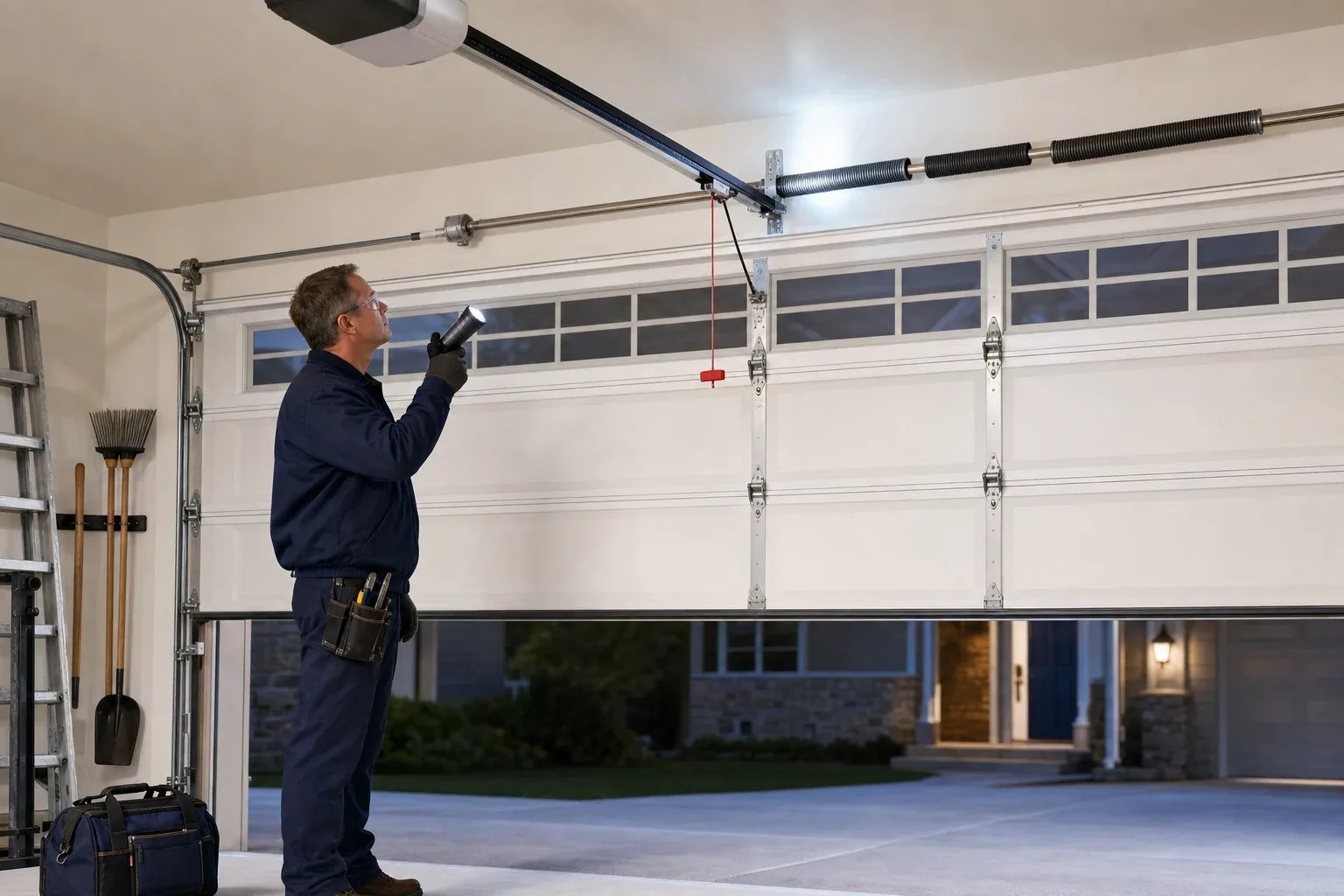
If the door has an emergency release, do not use it to try to muscle the door free while it is still frozen at the base; that is still forcing the door against the ice. Once the visible ice is cleared and the door still will not move freely, that may point to a mechanical issue, such as a broken spring, rather than the ice itself, and it is time to request service.
- Clear visible ice at the base with a plastic tool, not a metal one
- Do not force the opener against a door that is still iced at the bottom
- Do not use the emergency release to pull a still-frozen door open
Preventing it before the next storm
After freeing the door, cleaning and drying the area along the threshold helps keep the bottom seal from refreezing to the concrete. Keeping the area just outside the door clear after each snow event, rather than letting plowed snow pile against it, also helps.
Published by Connecticut Garage Pros, a regional brand of USA Garage Pros · Updated 2026-10-19