
The short answer
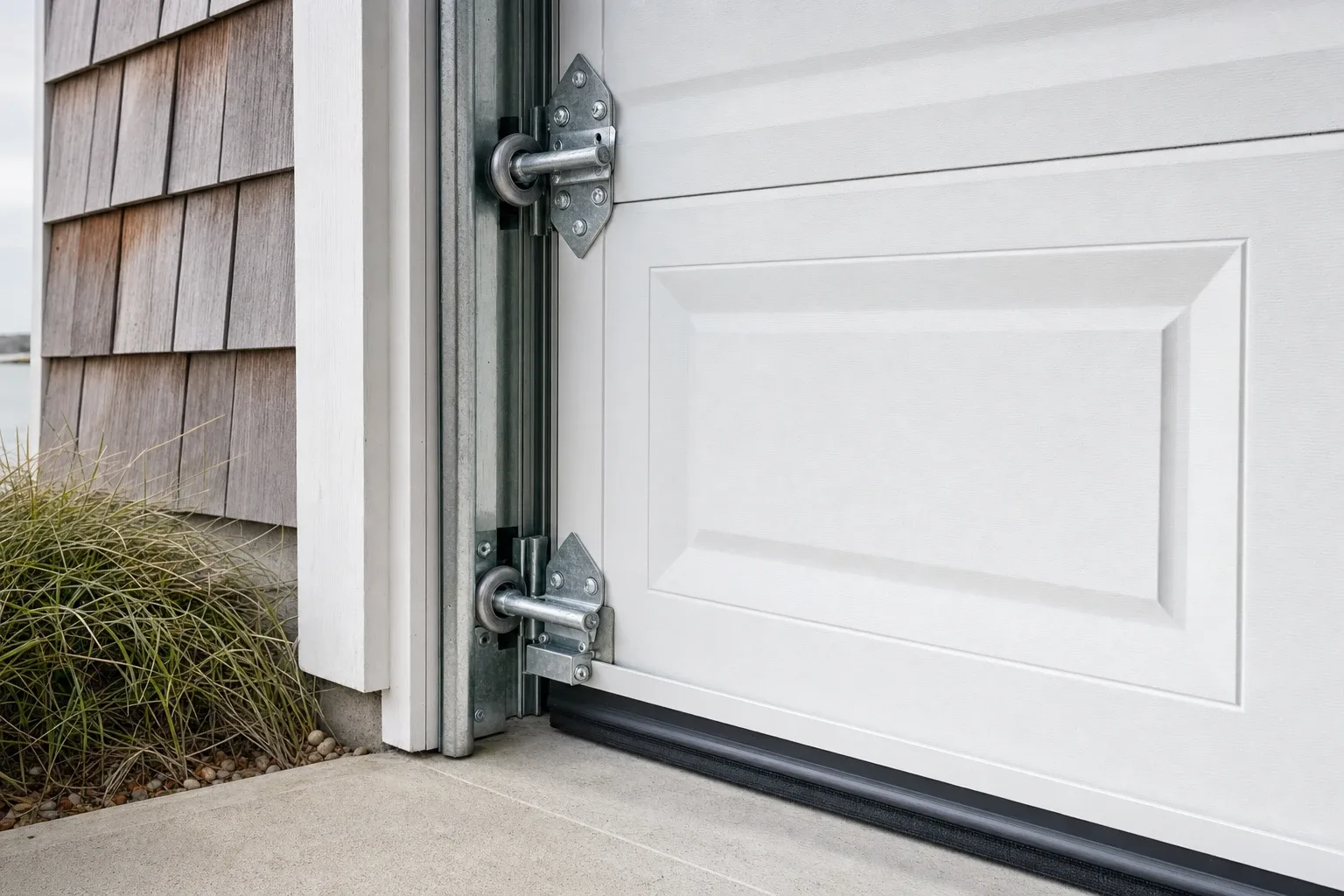
Garage door springs, hinges, rollers, and track hardware near Connecticut's Long Island Sound coastline corrode faster than the same hardware inland, because salt in humid coastal air settles on exposed metal and speeds up rust. Galvanized or coated hardware, a well-sealed door, and more frequent inspection are the main ways to slow it down.
Why coastal Connecticut hardware wears faster
Salt in coastal air settles on exposed metal and, combined with humidity, speeds up oxidation on unprotected steel faster than drier inland air would. This is a concern for homes along the Connecticut shoreline from Greenwich through Stonington.
Springs, exposed fasteners, hinges, and roller stems are worth watching for surface rust, and rust on springs is a particular concern because it reduces the spring wire's strength and can shorten its cycle life.
What to watch for
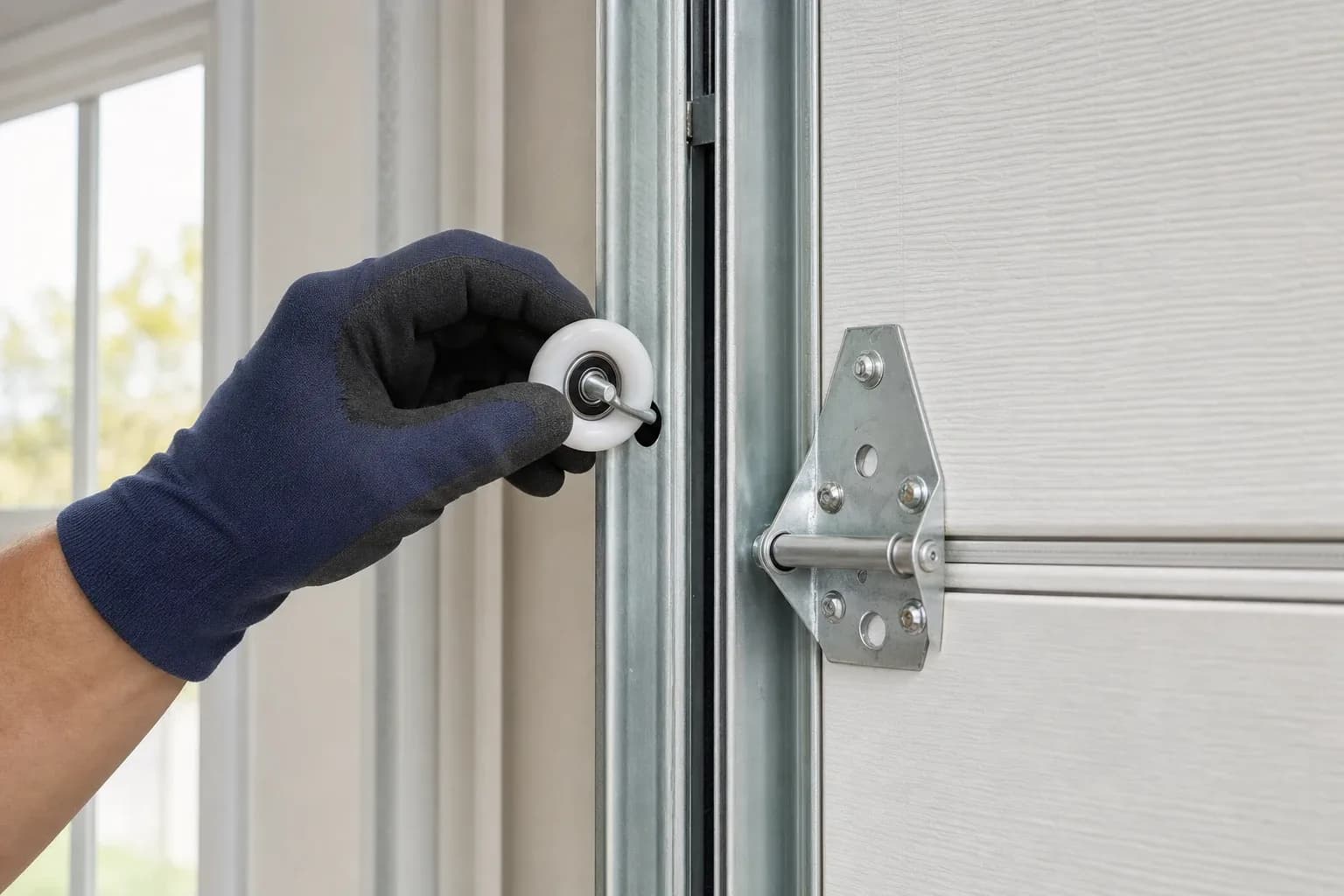
Surface rust on springs or hinges, stiffness in roller movement, and a rough or gritty feel when the door moves are early signs worth acting on before they become a failure. A door that has started to sound noisier than it used to, especially near the coast, is worth a closer look.
- Surface rust on springs, hinges, or track brackets
- Rollers that feel stiff or grind instead of rolling smoothly
- New noise or vibration that wasn't there a season ago
Reducing corrosion going forward
Galvanized or coated hardware resists coastal air better than bare steel, and a well-maintained weatherseal keeps some of the salt-laden air away from interior components. Homeowners near the shoreline generally benefit from more frequent cleaning and hardware checks; Clopay, for example, recommends cleaning a door's metal surfaces quarterly in coastal regions rather than twice a year.
Published by Connecticut Garage Pros, a regional brand of USA Garage Pros · Updated 2026-10-19