
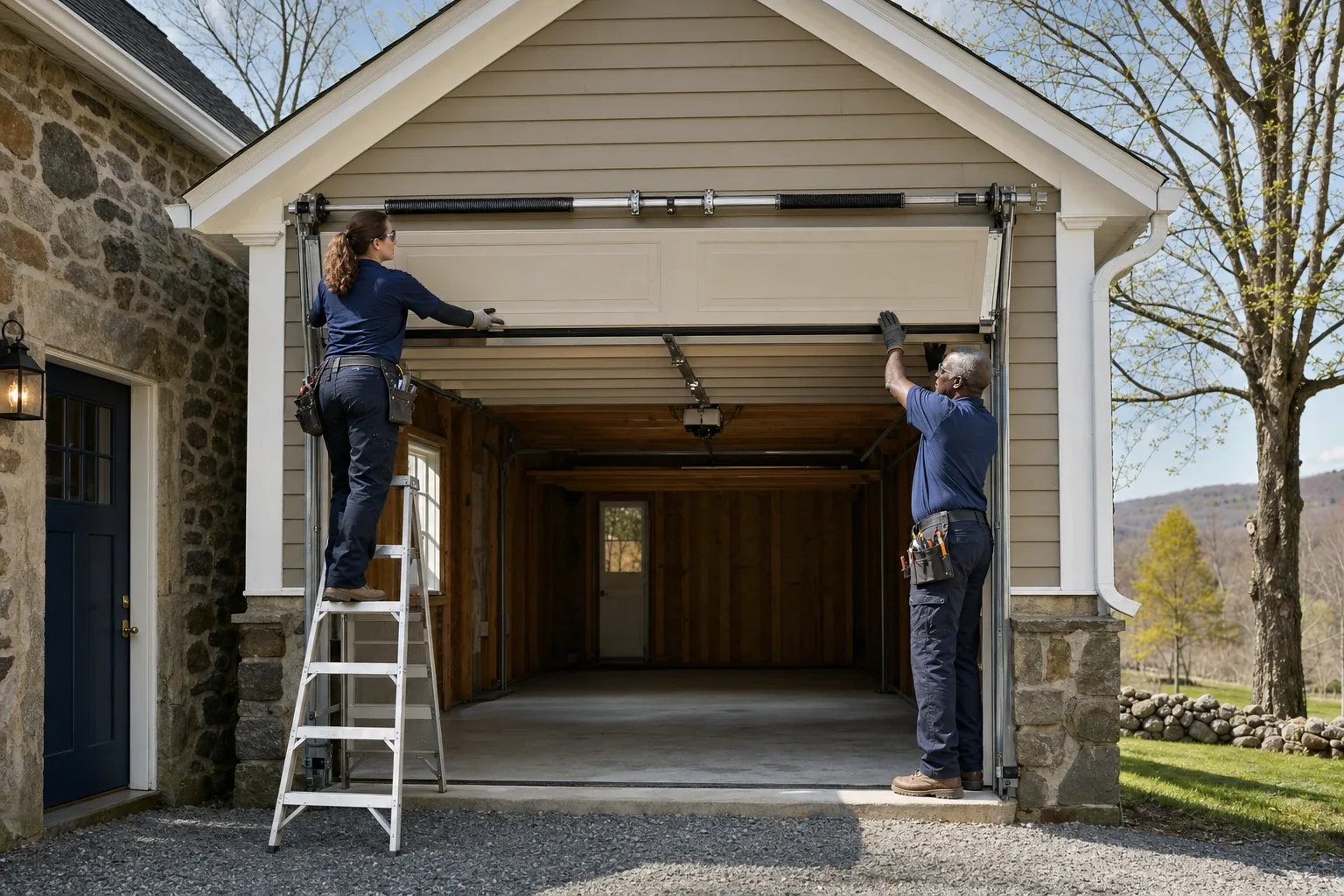
Connecticut Garage Pros
Garage Door Panel Replacement in Connecticut
Panel damage in Connecticut often traces back to a plow, a wind-driven branch during a nor'easter, or years of trapped moisture along a shoreline home's bottom section. Matching an existing panel on an older door can also be harder here given how many older doors are no longer in production.
Panel Replacement · Connecticut
Panel Replacement for Connecticut homes
Panel damage in Connecticut has a few recurring causes tied directly to the state's winters and coastline. A plow clipping a door during a heavy snow season is one common source, and a wind-driven branch during a nor'easter is another, particularly on coastal properties with mature trees close to the garage.
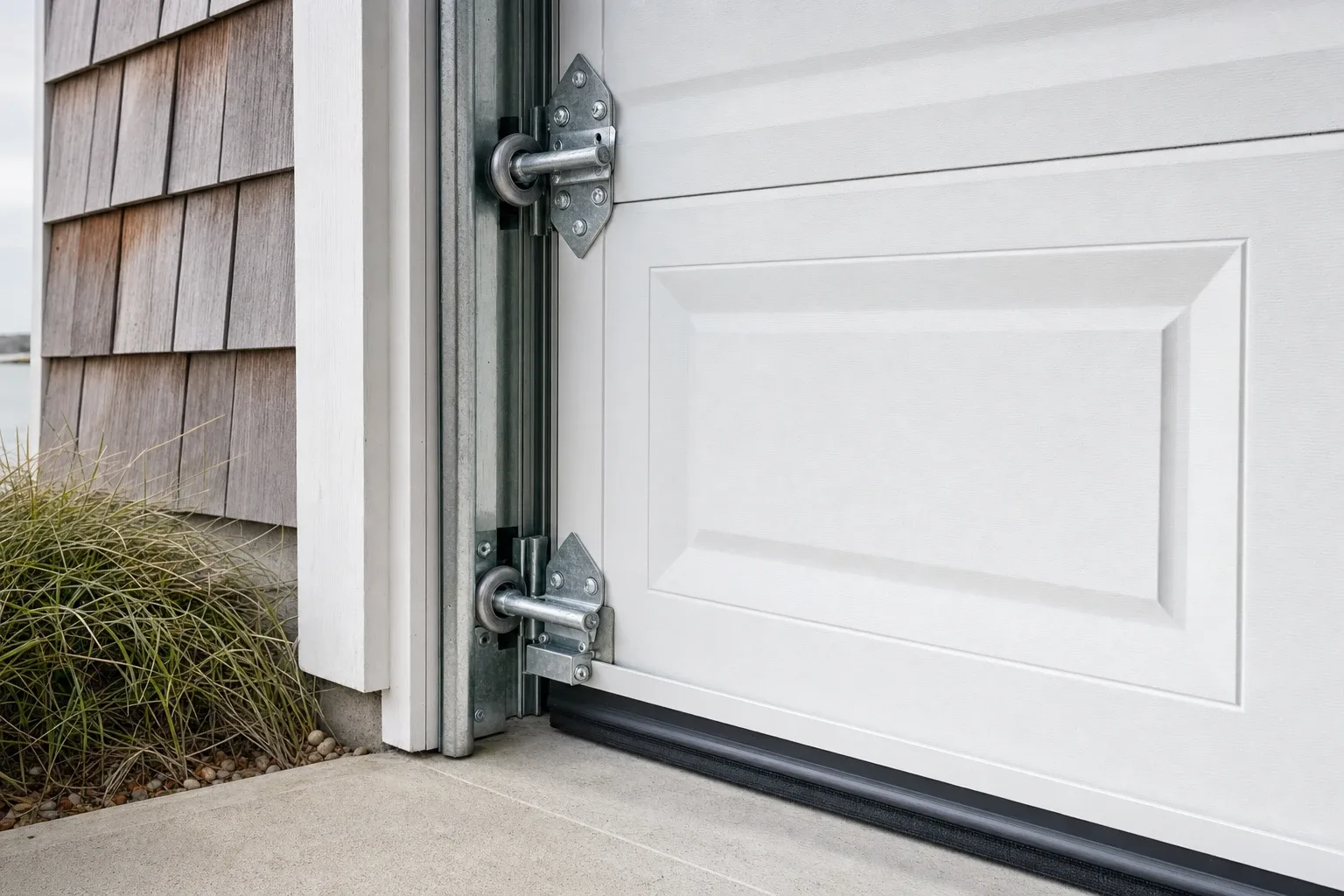
Moisture is a slower but equally real cause. Trapped humidity along a shoreline home's bottom section can quietly damage a panel over time, and matching an existing panel on an older Connecticut door can be difficult since many older door models are no longer in production.
Connecticut
What's different in Connecticut
- 01
Storm and plow impact
Plow contact during heavy snow seasons and wind-driven debris from nor'easters are recurring causes of panel damage, particularly on properties along the coast or near mature trees.
- 02
Trapped moisture along the coast
Shoreline homes can see slow panel damage from trapped humidity at the bottom section, a wear pattern that is less common on drier inland Connecticut properties.
- 03
Matching older panels
Connecticut's older housing stock often has doors that are no longer in production, which can make finding a matching replacement panel harder than on a newer, more common model.
Know the signs
When you need panel replacement
Common symptoms
- A dent, crack, or hole in one or more panels
- Rust that has worked through the metal on a lower panel
- A panel that's bowed, warped, or no longer sits flush with its neighbors
- Impact damage from a vehicle, ladder, or falling object
What the service covers
- Inspection of the damaged panel and identification of the door's make and model
- Sourcing a matching replacement panel where available
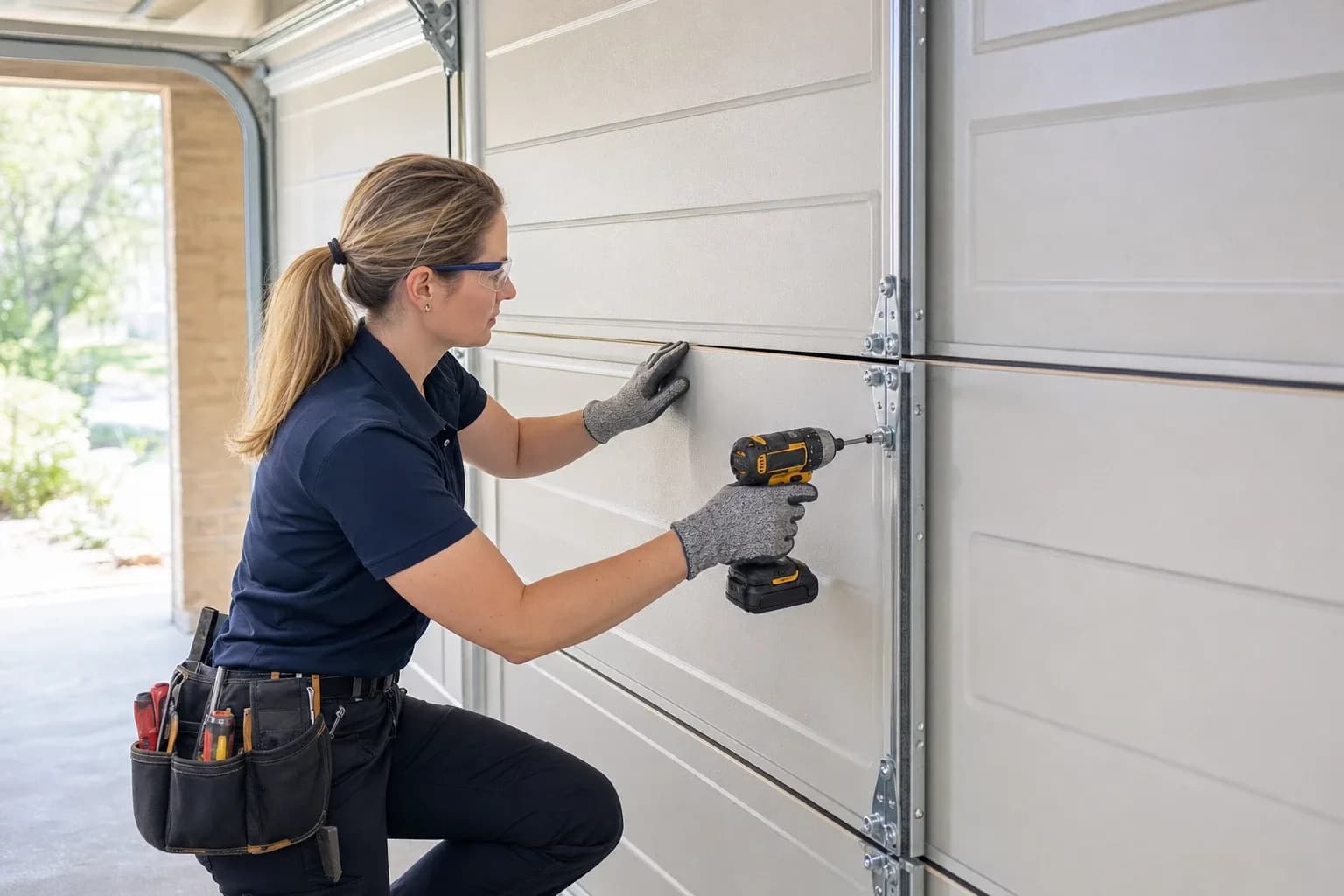
- Removal of the damaged section and hardware transfer to the new panel
- Reinstallation, alignment check, and a full-cycle test
The process
How the work is done
- 1
Identify the door and damage
The door's manufacturer, model, and panel profile are identified to determine whether a matching replacement section is available.
- 2
Remove the damaged panel
The affected section is unhinged and removed while the door's other sections and hardware stay supported.
- 3
Fit the replacement panel
Hardware from the old panel, such as hinges, rollers, and end caps, is transferred to the new one, which is then set into place.
- 4
Align and test
The door is checked for even alignment across all sections and cycled to confirm smooth travel and a proper seal.
Cost factors
What affects the price
Prices aren't published because they depend on your door, the parts involved and the access to the work. These are the things that move the cost — ask for the price before any work starts.
- Panel availability
- An exact match depends on the door's manufacturer, model, and age; some panels are easier to source than others.
- Number of panels affected
- Damage to a single section costs less to correct than damage spread across multiple sections.
- Color and finish matching
- Sun fading on the rest of the door can make a brand-new panel stand out even if the profile matches.
- Hardware condition
- Hinges, rollers, or end caps that are also damaged in the affected area may need replacing along with the panel.
Safety first
- Keep hands clear of hinge points and section seams while a panel is being removed or fitted.
- Do not operate the door with a section removed or only partially secured.
- If a panel is damaged near the bottom corner where a lift cable attaches, treat the cable as compromised and avoid using the door until it's inspected.
Safe things to check first
- Note which panel or panels are affected and whether the damage is a shallow dent or has gone all the way through the material.
- Check whether the damaged section still sits flush with the panels above and below it, or if there's a visible gap.
Local pages
Panel Replacement by city
Answers
Panel Replacement questions in Connecticut
Can a single damaged panel be replaced instead of the whole door?
Often yes, though it depends on whether a matching panel is available. Older Connecticut doors that are no longer in production can make matching more difficult.
What typically damages garage door panels in Connecticut?
Plow contact during snow removal and wind-driven debris during nor'easters are common causes, along with slower moisture-related wear on coastal homes.
Related
Related services
Connecticut Garage Pros
Request service
Send the details in two quick steps. This isn't a booking — we contact you to confirm the problem, the timing and the location first.
Sources
- Technical Data Sheets — Door & Access Systems Manufacturers Association (DASMA) (accessed 2026-09-24)