

The short answer
Manufacturer safety guidance centers on a short monthly routine: a visual check of the hardware, a balance test, and two specific safety tests on the opener. Seasonal lubrication and a weatherseal check round out what a homeowner can reasonably do. Anything involving the springs, cables, or bottom brackets is professional-only work, and an annual inspection by a trained technician covers those components along with a full calibration of the opener's force and travel settings.
Monthly: the safety tests
Manufacturer guidance recommends running two specific tests every month. First, with the door open, place a one-inch board or a 2x4 laid flat in the center of the door's path and close it — the door should stop and reverse the instant it touches the board. Second, wave an object through the photo-eye beam while attempting to close the door; it should refuse to close unless the wall button is held down manually. Both tests confirm the entrapment-protection system required by federal safety rules is actually working.
Monthly: the balance test and a visual check
Disconnect the opener using the manual release, then open the door by hand. It should move freely and stay in place on its own roughly three to four feet above the floor. While it's open, look over the hinges, rollers, and panels for wear or damage, and confirm the photo-eye sensors sit no higher than about six inches above the garage floor. Reconnect the opener afterward.
- 2x4 reversal test on the opener
- Photo-eye obstruction test on the opener
- Balance test with the opener disconnected
- Visual check of hinges, rollers, panels, and sensor height
Seasonal: lubrication and weatherseal
Rollers, hinges, and the track's roller-contact surfaces benefit from a garage-door-specific lubricant a few times a year, more often in climates with big temperature swings, since cold weather stiffens lubricant and can change how the door feels moving through its cycle. Check the bottom weatherseal and perimeter seals for gaps, cracks, or compression that's worn unevenly, since seal condition affects drafts independently of the door's insulation.
Annual: what to leave to a professional
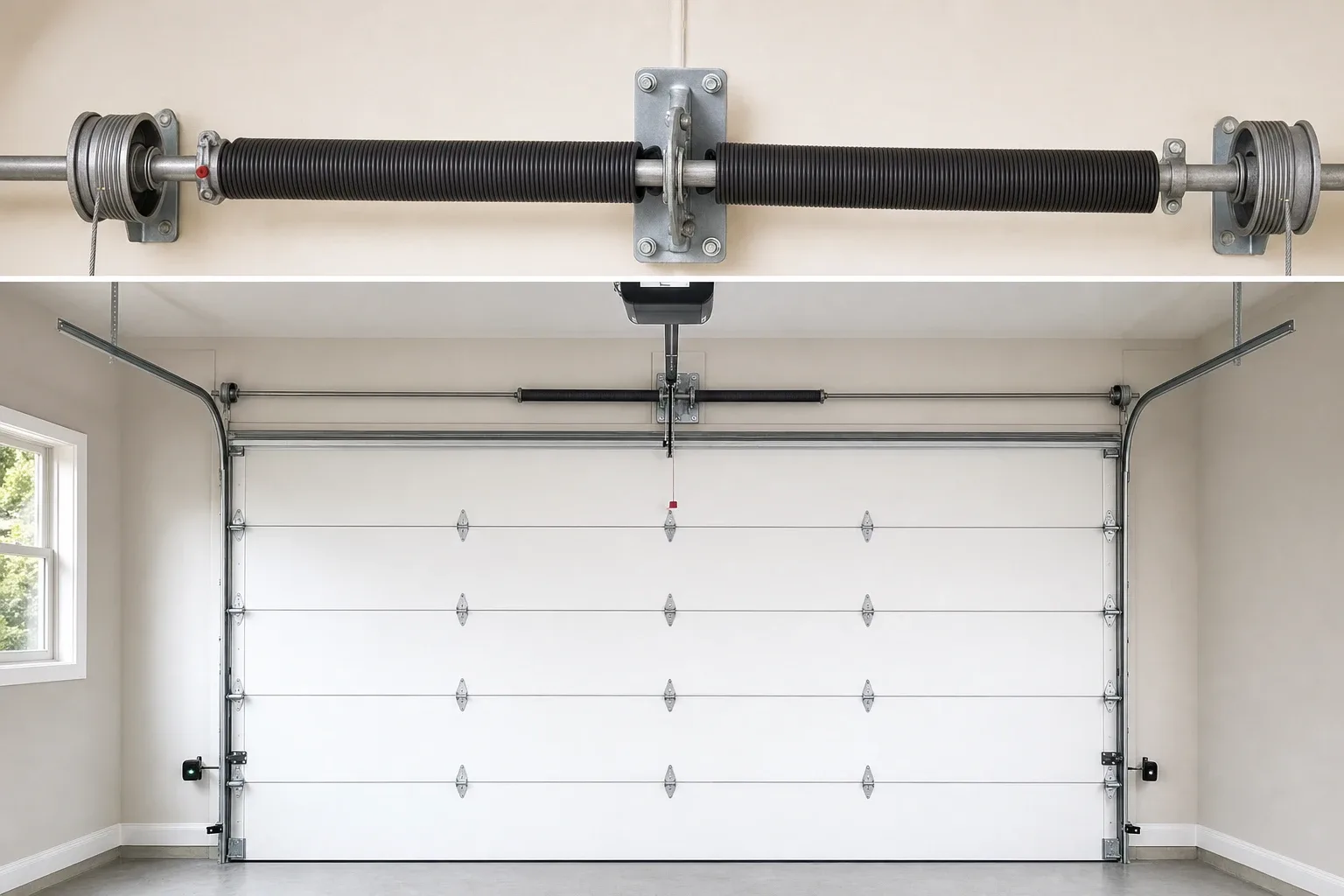
An annual visit from a trained technician typically covers the parts that shouldn't be homeowner maintenance: spring tension and wear, cable and drum condition, track alignment at the mounting points, and calibration of the opener's force and travel-limit settings. This is also a good point to confirm an older opener has current photo-eye entrapment protection if that hasn't been checked before.
Keeping a simple record
Keep the owner's manuals for both the door and the opener somewhere accessible, and jot down the date each time you run the monthly tests along with anything that felt different. A simple log like this makes it much faster for a technician to pin down when a problem actually started if something does go wrong.
What never belongs on a homeowner's list
Torsion springs, extension springs, lift cables, and the bottom brackets they attach to stay under continuous high tension and should only be adjusted, repaired, or replaced by a trained technician. Never attempt to release a door that's under spring tension, and never disable, cover, or bypass a photo-eye sensor to keep a door running — both remove protection that federal safety rules require.
Published by USA Garage Pros · Updated 2026-09-24