

The short answer
When a garage door starts down and then reverses back up, that's the entrapment-protection system built into every opener sold in the U.S. doing its job, not a random malfunction. Federal rules require an opener to reverse within two seconds of contacting an object on the floor, and most reversals come from a blocked photo-eye, an obstruction in the track, or force and limit settings that are more sensitive than they need to be. A door that reverses violently, drops suddenly, or behaves differently after any hardware was touched is a different situation and needs a technician, not a settings tweak.
The reversal is a required safety feature
Federal rules under 16 CFR Part 1211 require every automatic residential garage door operator to reverse a downward-moving door within two seconds of contact with a two-inch-high test object on the floor. That requirement exists because a closing garage door is heavy enough to injure or trap someone, and the reversing mechanism is the last line of defense if the photo-eye sensors don't catch an obstruction first.
So when a door reverses unexpectedly, the opener isn't broken in the sense of failing — it's reacting to something it interpreted as resistance or an interrupted sensor beam. The fix is finding what it's reacting to.
The most common false triggers
A photo-eye sensor that's dusty, misaligned, or catching direct sunlight can register a false obstruction and trigger a reversal even with nothing in the doorway. Debris in the track, a roller that's started to bind, or a door that's slightly out of square can create just enough resistance for the force sensor to read it as an obstacle.
Temperature swings matter too. Cold weather stiffens lubricant and can tighten spring tension slightly, which changes how much resistance the opener feels during the last part of the travel — sometimes enough to trip a force setting that was fine a few weeks earlier.
- Dirty or misaligned photo-eye lenses
- Debris or a bent section in either track
- Force or travel-limit settings adjusted too sensitively
- Seasonal stiffness in rollers, hinges, or spring tension
Testing the reversal system the right way
Manufacturers document a specific test for this: with the door fully open, place a one-inch board or a 2x4 laid flat in the center of the door's path and run the door down. It should stop and reverse as soon as it touches the board. Then, with the door open again, wave an object through the photo-eye beam while attempting to close the door — it should refuse to close at all unless the wall button is held down manually. Both tests are the manufacturer's own way of confirming the safety system is working, and they're worth doing monthly.
When reversal points to something bigger
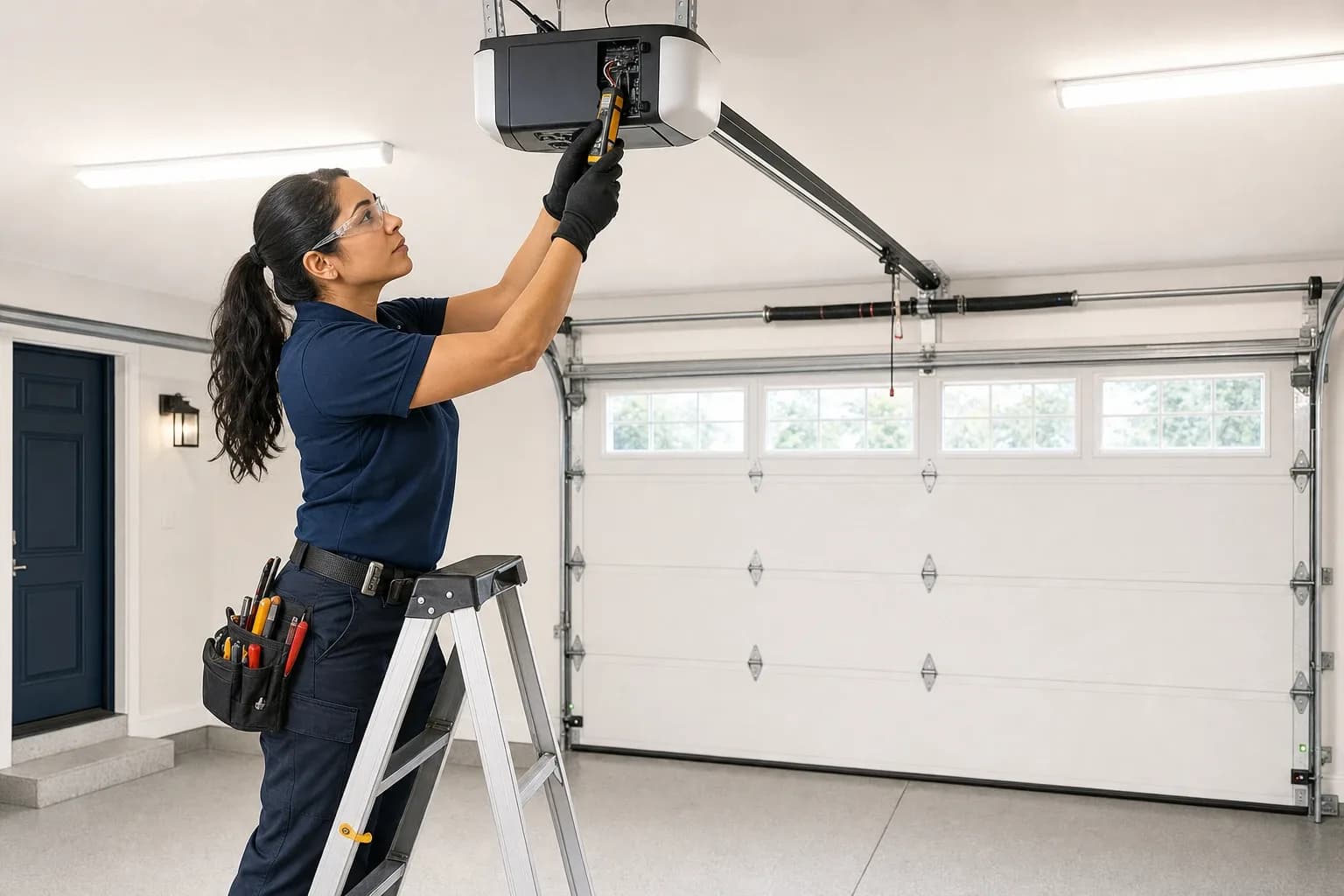
A door that reverses hard, drops instead of reversing smoothly, or has become noticeably harder to move by hand recently is telling you something beyond a sensor or a setting. Uneven cable tension, a weakening spring, or a track that's pulling away from the wall can all change how the door behaves right at the point where the opener is checking for resistance, and those are hardware problems for a trained technician.
What's safe to adjust and what isn't
Force and travel-limit settings are typically adjustable by the homeowner following the opener's manual, within the ranges the manufacturer allows. What's not appropriate to adjust yourself is anything that reduces the sensitivity of the entrapment protection itself, or any work on the springs, cables, or bottom brackets — those stay under tension and belong to a professional.
Published by USA Garage Pros · Updated 2026-09-24