

The short answer
A single damaged panel, worn rollers, one broken spring, or a sensor fault are usually straightforward repairs on an otherwise sound door. Widespread rust or rot, repeated breakdowns of different parts within a short span, an opener old enough to predate current sensor requirements, or structural damage across multiple panels are the signals that repair is becoming a series of patches rather than a real fix. An in-person inspection is the only reliable way to get a recommendation specific to your door, since the right call depends on the door's construction, age, and exact damage.
When repair usually makes sense
Most single-issue problems on a door that's otherwise structurally sound are repairable: one dented or cracked panel, worn or noisy rollers, a frayed cable, a misaligned track, a failed sensor, or a single broken spring.
- One damaged panel on an otherwise intact door
- Worn rollers, hinges, or a noisy but functional opener
- A single broken spring, sensor fault, or off-track section
- Cosmetic wear that doesn't affect operation or balance
When replacement is worth considering
Replacement starts to make more sense when the door is failing in more than one place at once, when the same type of repair keeps recurring, or when the underlying material has degraded across the whole door rather than in one spot.
- Rust, rot, or delamination spread across multiple panels
- Repeated repairs to different parts within a short period
- Structural damage from an impact affecting the door's frame or multiple sections
- An opener old enough to lack current photo-eye entrapment protection
Repair vs. replace, side by side
The two paths differ mainly in scope, disruption, and what you get afterward, not just in the size of the job.
- Cost predictability: repair addresses a known issue; replacement is a larger, more defined project
- Timeline: repair is typically resolved in a single visit; replacement takes longer to schedule and install
- Disruption: repair rarely affects daily use of the garage; replacement means the door is out of service during installation
- Long-term outcome: repair extends the current door's life; replacement resets the clock and can address insulation, styling, and opener technology at once
Safety and code considerations either way
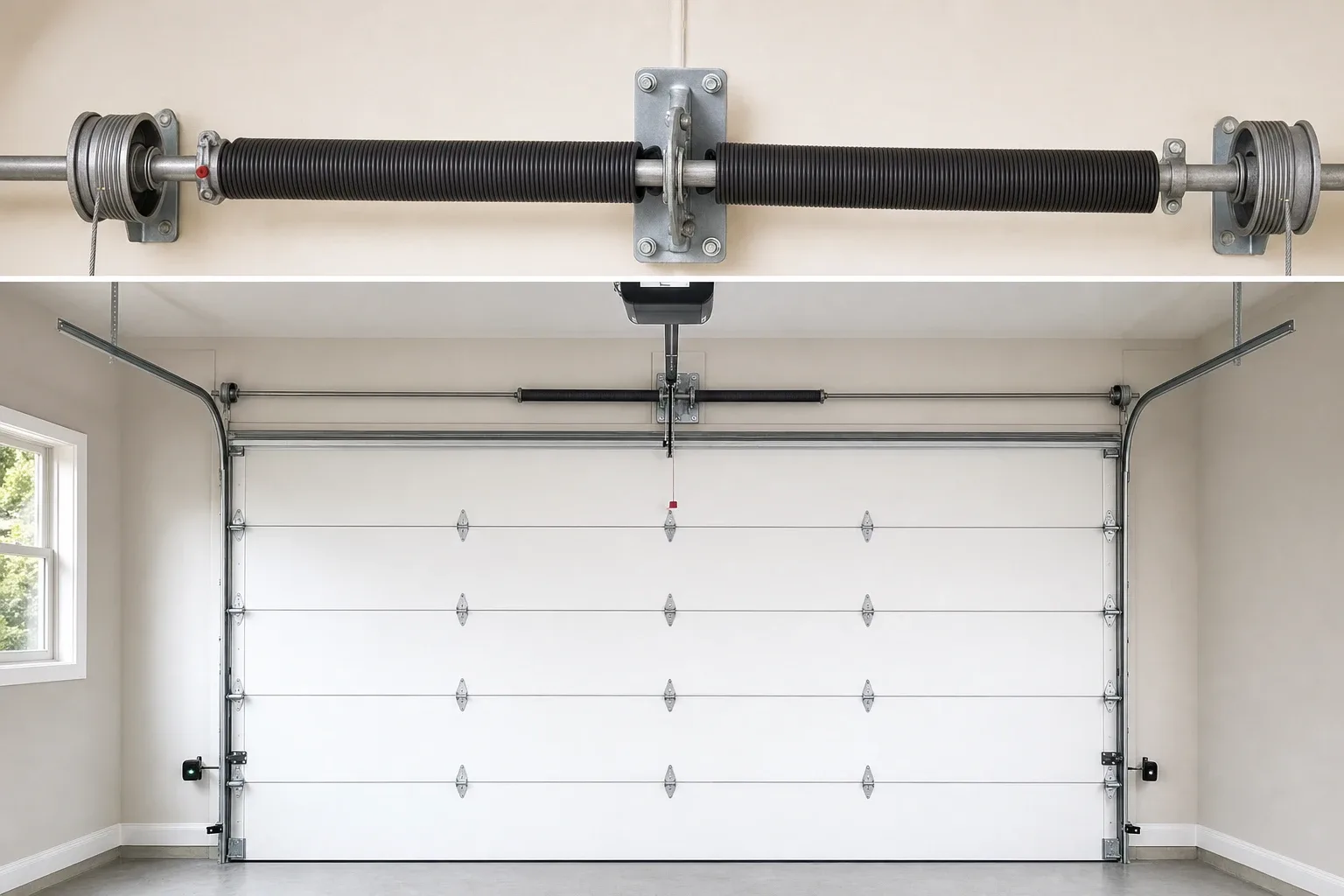
Openers manufactured before 1993 predate the federal requirement for photo-eye or edge-sensor entrapment protection, so an older opener paired with a newer door — or vice versa — may not have the safety features expected today. That's worth flagging during any inspection, independent of the repair-or-replace decision. Regardless of which path you take, torsion springs, extension springs, lift cables, and bottom brackets remain professional-only work; they're never a homeowner repair on a door being kept or one being replaced.
Getting a recommendation specific to your door
Because the right call depends on the door's exact construction, age, and the pattern of what's failing, an in-person inspection is the most reliable way to know which category your situation falls into. A technician can check the door's balance, the condition of the springs and cables, the opener's safety features, and the panels themselves in one visit.
Published by USA Garage Pros · Updated 2026-09-24