
USA Garage Pros
Garage Door Panel Replacement
Replacing one or more damaged sections of a sectional garage door, from a dent or crack to a section that's warped or rusted through.
Panel Replacement
Garage door panel replacement
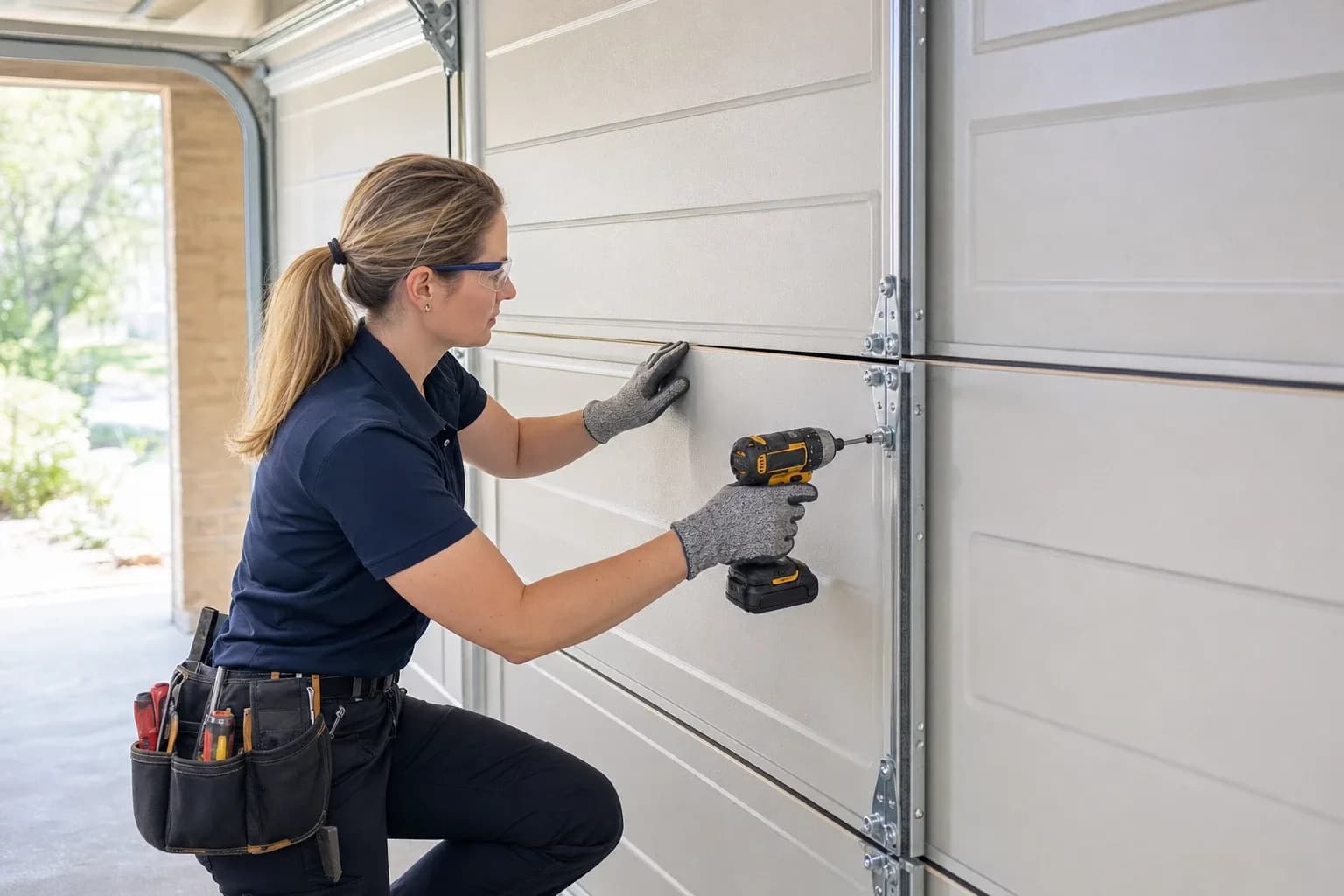
A sectional garage door is made up of individual horizontal panels connected by hinges, so damage to one section, whether a dent from an impact, a crack, or rust that's worked through the metal, doesn't necessarily mean the whole door needs to go. Panel replacement swaps out the affected section, or sections, while keeping the rest of the door in place.
Matching a replacement panel to an existing door depends on the manufacturer, model, and how long ago the door was made, since finishes and profiles change over time. Where an exact match isn't available, the option of replacing more than one panel, or the full door, gets discussed rather than forcing a mismatched fit.
Know the signs
When you need panel replacement
Common symptoms
- A dent, crack, or hole in one or more panels
- Rust that has worked through the metal on a lower panel
- A panel that's bowed, warped, or no longer sits flush with its neighbors
- Impact damage from a vehicle, ladder, or falling object
What the service covers
- Inspection of the damaged panel and identification of the door's make and model
- Sourcing a matching replacement panel where available
- Removal of the damaged section and hardware transfer to the new panel
- Reinstallation, alignment check, and a full-cycle test
The process
How the work is done
- 1
Identify the door and damage
The door's manufacturer, model, and panel profile are identified to determine whether a matching replacement section is available.
- 2
Remove the damaged panel
The affected section is unhinged and removed while the door's other sections and hardware stay supported.
- 3
Fit the replacement panel
Hardware from the old panel, such as hinges, rollers, and end caps, is transferred to the new one, which is then set into place.
- 4
Align and test
The door is checked for even alignment across all sections and cycled to confirm smooth travel and a proper seal.
Decide
Repair or replace?
| Repair usually makes sense when… | Replacement is worth considering when… |
|---|---|
| Damage is a minor dent that doesn't affect the section's structure or seal | The panel is cracked, rusted through, or warped enough to affect fit or seal |
| Only cosmetic correction is needed and a full panel swap isn't necessary | The damage is at a hinge point or corner where structural integrity matters |
Cost factors
What affects the price
Prices aren't published because they depend on your door, the parts involved and the access to the work. These are the things that move the cost — ask for the price before any work starts.
- Panel availability
- An exact match depends on the door's manufacturer, model, and age; some panels are easier to source than others.
- Number of panels affected
- Damage to a single section costs less to correct than damage spread across multiple sections.
- Color and finish matching
- Sun fading on the rest of the door can make a brand-new panel stand out even if the profile matches.
- Hardware condition
- Hinges, rollers, or end caps that are also damaged in the affected area may need replacing along with the panel.
Safety first
- Keep hands clear of hinge points and section seams while a panel is being removed or fitted.
- Do not operate the door with a section removed or only partially secured.
- If a panel is damaged near the bottom corner where a lift cable attaches, treat the cable as compromised and avoid using the door until it's inspected.
Safe things to check first
- Note which panel or panels are affected and whether the damage is a shallow dent or has gone all the way through the material.
- Check whether the damaged section still sits flush with the panels above and below it, or if there's a visible gap.
Answers
Frequently asked questions
Can just one panel be replaced instead of the whole door?
Often yes, as long as a matching or acceptably close panel is available for the door's manufacturer and model.
Will a new panel match the rest of my door exactly?
It depends on the door's age and how much the finish has weathered; profile and color matches are usually close, but sun-faded doors may show a slight difference.
What usually causes panel damage?
Vehicle impacts, wind-blown debris, ladders or equipment leaned against the door, and long-term rust from moisture at the bottom are common causes.
Is replacing a panel less involved than replacing the whole door?
Generally yes, since the tracks, springs, and other panels stay in place; the work is focused on the affected section and its hardware.
Related
Related services
Guides
Related guides
USA Garage Pros
Request service
Send the details in two quick steps. This isn't a booking — we contact you to confirm the problem, the timing and the location first.
Sources
- Technical Data Sheets — Door & Access Systems Manufacturers Association (DASMA) (accessed 2026-09-24)