
The short answer
A garage door that won't move after a hard freeze in Spokane, the Columbia Basin, or the Cascade foothills is often ice at the bottom seal or inside the track rather than a broken part. Warm the seal gently, don't force the door, and call a technician if it still won't move or the opener strains against it.
Why This Happens in Eastern Washington
Spokane-area valleys see routine hard freezes, and the Spokane airport station averages about 45 inches of snow a winter per NWS climate normals, with considerably more in the surrounding mountains, and unheated detached garages track outdoor temperature closely. Meltwater from a warmer afternoon can refreeze overnight in the vertical tracks or under the bottom seal, effectively binding the door to the slab.
What's Safe to Check Yourself
Look for visible ice along the bottom seal or inside the track before doing anything else, and disconnect the opener's power if you plan to look closely at it. Lukewarm (not hot) water on the seal can free light icing. Listen for the opener motor straining or making a grinding sound — that's a sign to stop and call for help rather than continuing to try the remote.
- Check for ice at the bottom seal and inside the vertical tracks
- Disconnect opener power before inspecting anything closely
- Never pry, pull, or force a door that resists moving
- Stop immediately if the opener strains or makes an unusual noise
When to Call a Professional
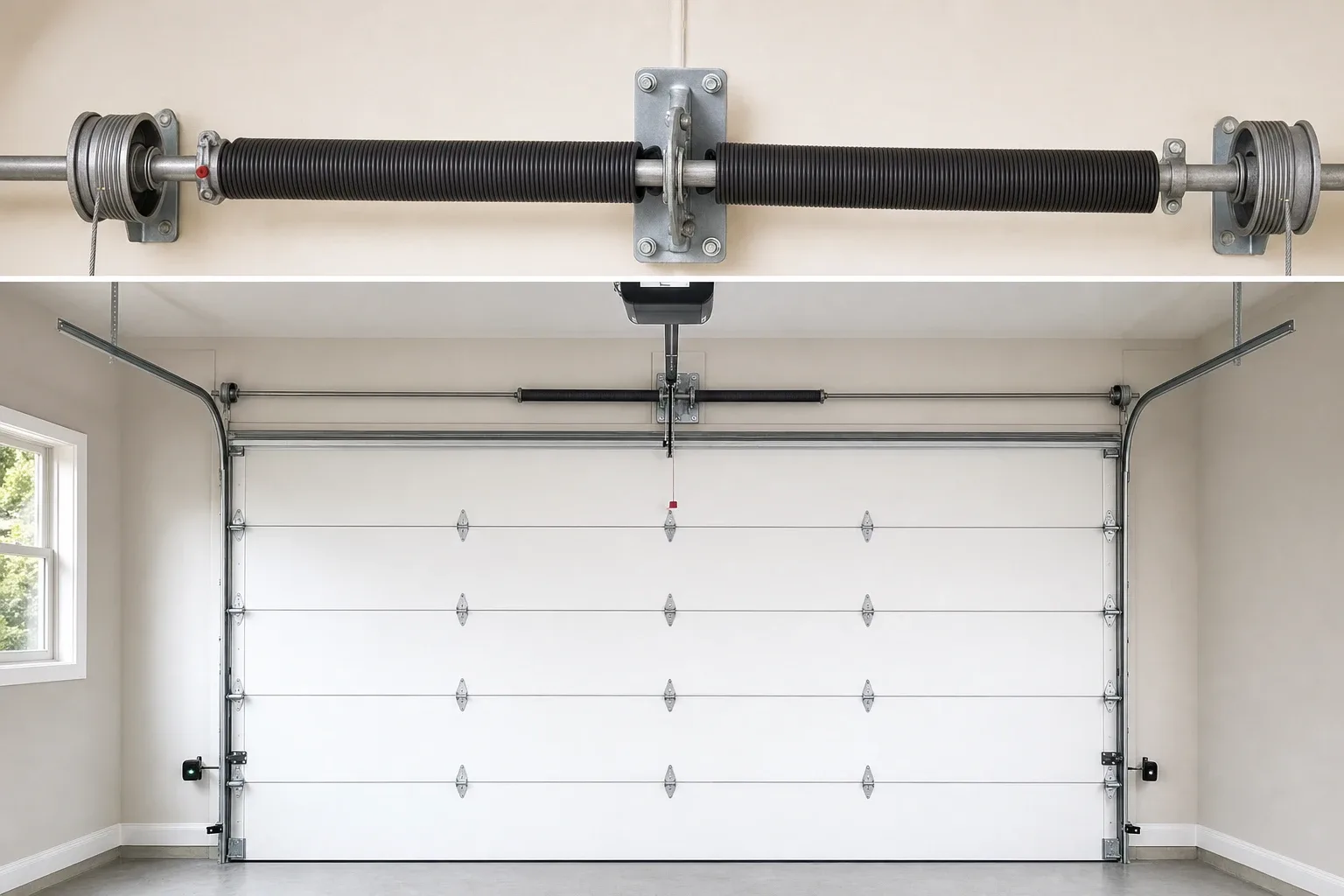
A door that's still stuck after gentle warming, a track that's visibly bent or iced solid, or any sign of trouble at the torsion spring or cables means it's time for a technician rather than continued attempts to free it. Torsion springs and cables are under significant tension and are never a homeowner repair, especially once cold has added extra stress to the system.
Published by Washington Garage Pros, a regional brand of USA Garage Pros · Updated 2026-10-19