
Washington Garage Pros
Garage Door Opener Installation in Washington
A new opener installed in Washington should include a working photo-eye safety reversal system, tested per the manufacturer's guidance, especially in older detached garages that were never wired for one originally.
Opener Installation · Washington
Opener Installation for Washington homes
A new opener installed anywhere in Washington should include a working photo-eye safety reversal system, tested against the manufacturer's guidance, which matters especially in older detached garages around Seattle and Tacoma that were never wired for one originally.
Beyond the safety system, an inland Eastern Washington install typically accounts for wider temperature swings affecting the unit's electronics, while a coastal install accounts for sustained dampness that can accelerate corrosion on unprotected contacts over the years.
Washington
What's different in Washington
- 01
Auto-Reverse Testing
Confirming the photo-eye safety reversal works as intended is part of a proper install, not an optional extra, particularly in a garage that never had one before.
- 02
Older Detached Garages
Many pre-war Seattle and Tacoma garages were built without any opener wiring at all, so adding one for the first time can involve running new power and confirming the structure can support the rail.
Know the signs
When you need opener installation
Common symptoms
- No opener currently installed and the door is operated manually
- Replacing an opener that's being upgraded rather than repaired
- Adding an opener as part of a new door installation
- Wanting features an existing opener doesn't have, such as a quieter drive or battery backup
What the service covers
- Matching an opener's horsepower and drive type to the door's weight and size
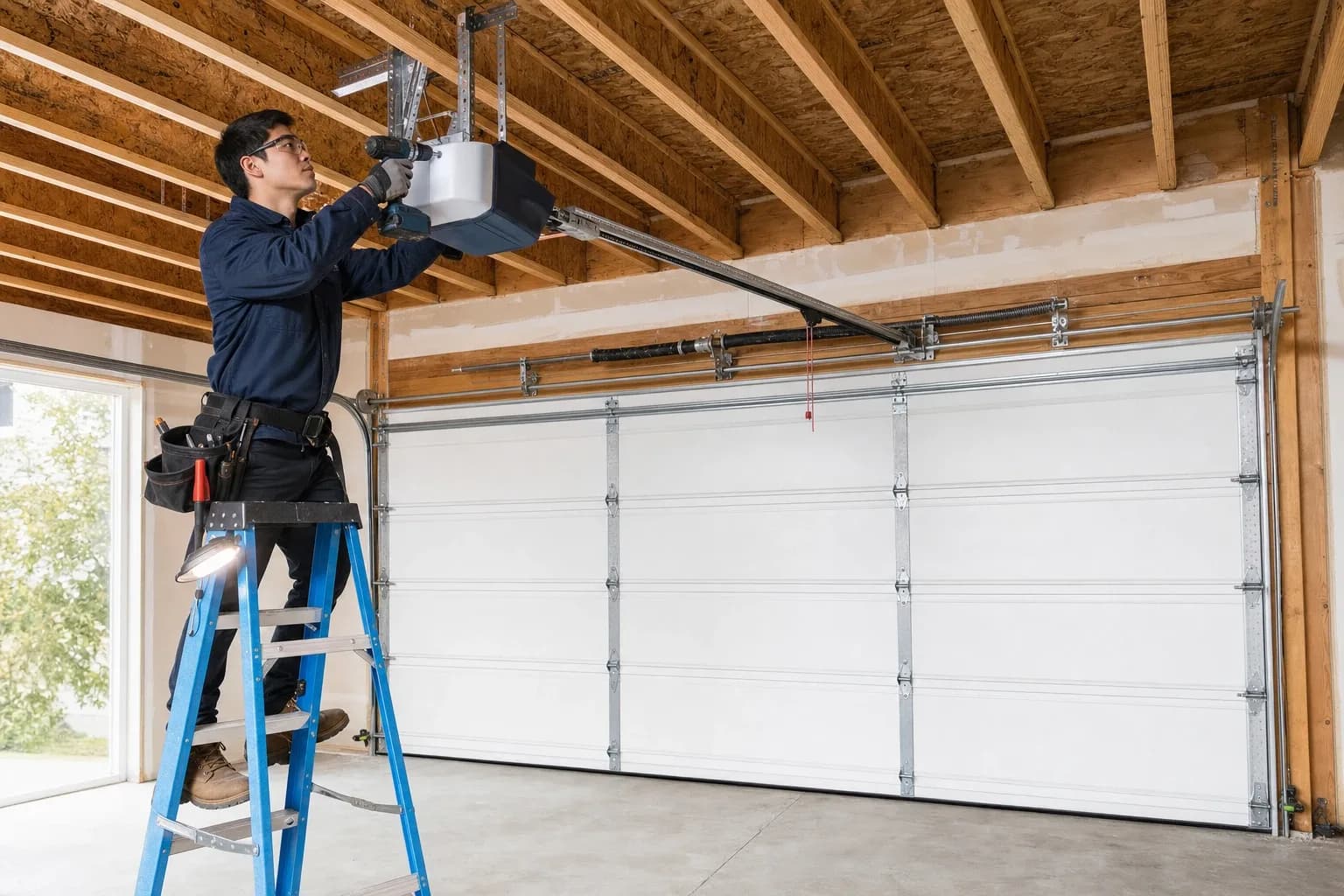
- Mounting the motor unit, rail, and trolley, and connecting it to the door
- Wiring and positioning the required photo-eye safety sensors
- Setting travel limits and force settings and testing the auto-reverse feature
The process
How the work is done
- 1
Match the opener to the door
The door's weight, size, and headroom are used to choose an appropriately sized opener and drive type, such as chain, belt, or screw.
- 2
Mount the unit and rail
The motor unit is secured to the ceiling structure, the rail is connected to the header above the door, and the trolley is linked to the door's arm.
- 3
Install and align safety sensors
Photo-eye sensors are mounted about 6 inches above the floor on both tracks and aligned so their indicator lights confirm a clear beam between them.
- 4
Set limits and test
Travel limits and closing force are set, and the auto-reverse feature is tested to confirm the door stops and reverses on contact with an obstruction.
Cost factors
What affects the price
Prices aren't published because they depend on your door, the parts involved and the access to the work. These are the things that move the cost — ask for the price before any work starts.
- Drive type
- Chain, belt, and screw-drive openers differ in noise level and typical cost of parts.
- Door weight and size
- Heavier or larger doors may need a higher-capacity opener.
- Existing wiring and mounting structure
- Whether ceiling framing and an outlet are already in place affects installation time.
- Added features
- Battery backup, smartphone connectivity, or keypad entry add to the scope.
Safety first
- Photo-eye safety sensors must be installed roughly 6 inches above the floor and never bypassed, blocked, or removed — they prevent the door from closing on an obstruction.
- The auto-reverse feature must be tested after installation and periodically afterward per the manufacturer's guidance.
- Keep hands and loose clothing clear of the trolley, rail, and drive mechanism during and after installation.
Local pages
Opener Installation by city
Answers
Opener Installation questions in Washington
Does an older Seattle garage need rewiring to add an opener?
Often, since many detached garages of that era were never wired for one, which a technician confirms before installation.
Is the photo-eye safety feature required on a new opener?
A working, tested auto-reverse safety system is standard practice on a proper new opener installation regardless of where in the state it's installed.
Related
Related services
Washington Garage Pros
Request service
Send the details in two quick steps. This isn't a booking — we contact you to confirm the problem, the timing and the location first.
Sources
- Automatic Residential Garage Door Operators — U.S. Consumer Product Safety Commission (accessed 2026-09-24)
- UL 325 50th Anniversary & Key Safety Issues — UL Solutions (accessed 2026-09-24)
- Technical Data Sheets — Door & Access Systems Manufacturers Association (DASMA) (accessed 2026-09-24)